Cosplay outfits at Marco Jacket split into two different jobs: anime and cartoon jackets built to be worn as actual clothing, and standalone costumes assembled specifically for a con floor, a themed party or a night of trick-or-treating. A character built around a specific playable video game skin or an item earned inside a game gets its own deeper treatment under Video Game Outfits; this page covers the wider ground of anime, Western cartoons and general costume archetypes that aren't tied to one particular game. Nothing in either bucket carries an official license. Every piece is built around a general silhouette, color scheme or character type rather than sold as merchandise from a studio, publisher or franchise, and naming a show or character in a product description is descriptive shorthand for the look, not a claim of partnership with whoever owns the rights to it.
Where the Word "Cosplay" Actually Comes From
"Cosplay" fuses "costume" and "play," and the coinage is usually credited to Nobuyuki Takahashi, a Japanese writer who encountered costumed fans at a science fiction Worldcon in Los Angeles sometime in the 1980s and brought the concept of organized costumed fan participation back into Japanese convention culture, where it took hold and spread. People had been dressing as characters at science fiction and comic conventions well before the word existed to describe it; what Takahashi's term did was give an already-happening practice a shared label, and a shared label is a big part of why a scattered habit turns into an organized hobby with competitions, meetups and dedicated photographers rather than staying a one-off novelty a handful of fans do at a single event.
From a Convention Weekend to a Year-Round Hobby
What began as costumed convention attendance has grown into something that runs on its own calendar independent of any single weekend event: build competitions judged on craftsmanship, online communities organized around one character or one construction technique, photographers who specialize almost exclusively in convention and studio cosplay work, and a whole supporting trade of pattern drafters, prop builders and apparel makers. Anime and gaming fandoms expanding well beyond Japan tracks closely with that growth, which is a reasonable part of why anime, cartoon and game characters make up such a large share of what people actually build or shop for today.
How a Build Actually Comes Together
Few cosplayers rely on just one technique. A build usually blends sewing a garment from scratch off a drafted or heavily modified pattern, altering something off the rack into a closer match for a character's silhouette, and prop or accessory work, foam armor, resin pieces, wigs, handled as a separate project from the clothing itself. A jacket ordered from this category typically becomes the base layer of that kind of build, the piece that benefits most from real construction and finishing, while wigs, weapons and armor pieces still get sourced or built on their own.
What "Inspired By" Means on a Product Page Here
Most character designs, anime and cartoon ones especially, were drawn for a screen rather than built to be sewn, so translating one into wearable clothing always involves some interpretation. "Inspired by" is the language Marco Jacket uses for that interpretation: a garment built around a character's recognizable silhouette, color blocking and a couple of signature details, produced independently rather than under any license from the studio or rights holder behind the original work. None of these pieces ship with a studio tag, hologram or other authentication mark, since that kind of marking belongs to officially licensed merchandise specifically, not to an independently made piece referencing a look.
General Costumes Built on Real Construction Instead of a Flat Print
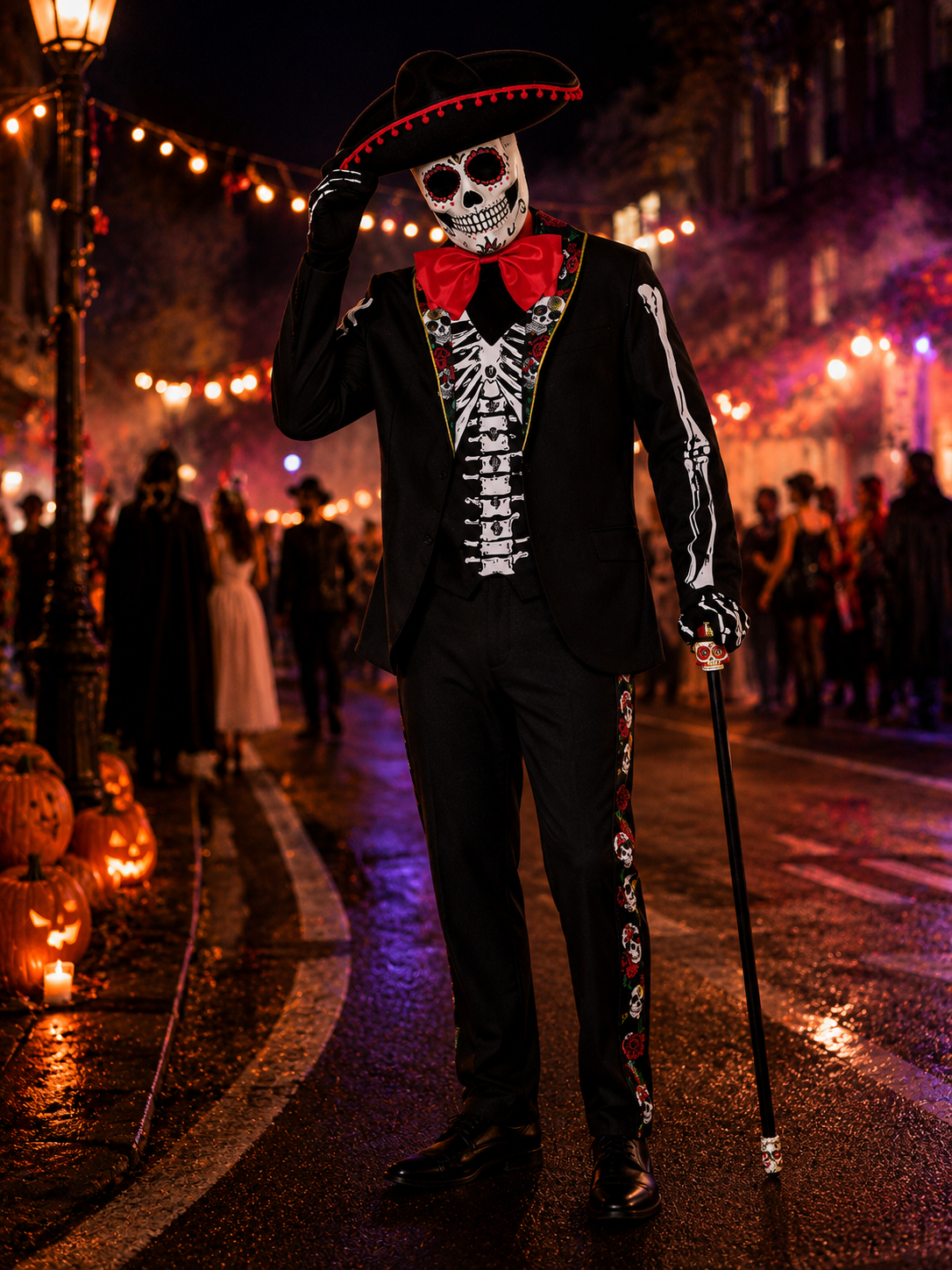
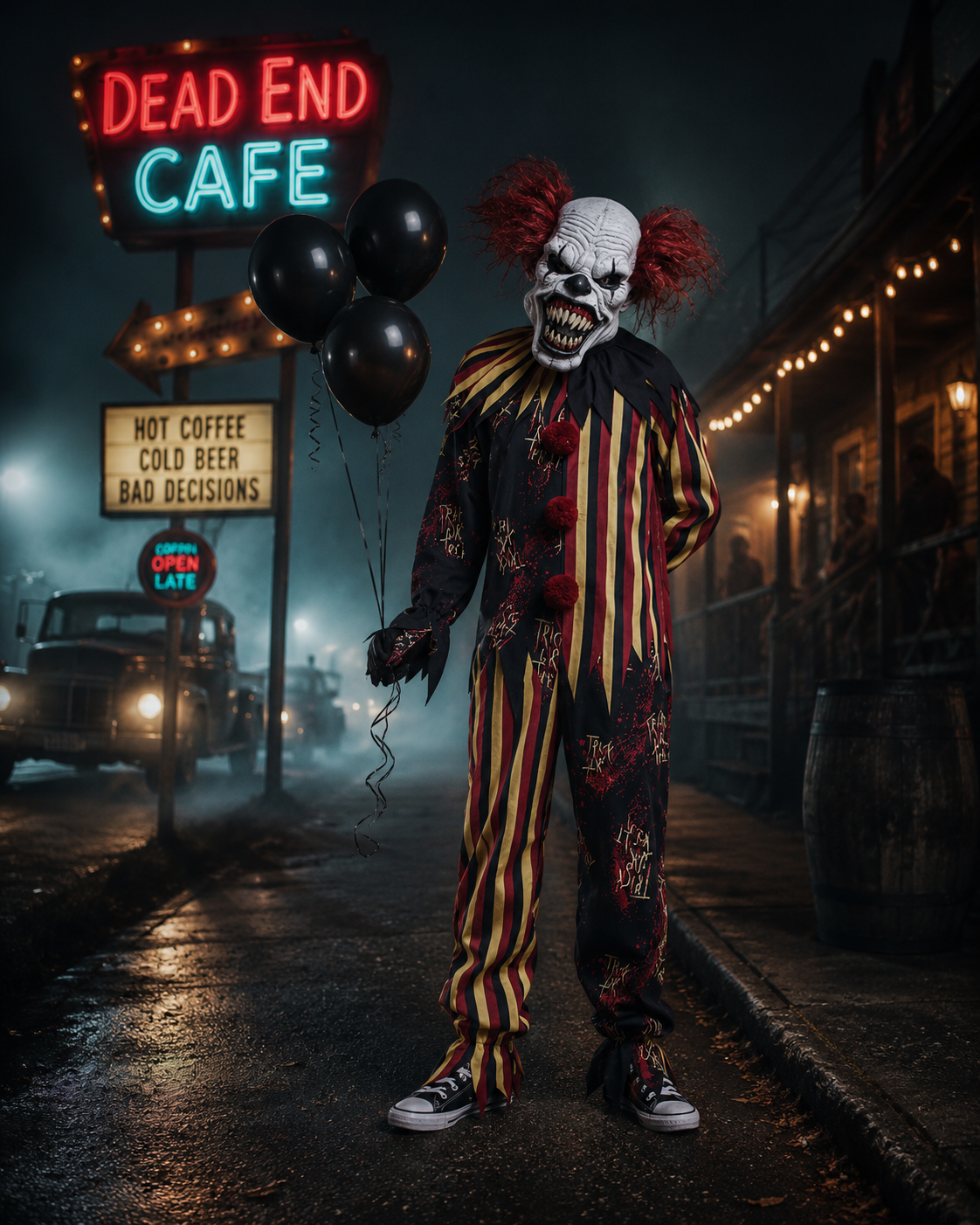
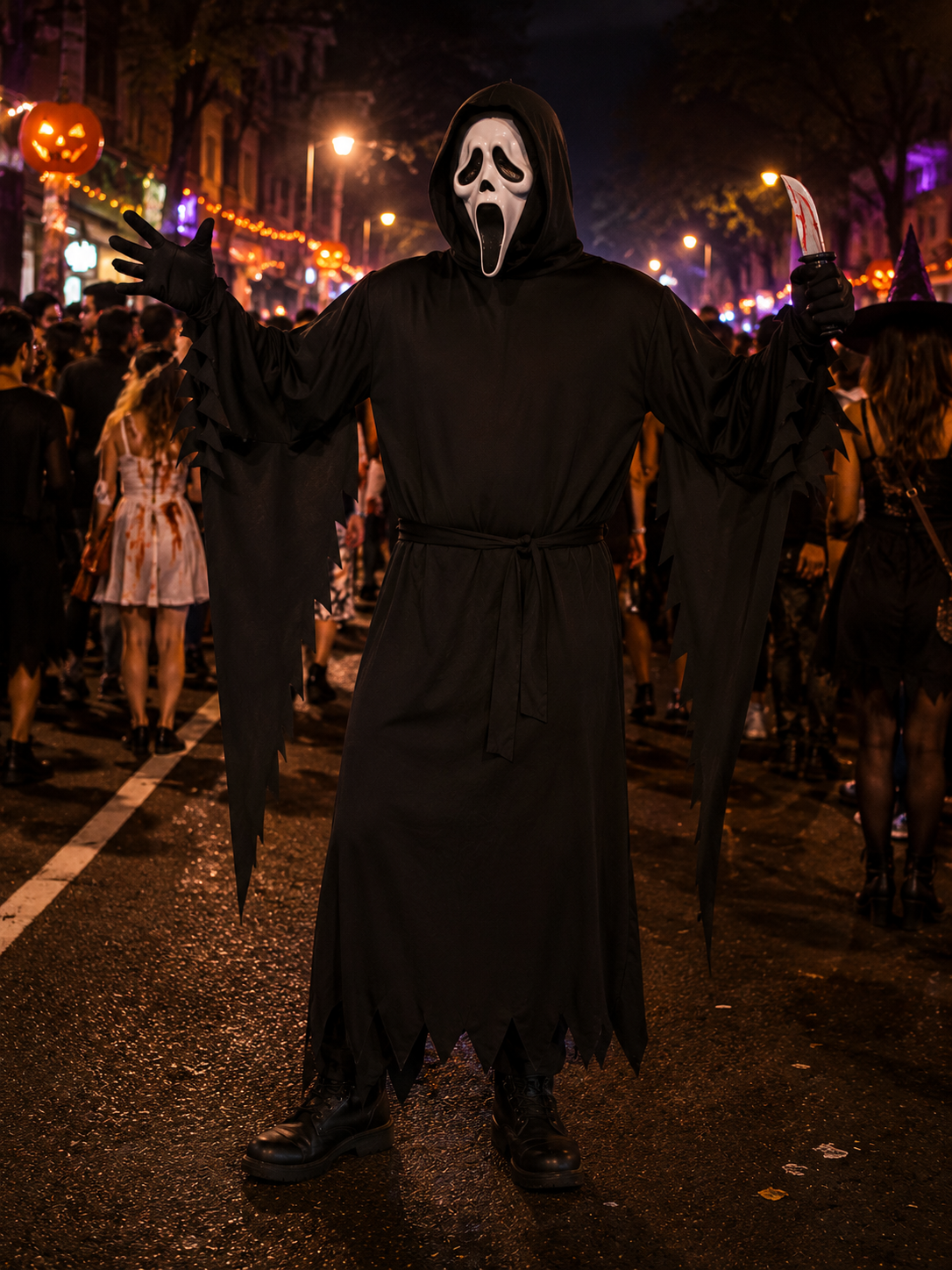
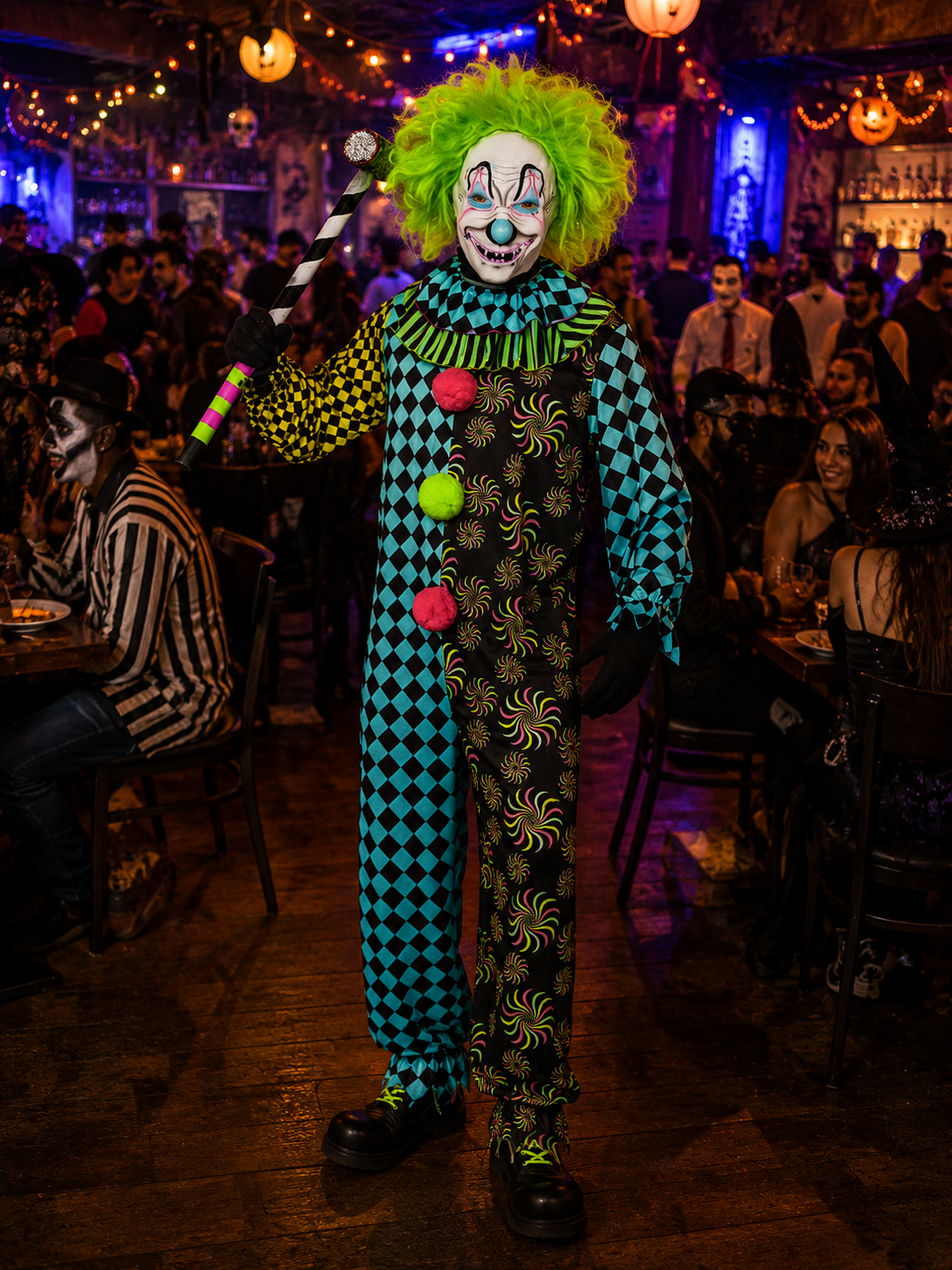
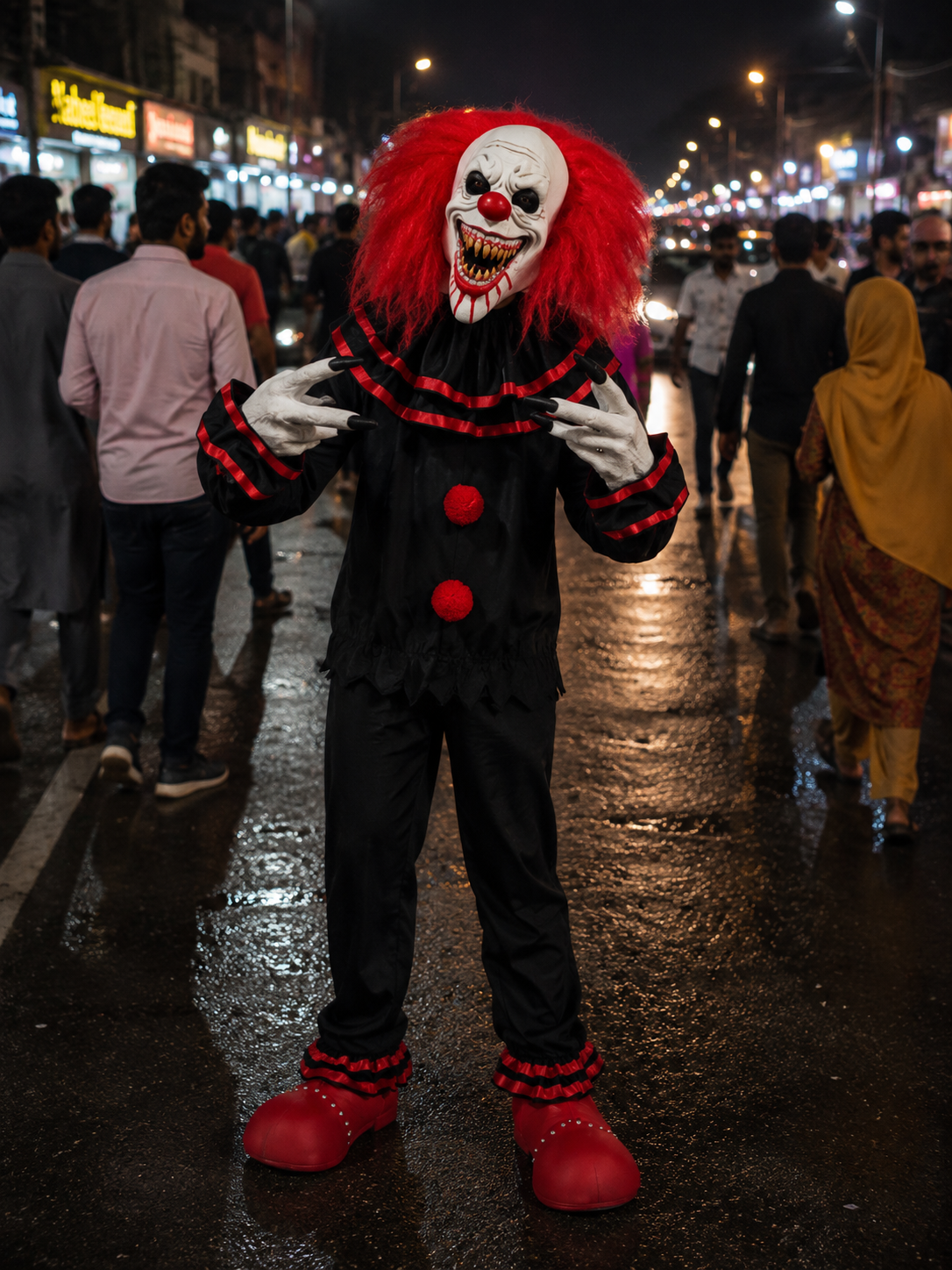
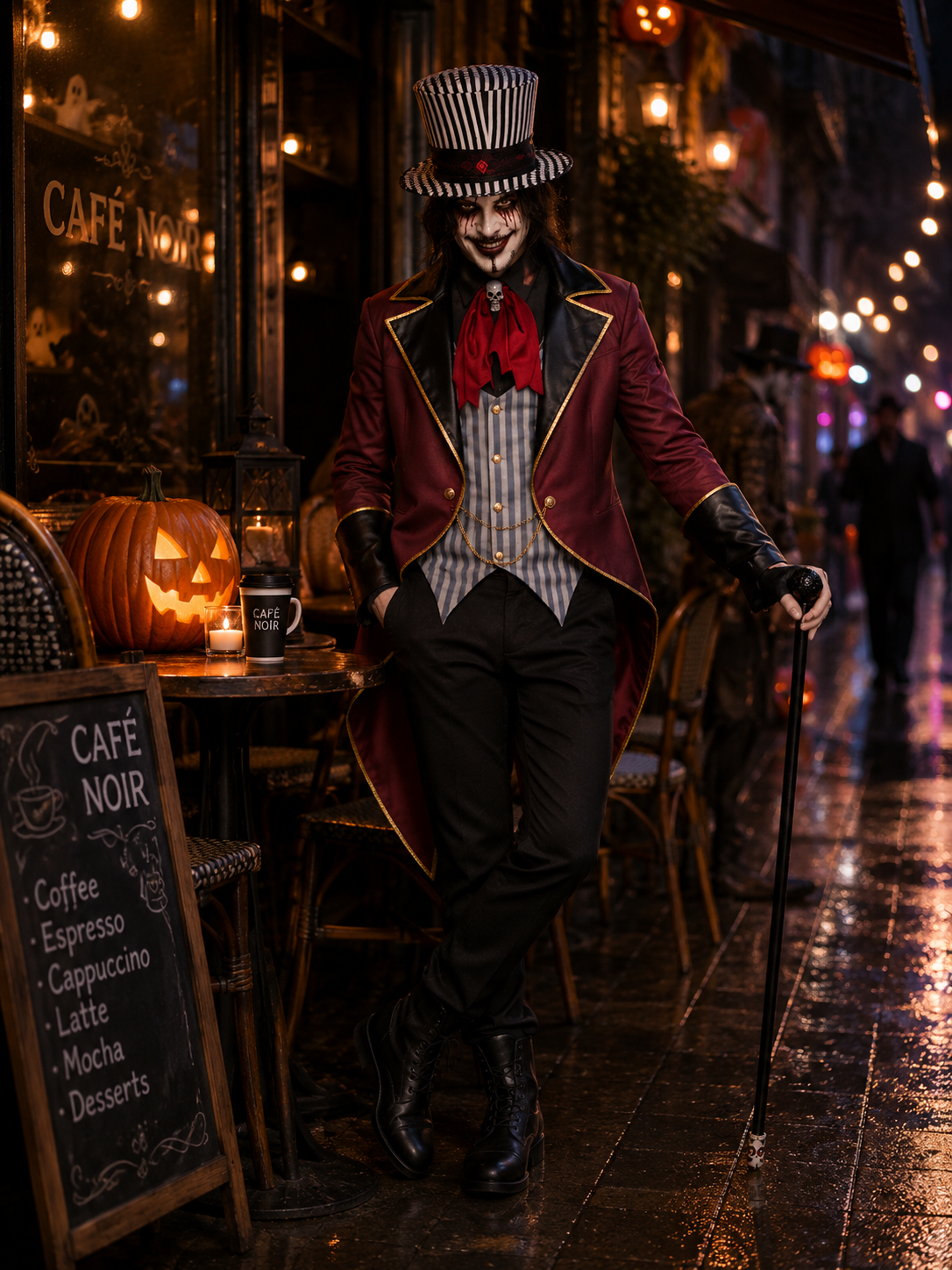
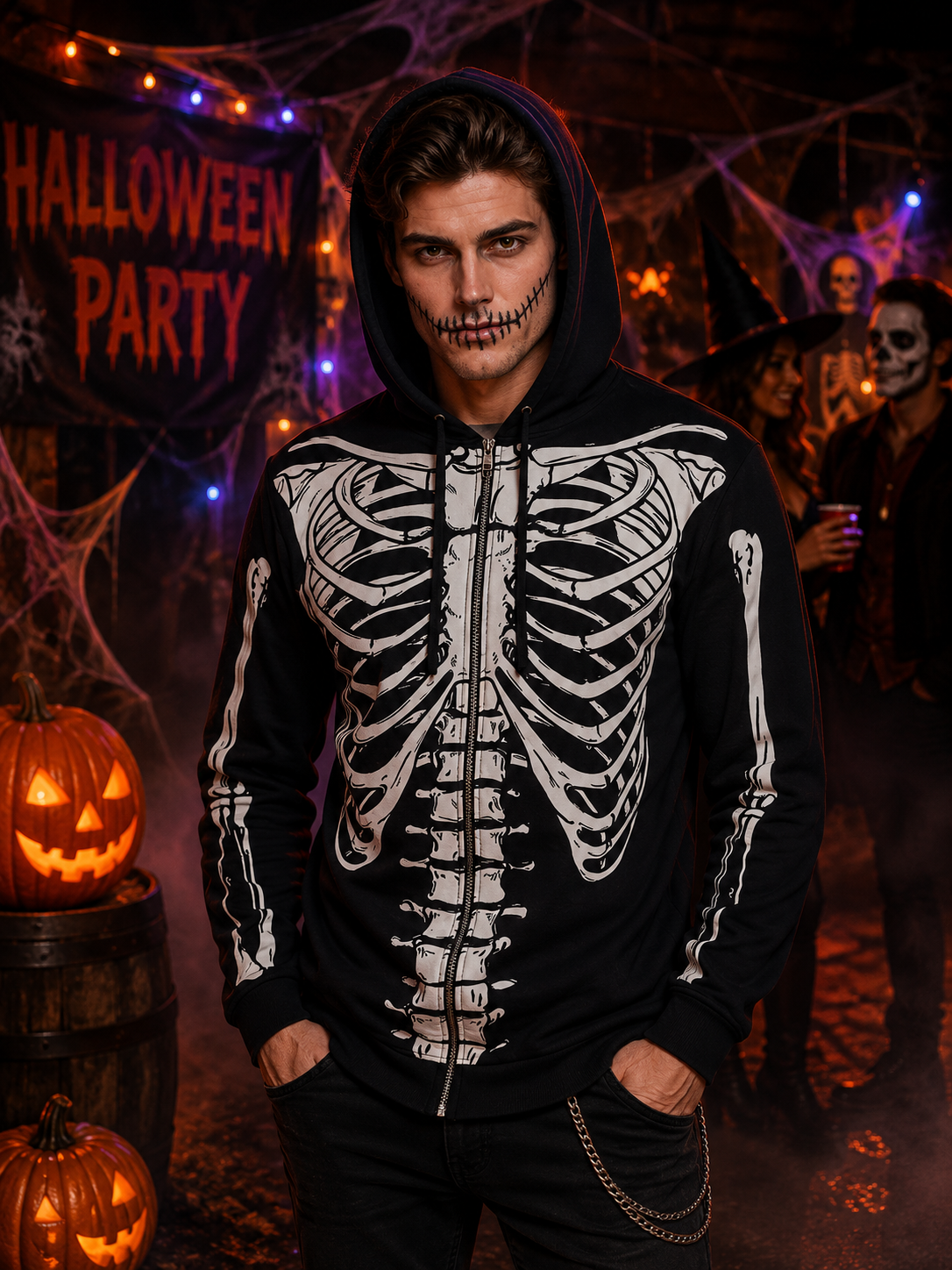
A chunk of this category isn't tied to one franchise at all: think circus, horror and skeleton-themed costumes built around a type rather than a licensed character. The Day of the Dead Skeleton Suit is the clearest example of what separates this kind of piece from a bag-and-mask costume-aisle set: a tailored jacket and trousers with embroidered sugar-skull and floral detailing, a bone-print shirt, sombrero and bow tie included, built to be worn as a genuine suit for the night rather than a printed shirt over jeans. The Skeleton Hoodie Costume takes the same skeletal theme in the opposite direction, a full-zip hoodie printed with rib cage and spine detail that trades a restrictive bodysuit for something you can actually sit down and move in for an entire event. The clown and circus pieces in this category, including the glow-in-the-dark clown costume and the horror mask and robe costume, follow the same logic: a sculpted mask paired with a properly constructed jumpsuit or robe rather than a flat print, so the mask and the garment each hold up as their own piece instead of one dragging the other down.
From Screen Art to a Wearable Anime Jacket
An animated character's design usually exists as flat linework and a couple of saturated colors rather than anything built with real fabric in mind, so getting from that to something a person can wear means choosing the two or three details that read as unmistakably that character once the rest is stripped away. The purple trench-style anime jacket, styled after Future Trunks from Dragon Ball Z, is built around exactly that kind of long, structured trench silhouette in a deep purple tone, cut with proper shoulder structure and a lining rather than sold as a flat costume overlay. It carries the same independence as everything else in this category: not produced, licensed or authorized by Toei Animation, Bird Studio or any other rights holder connected to the franchise, an original garment referencing a widely recognized look rather than a studio-issued reproduction of it.
Costumes Built Around a Type Instead of One Exact Character
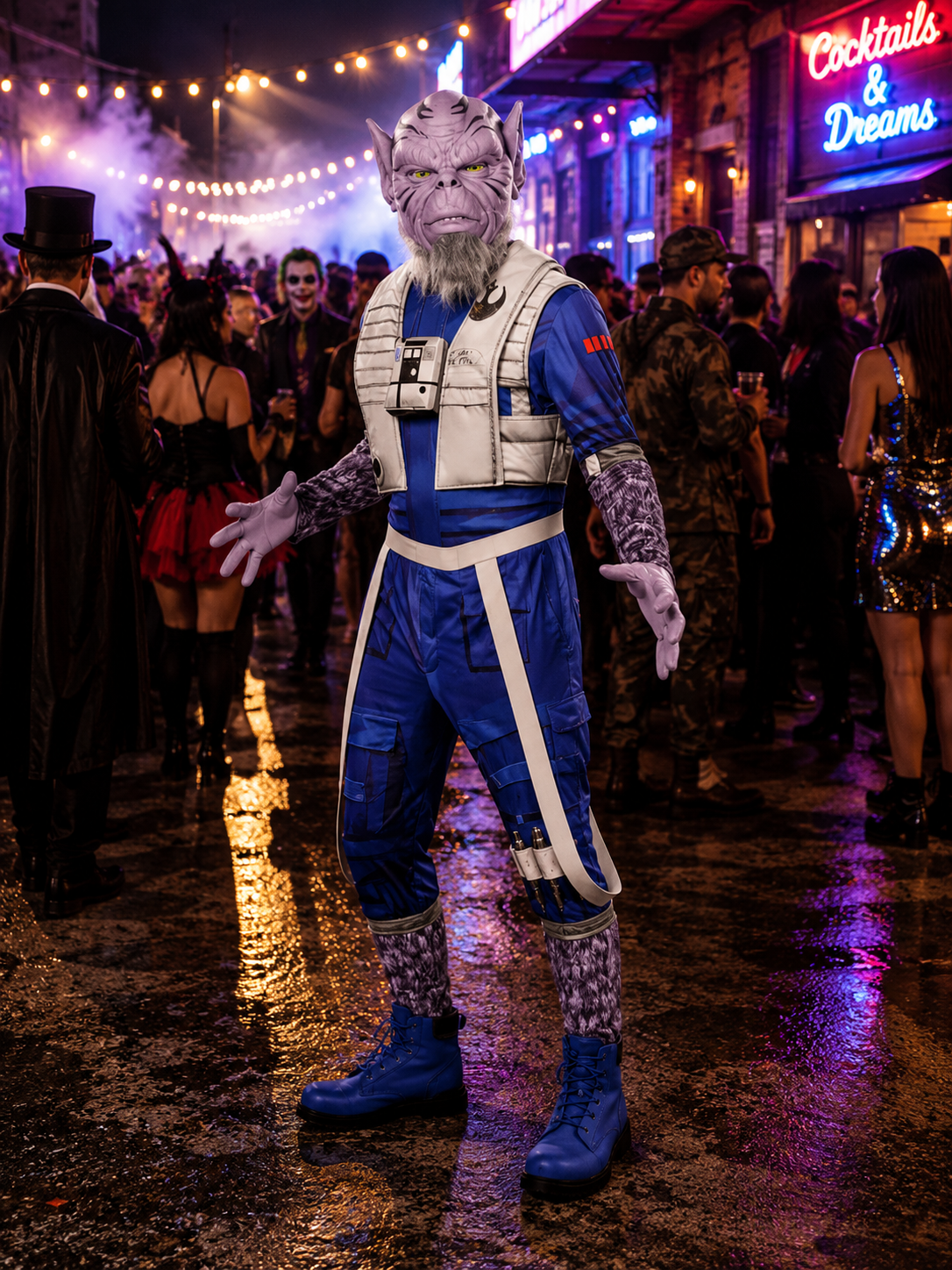
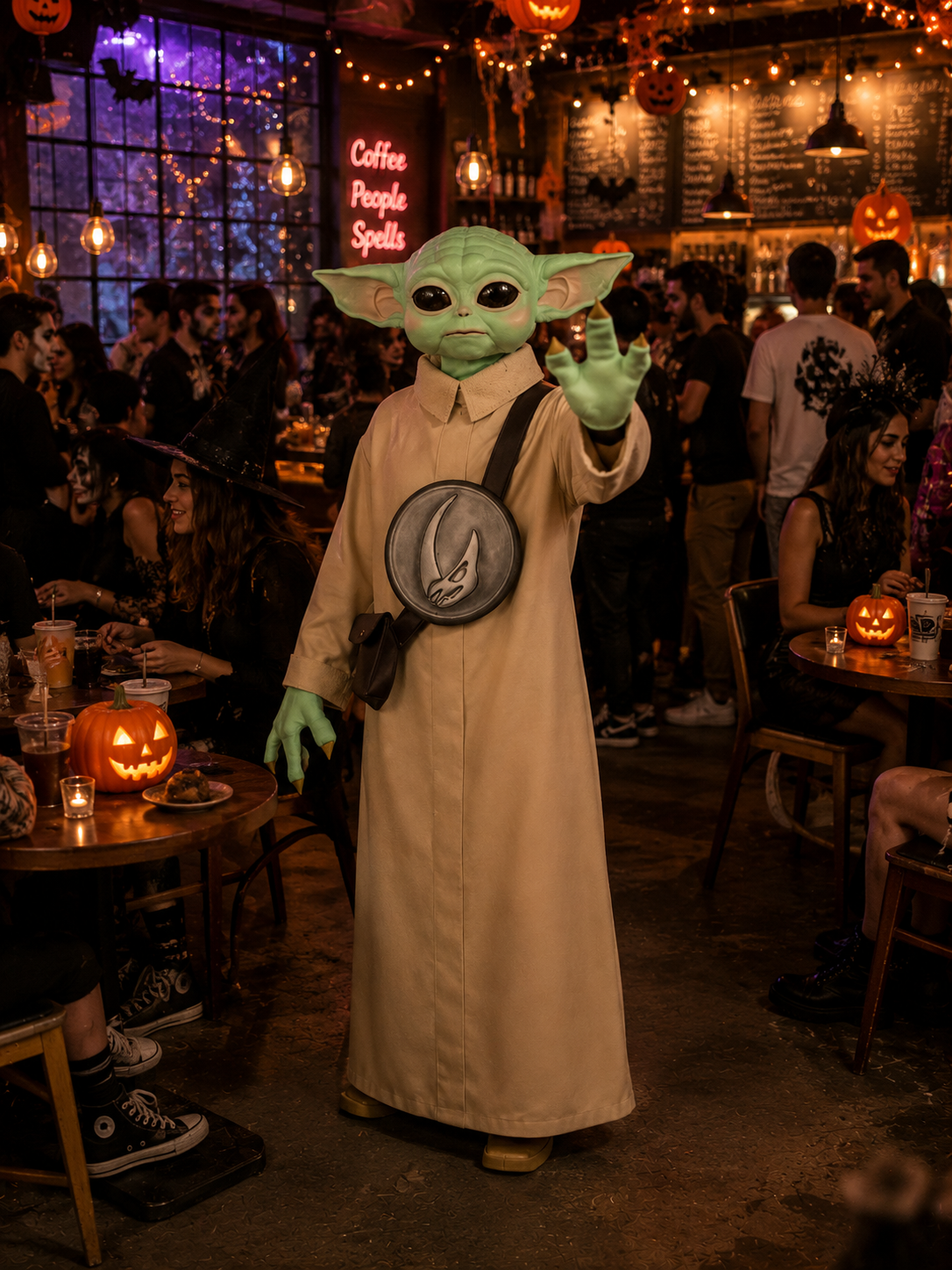
Some of the strongest sci-fi costume design leans on an archetype rather than one film's exact creature or prop work, an armored bounty hunter, a wide-eyed alien companion, a retro racing driver, recognizable on sight without pointing at a single specific source. The alien bounty hunter costume and green alien baby costume both work this way, a tactical jumpsuit with a sculpted mask on one and a robe-and-satchel pairing with a sculpted character mask on the other, each keeping the description at the level of a type rather than naming any one production. The retro racing jumpsuit costume uses the same approach for a different genre entirely, a one-piece suit with bold color-blocked panels and patch-style detailing that reads as motorsport nostalgia generally rather than one driver's actual sponsor livery.
Fabric and Construction for a Full Day at a Convention
A convention day asks more of a costume than a couple of hours at a party does. Attendees are often in costume from the show floor opening through the last panel of the day, standing in photo lines and sitting through long talks, so breathable fabric, enough room to move and seams that survive repeated wear matter more here than they would for a single evening out. Photography adds its own demands too: a matte finish generally reads more accurately under convention-hall lighting and a camera flash than a shiny synthetic that blows out in photos, and a garment that keeps its shape while standing still for a shot matters as much as how it moves. That's the standard the anime jacket above is built to, real seams and a real closure rather than a printed graphic on a thin base layer, meant to be worn for a full con day rather than a single scene.
A Jacket You Keep Wearing vs. a Costume Built for One Night
A character-inspired jacket and a full costume solve different problems, and it's worth being honest about which one actually fits your plans. The jacket doubles as regular clothing that happens to reference a character, easy to style with jeans or a plain shirt long after the event that prompted buying it. A full costume, the Day of the Dead suit among them, is built specifically for the look it represents and generally isn't meant to double as daily wear, which is also why several pieces in this category are cross-filed under Halloween Outfits for anyone shopping from that angle instead. If regular wear is the plan, the jacket route makes more sense; if the goal is one complete look for one occasion, a standalone costume is doing exactly what it's built for.
Anime and Cartoon Here, Live-Action and Real People Elsewhere
This category's job is anime, Western cartoon and general costume territory specifically, which means a few adjacent searches actually belong elsewhere. A character who exists only in a live action film belongs under Movie Outfits, a live action television role sits under TV Show Outfits, and a look built around a real public figure rather than a fictional character, wrestling gear, red carpet tailoring, stage style, sits under Celebrity Outfits. A jacket built around a specific playable video game character or an item confirmed inside a game gets the deepest treatment on the Video Game Outfits page instead. Every one of those runs the same way this category does: made to order, referencing a look rather than a license.
Sizing a Cosplay Piece When Something Else Is Going Over or Under It
Ordering here works a little differently than buying an ordinary jacket, mostly because of what else tends to go with it once it's actually being worn. A lot of cosplay gets layered, a base shirt under a jacket, armor or a harness over a costume, a wig and accessories changing how the whole silhouette reads, so it's worth building that into your measurements rather than sizing off your everyday clothing alone. Most pieces here are listed in adult sizing, though a handful of costume types are also offered in kids sizes on their own product page, so check the specific listing rather than assuming. Everything gets cut only once an order comes in, matched to the chart posted on that product's own page; numbers that fall outside it are worth a note to sales@marcojacket.com before you check out rather than after, so the team can tell you what's realistic. Prefer to pick your own color and material outright rather than choose from what's currently listed here? That runs as its own custom order, detailed on the Custom Leather Jacket page.
Keeping a Costume or Jacket in Shape Between Events
Care here depends heavily on what a specific piece is made of, and a couple of these products spell out their own routine directly: the Day of the Dead suit's embroidered detailing calls for dry cleaning rather than a home wash to protect the stitching, while the glow-in-the-dark clown costume's pom-pom trim holds up better hand-washed, with its sculpted mask wiped clean rather than run through water at all. As a general rule across the rest of the category, hang jackets and costumes instead of folding them for long stretches, since a fold creases fabric in ways that don't always drop out before the next event, and keep sculpted masks, wigs and props stored apart from fabric pieces, since resin, foam and synthetic hair need different handling than cloth does. Direct sunlight and nearby heat sources fade printed color and can warp a foam or resin piece over time, so storing everything somewhere cool and shaded between wears is worth the extra step.
Frequently Asked Questions
Is everything in this category made after I order, or is any of it in stock?
Made after ordering, across the board. There's no pre-built inventory of these jackets or costumes sitting ready to ship the same day.
Are any of these pieces officially licensed by the anime, cartoon or franchise they reference?
No. Every piece here is an independently made design built around a character's general look, not produced, sold or endorsed by the original studio, publisher or rights holder.
Why doesn't the anime jacket carry the character's actual name in its title?
Because it isn't an officially licensed product, so it's described by its own color, silhouette and construction rather than sold under a franchise-branded name. The reference to Future Trunks and Dragon Ball Z is stated directly on the product's own page for anyone comparing it to the source.
Why do the alien and racing costumes avoid naming a specific movie or show?
They're built around a broader type, an armored bounty hunter, an alien companion, a retro racing driver, rather than one production's exact design, which keeps them honestly framed as inspired by a genre instead of implying a partnership with any specific film or franchise.
Are the costumes in this category durable enough for a full day at a convention?
They're built as standalone garments meant for repeated wear rather than a single-use party piece, which matters for a full con day of walking, photo lines and long stretches between panels rather than just an evening out.
How does sizing work if a costume is going to be layered with armor, a harness or a wig?
Worth factoring in before you order rather than after. If props, armor or a base layer are going on with the piece, build that into the measurements you send rather than relying on your everyday clothing size alone.
Are the standalone costumes available in kids sizes?
Some are, listed as a separate option on that specific product's own page; most of the lineup here is adult sizing, so check the individual listing rather than assuming either way.
Does this category ship outside the United States?
Yes, to more than 200 countries. The shipping and delivery policy page has current coverage and delivery timelines.
What if a piece doesn't fit once it arrives?
The returns and refund policy page covers the return and exchange process, including how made-to-order pieces are handled.