A suit looks simple from across a room: a jacket, a pair of matching trousers, one color story. Up close it's a stack of separate decisions, cut, lapel, cloth weight, what holds the chest in shape, that determine whether the finished piece reads as sharp or slightly off no matter how good the photo looks. The suits currently available at Marco Jacket are cut and sewn per order rather than pulled from an existing rack, which means the size chart on each product's own page carries more weight here than it would with a looser, less structured garment.
How the Business Suit Took Shape
The suit as a single matched jacket and trouser set is younger than most people assume. Victorian and Edwardian men of business standing mostly wore a frock coat, or a morning coat for daytime and semi-formal use, both cut to be worn with odd trousers rather than matching cloth. The lounge suit itself traces back to the 1850s and 1860s, originating as loose, casual outdoor wear rather than anything appropriate for an office. Costume historians disagree on exactly when it crossed over into acceptable daily business dress, some point to the later Victorian decades, others to the Edwardian era stretching into the 1910s, so no single year is safe to state as settled fact. What's agreed on is the direction of travel: a garment built for comfort outdoors slowly displaced far more formal daywear as tailoring conventions loosened, and it never gave that ground back.
Reading a Jacket's Front: What the Button Layout Signals
A double-breasted jacket overlaps its front panels and closes with two columns of buttons instead of the single column on a single-breasted cut, and that overlap is doing real structural work, not decorative flourish. The extra fabric across the chest squares off the shoulder line and reads more formal and more deliberate than the single-column version cut from the same cloth. It also asks more of an accurate measurement: an overlapping front that sits even slightly wrong shows up faster than a narrower front would in the same spot. The navy pinstripe suit in this collection keeps that crossover front in a regular, comfort-first cut, while a separate slim-fit version pairs the same crossover style with a closer body line, which is the more contemporary way to wear it without reading dated or oversized.
Notch, Peak, and Shawl: What a Lapel Says Before You Do
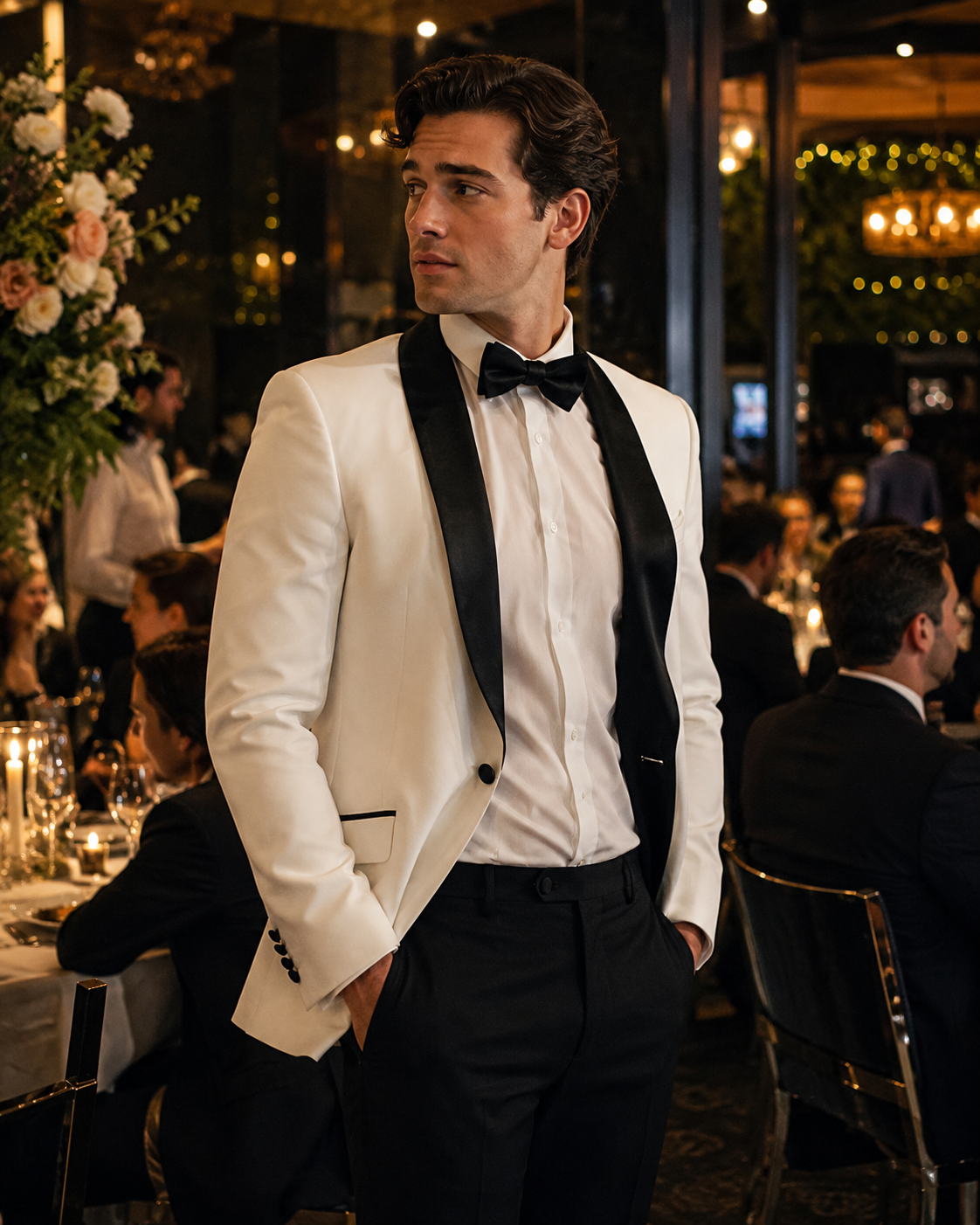
Lapel shape carries its own formality signal, independent of color or cut. A notch lapel, where a small V-shaped notch marks the seam between collar and lapel, is the standard on most business suits and reads as the most versatile of the three shapes. A peak lapel angles upward toward the shoulder and sits higher on the formality scale; it's a common pairing with double-breasted jackets specifically because the wider peak balances the extra fabric across the chest instead of getting visually lost in it. A shawl collar skips the notch entirely, running as one unbroken curved line from collar to button, and it's reserved almost exclusively for tuxedos and black-tie wear rather than everyday business tailoring. Marco Jacket's own product listings describe lapel detailing in general terms rather than naming a specific shape on every page, so it's worth checking a given product's photos or writing in before ordering if lapel shape is the deciding factor.
Wool Weight and Weave: Matching Cloth to the Calendar
Wool remains the standard suiting fiber because it holds a crease, breathes better than most synthetics, and resists wrinkling reasonably well across a full day of wear. Weight, usually described in ounces per yard, is the main variable for matching a suit to a season: a lighter cloth weighing roughly seven to nine ounces per yard moves and breathes better in warm weather, while anything above about twelve ounces holds a crisper, heavier line suited to colder months and more formal indoor settings. A cloth in the nine-to-eleven-ounce middle ground splits the difference and covers most of the year reasonably well, which matters if the plan is one suit rather than a seasonal rotation. Fabric quality within wool is often described by a Super number, such as Super 100s or Super 130s, which measures how fine the individual fibers are rather than how durable or heavy the finished cloth is; a higher number means a softer, smoother hand, not automatically a better-wearing suit for regular use. None of Marco Jacket's current suit listings publish an exact fiber weight or Super number on the page itself, each one points shoppers back to that product's own listing for the specific blend, so confirm it there or by writing to sales@marcojacket.com if a particular weight matters for your climate or occasion.
Inside the Chest: Canvassed Construction vs Fused Interlining
Every suit jacket has a layer of interlining inside the chest and lapel holding the shape, and how that layer is attached changes both how the jacket moves and how long it holds up. A fused jacket has the interlining glued to the back of the shell fabric, the faster and cheaper method, which tends to produce a flatter chest that can start to bubble or separate from the outer cloth after repeated cleaning. A canvassed jacket, whether half canvas or full canvas, has that layer sewn in rather than glued, letting the chest and lapel roll and move with the body instead of sitting stiff, and it generally holds its shape over many more years of wear. Full canvas runs that sewn layer the entire length of the jacket front; half canvas covers just the upper chest and blends it with a fused lower section, a middle ground on both cost and drape. Marco Jacket doesn't state which construction method is used in a given suit on the current product pages, so anyone for whom that distinction matters should confirm it directly before ordering.
Pattern, Color, and Fit Currently in This Collection
The styles available right now cover a fairly wide spread within that crossover-front silhouette. A subtle navy pinstripe sits at the more conservative end, aimed at business and daytime formal settings where the pattern should read as texture rather than announce itself. A step up in pattern complexity, the navy glen plaid suit uses a check historically associated with Scottish tweed and old-world tailoring, understated up close but distinct from a plain weave at any distance. For daytime events that call for something lighter than black or navy, the light gray suit covers formal occasions held in warm weather, like an outdoor wedding, without the visual weight of a darker cloth. At the opposite end of the formality spectrum, a bold red-carpet-style suit trades the quieter patterns above for a color and finish built to hold up under stage lighting and photography rather than blend into a business setting. Fit runs from the regular cuts described above through a dedicated slim-fit option in the same silhouette, so the choice between them comes down to how close to the body the jacket should sit rather than which one is more or less formal.
Suits vs Tuxedos: Where the Line Actually Falls
A tuxedo is a specific kind of suit built for one occasion, black tie, rather than a separate garment category entirely. The detail that actually separates it from a very dark business suit is the lapel facing, traditionally a satin or grosgrain finish rather than matching wool, almost always paired with a peak lapel or shawl collar instead of a notch. That contrast finish, plus the general absence of pattern that keeps evening formalwear looking uniform, is the whole visual distinction once you know to look for it. Marco Jacket keeps black-tie pieces in their own tuxedos category rather than folding them into suits generally, so anyone shopping specifically for an event that calls for black tie should start there instead.
Getting the Size Chart Right for a Made-to-Order Suit
Standard sizing across most of the styles here currently spans XS through 5XL, with the red-carpet-style suit currently listed up through 3XL; each product page carries its own chart and its own size run, so check the specific listing rather than assuming one range applies across the whole category. Custom sizing outside the posted chart is available on request, with measurements provided at checkout or by writing to sales@marcojacket.com ahead of ordering. Because nothing here is finished inventory waiting on a shelf, an accurate chest, shoulder, and waist measurement matters more than it would with a garment that isn't built to a specific body from the start, and it matters even more on that overlapping crossover front, where a slightly off fit becomes visible fastest.
Keeping a Tailored Suit in Shape Between Wears
Every suit page in this collection specifies dry-clean-only care rather than a home wash, since machine washing risks shrinking the cloth or breaking down the structure built into the shoulders and chest. Spot-treating a small mark with a damp cloth between full cleanings avoids sending the whole jacket out more often than necessary. A shaped hanger, not a wire one, keeps the shoulder line from collapsing in storage, and letting a suit rest a day between wears gives the fibers time to recover instead of setting creases in from back-to-back use.
Frequently Asked Questions
Is everything in this category made after I order or is any of it in stock?
Everything currently listed under suits is cut and sewn after an order is placed. There is no finished suit inventory kept on hand for same-day shipping.
What's the actual difference between a double-breasted and a single-breasted jacket?
A double-breasted jacket overlaps its front panels and fastens with two columns of buttons, which squares off the shoulder and reads more formal than a single-breasted jacket in the same fabric. It's also less forgiving of an inaccurate measurement, since the overlapping front makes a poor fit more visible across the chest.
What does a peak lapel signal that a notch lapel doesn't?
Mostly a step up in formality. A notch lapel is the standard, versatile choice for business and semi-formal settings, while a peak lapel sits higher on the formality scale and is commonly paired with an overlapping front because the wider shape balances the extra fabric across the chest.
What's the difference between a canvassed jacket and a fused one, and does it matter for a suit I'll only wear occasionally?
A canvassed jacket has its interlining sewn into the chest and lapel, letting it move naturally with the body and hold its shape for years. A fused jacket has that layer glued on instead, which is cheaper but can bubble or separate from the fabric over time. For occasional wear the difference matters less than it would for a suit worn weekly, but it's still worth confirming with the seller if long-term shape retention is a priority.
Is a tuxedo just a black suit, or is it a different garment entirely?
Different in a few specific ways. A tuxedo carries a satin or grosgrain lapel facing rather than matching wool, is almost always paired with a peak lapel or shawl collar instead of a notch, and is built specifically for black-tie occasions. Marco Jacket keeps those pieces in a separate tuxedos category rather than mixing them into suits generally.
What fabric weight should I choose for a suit meant to work across most of the year?
Wool weighing roughly nine to eleven ounces per yard is the standard compromise for a single suit meant to cover multiple seasons rather than one specific climate. Lighter cloth around seven to nine ounces suits warm weather and daytime events better, while heavier cloth above twelve ounces holds a crisper line for colder months and formal indoor settings.
Can sizing be adjusted if my measurements don't match the standard chart?
Yes. Send your measurements to sales@marcojacket.com before ordering and the team can confirm what's adjustable for the specific style you want.
How long does a made-to-order suit take before it ships?
Orders are generally processed within 10 to 12 business days before shipping begins, with transit time on top of that depending on the shipping method chosen. Peak periods or unusual demand can extend processing, so build in some buffer if the suit is needed by a fixed date.
Does this category ship outside the United States?
Yes, shipping is available to a large number of international destinations. The shipping and delivery policy page covers carrier options, transit estimates, and a few address types, like PO boxes and military addresses, that some carriers can't reliably service.
What if a suit doesn't fit once it arrives?
The returns and refund policy page covers the return window and condition requirements. Because these are cut per order, checking the size chart carefully before ordering matters more than it would with off-the-rack sizing.