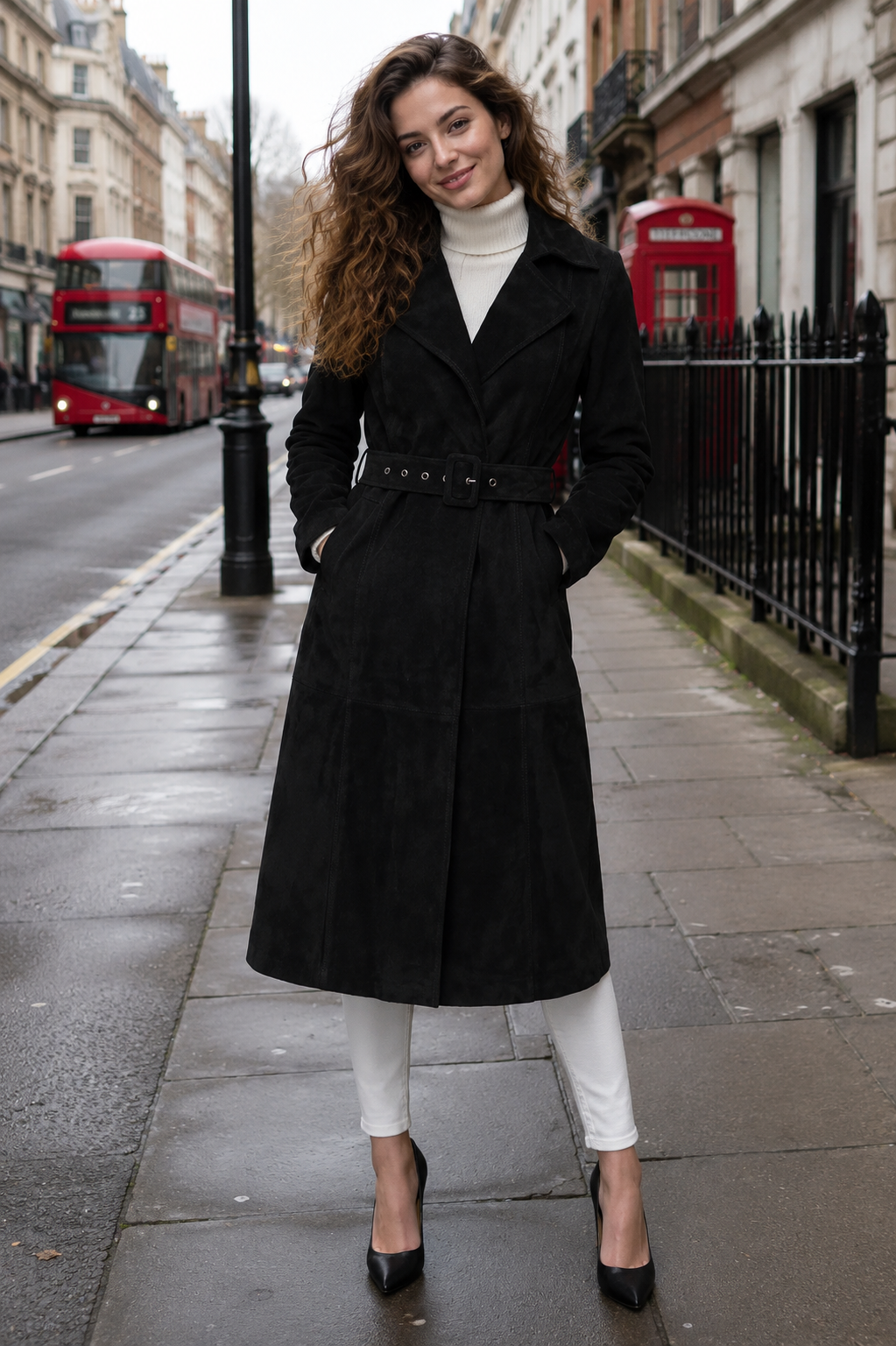
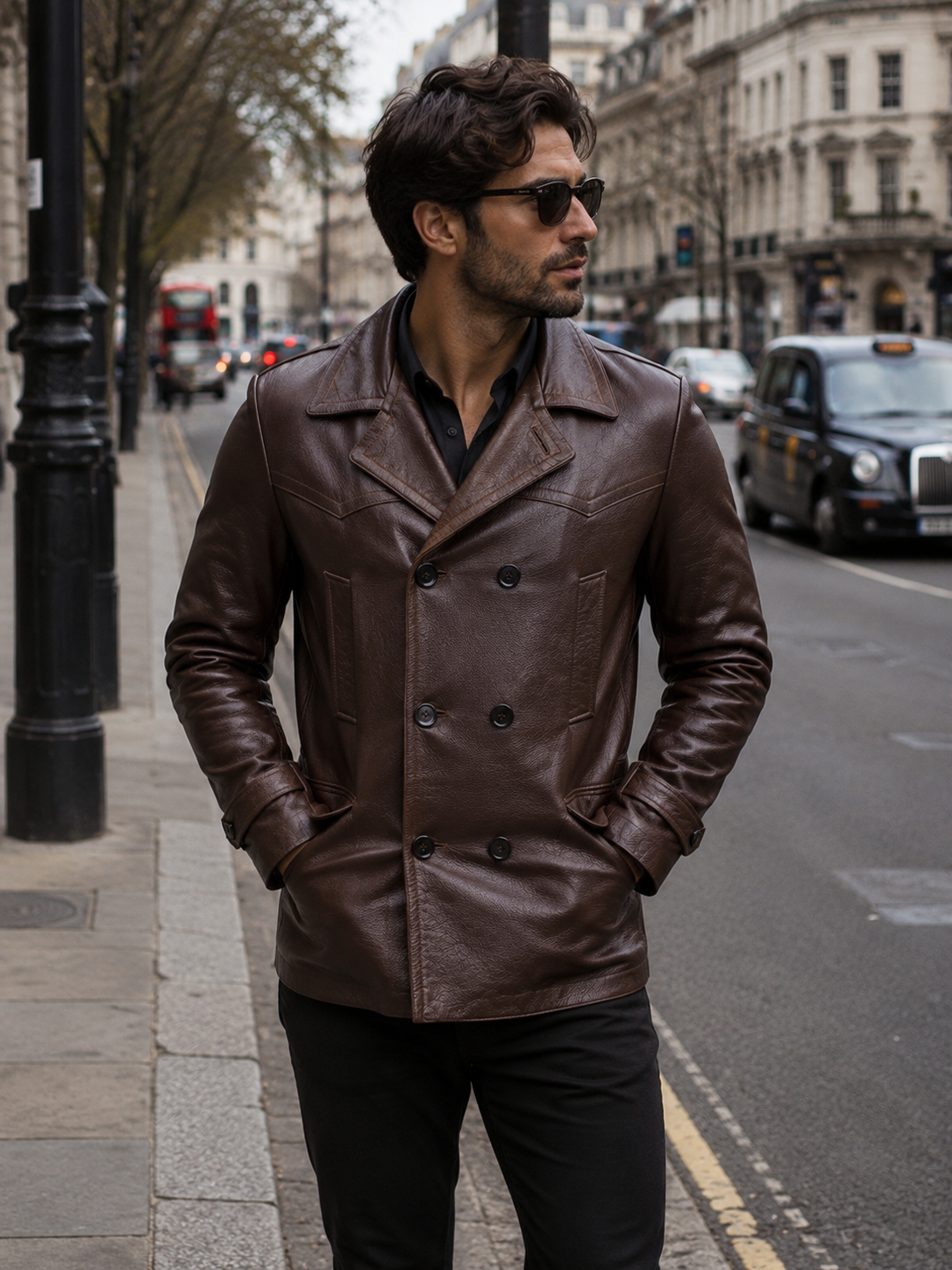
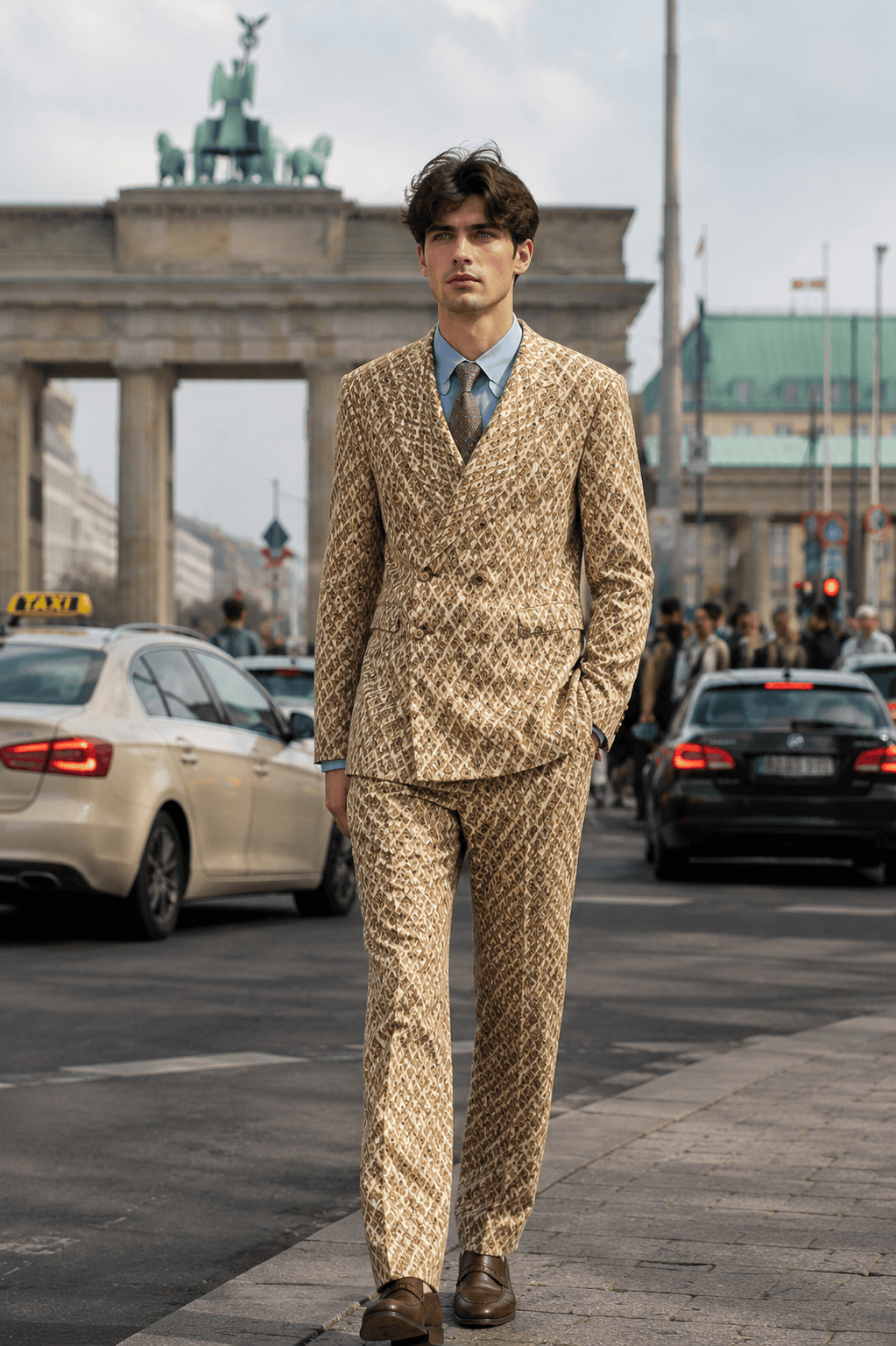
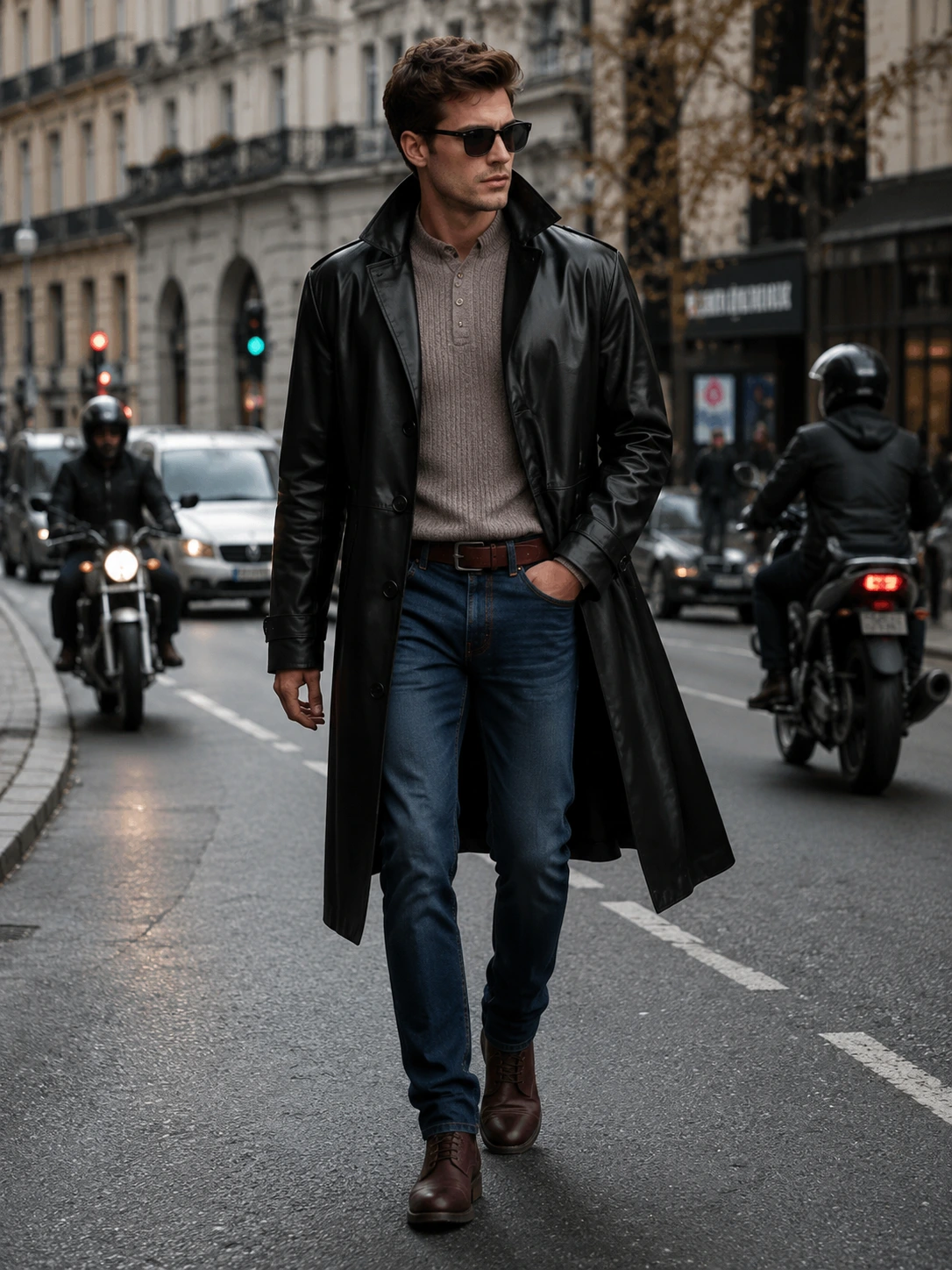
Coats sit apart from the rest of the Marco Jacket catalog by length and purpose rather than by material alone. Trench coats, wool coats, overcoats, pea coats and leather coats all belong here, built to go over a suit, a sweater or another layer instead of standing in as the main piece the way a jacket does. Every coat on this page is cut and sewn once an order comes in, not pulled from finished stock sitting in a warehouse.
What Actually Separates a Coat From a Jacket
Length and role are the real dividing line, not fabric. A jacket is generally built to be the main layer, worn over a shirt or a base layer and nothing else. A coat is built to go over something, a suit jacket, a sweater, another layer entirely in genuinely cold weather, which is why coats run longer than jackets, anywhere from hip length at the shortest to knee length or beyond, and why they're cut with more room through the chest and shoulders to fit over what's underneath. That extra room is a deliberate design choice tied to the coat's job as an outer layer, not a looser fit for its own sake.
Where the Trench Coat's Silhouette Comes From
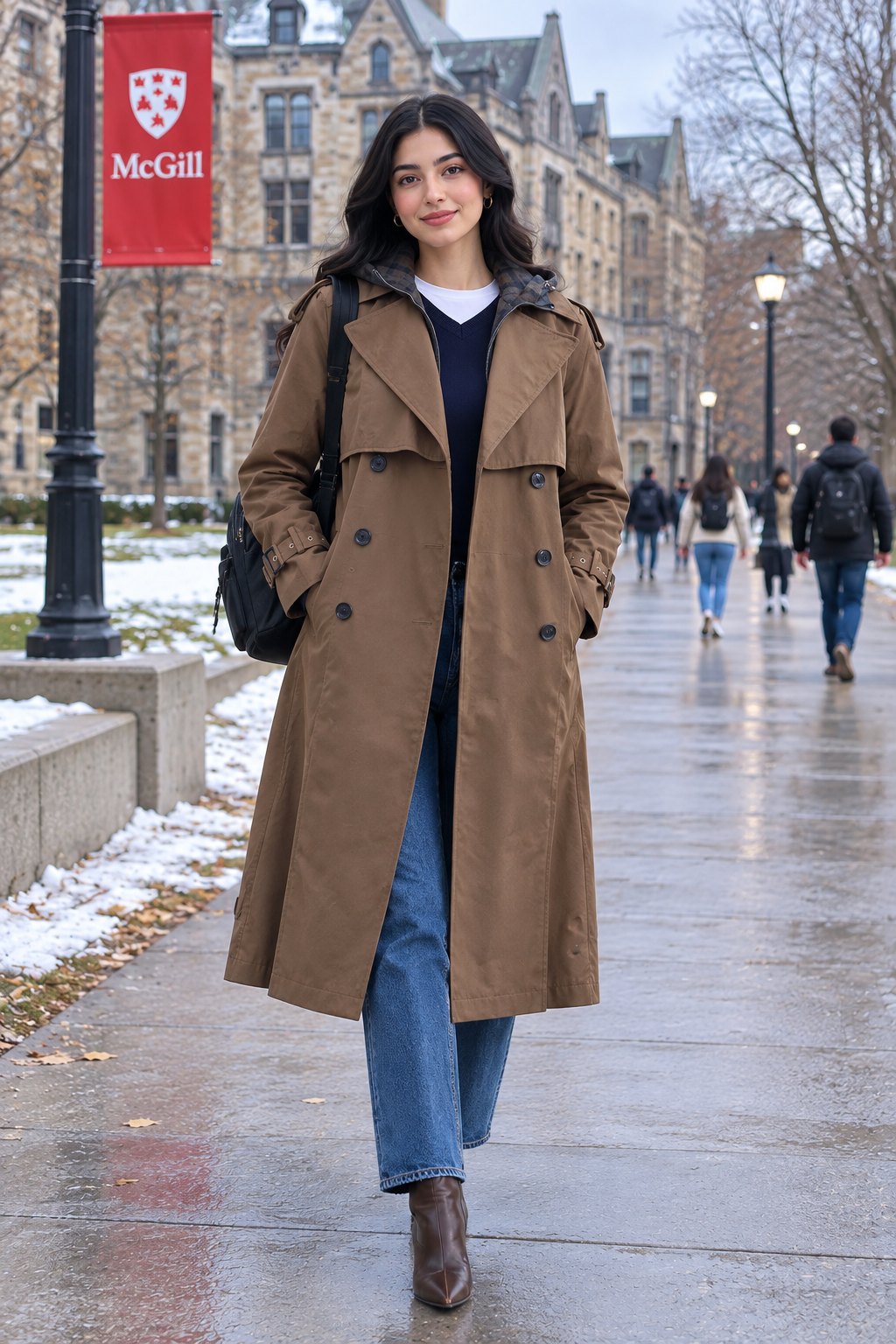
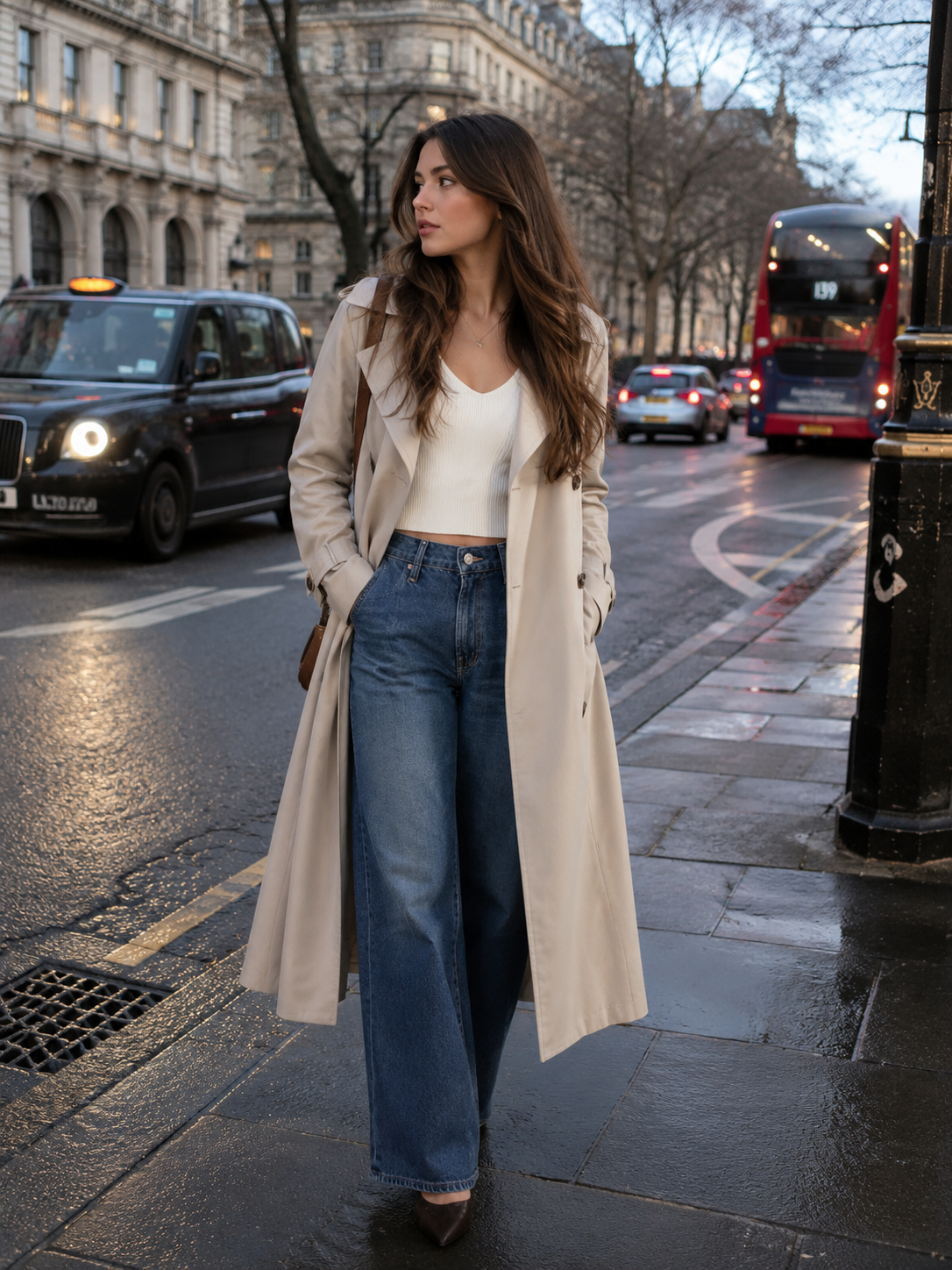
The trench coat's details trace back to officer outerwear from the First World War rather than fashion styling. British officers needed something lighter and more mobile than the heavy wool greatcoats issued to enlisted soldiers, and a handful of British outerwear makers, Burberry and Aquascutum among the best documented, had already been developing weatherproofed, tightly woven fabrics and belted coat designs in the years around that war. Exactly which company built the first version, and precisely when, is still debated even among fashion historians, so it's worth treating any single firm date with some skepticism. What's better established is the function behind the details: a belt to cinch the coat against wind and rain, a storm flap across the shoulder to keep equipment straps from chafing, a collar built to close high against the neck. Those are the same details that make a trench coat read as structured, formal outerwear today rather than a casual jacket. The Wool Blend Trench Coat keeps that traditional double-breasted, belted shape in a classic wool blend, while the Curator Crepe Oversize Trench Coat carries the same detailing into a looser, more draped fit. The trench coats category covers the style in full, including field-length and technical fabric versions beyond what's summarized here.
The Pea Coat's Naval Roots
The pea coat's naval history runs back centuries rather than decades, worn by sailors in European and American navies long before it became civilian outerwear. Its short length wasn't a style choice originally: a coat that stopped at the hip instead of the knee was less likely to tangle in rigging or deck equipment during actual shipboard work. The double-breasted front and wide, foldable collar served a practical purpose too, the extra layer of overlapping wool at the chest blocked wind better than a single-breasted cut, and the collar could be turned up to close off the neck in bad weather. Traditional naval pea coats used a dense, tightly woven wool, heavy enough on its own to resist wind and rain without a separate shell fabric, which is part of why a pea coat still reads as a warmer, more substantial garment than its relatively short length would suggest. The pea coats category carries this shorter, naval-influenced cut on its own for anyone who wants coat-level warmth without the coverage of a full-length style.
Wool Coats, Overcoats and Fabric Weight
Overcoat and wool coat aren't strictly interchangeable terms, though the line between them blurs in everyday use. An overcoat generally refers to a longer, heavier piece meant to clear a suit jacket underneath and stand up to real winter cold, while a lighter wool coat is built more for transitional weather than the depth of winter. Wool itself does most of the actual work regardless of which term gets used: a heavier, more densely woven fabric traps more air and holds more warmth than a lighter weave, which is why a coat described as midweight or heavyweight wool reads noticeably warmer than one cut from a lighter suiting-style fabric, independent of length or color. A tightly woven, felted wool like melton also blocks wind better than a looser weave, which is part of why it shows up so often in outerwear rather than in suits. The wool coats and overcoats categories each lean toward a slightly different weight and formality, worth comparing directly if wool specifically is what you're after.
Leather Coats: A Jacket Silhouette Stretched to Coat Length
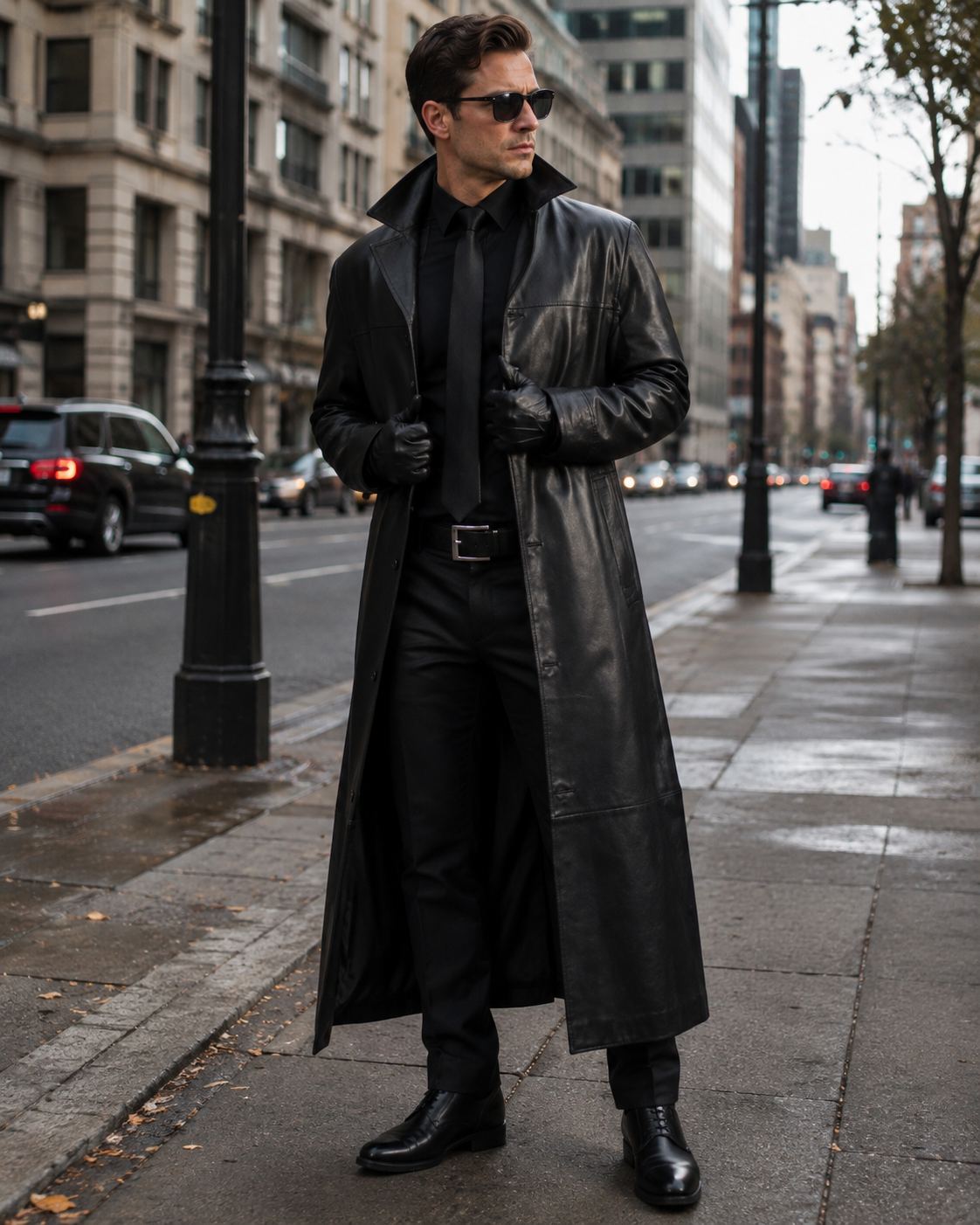
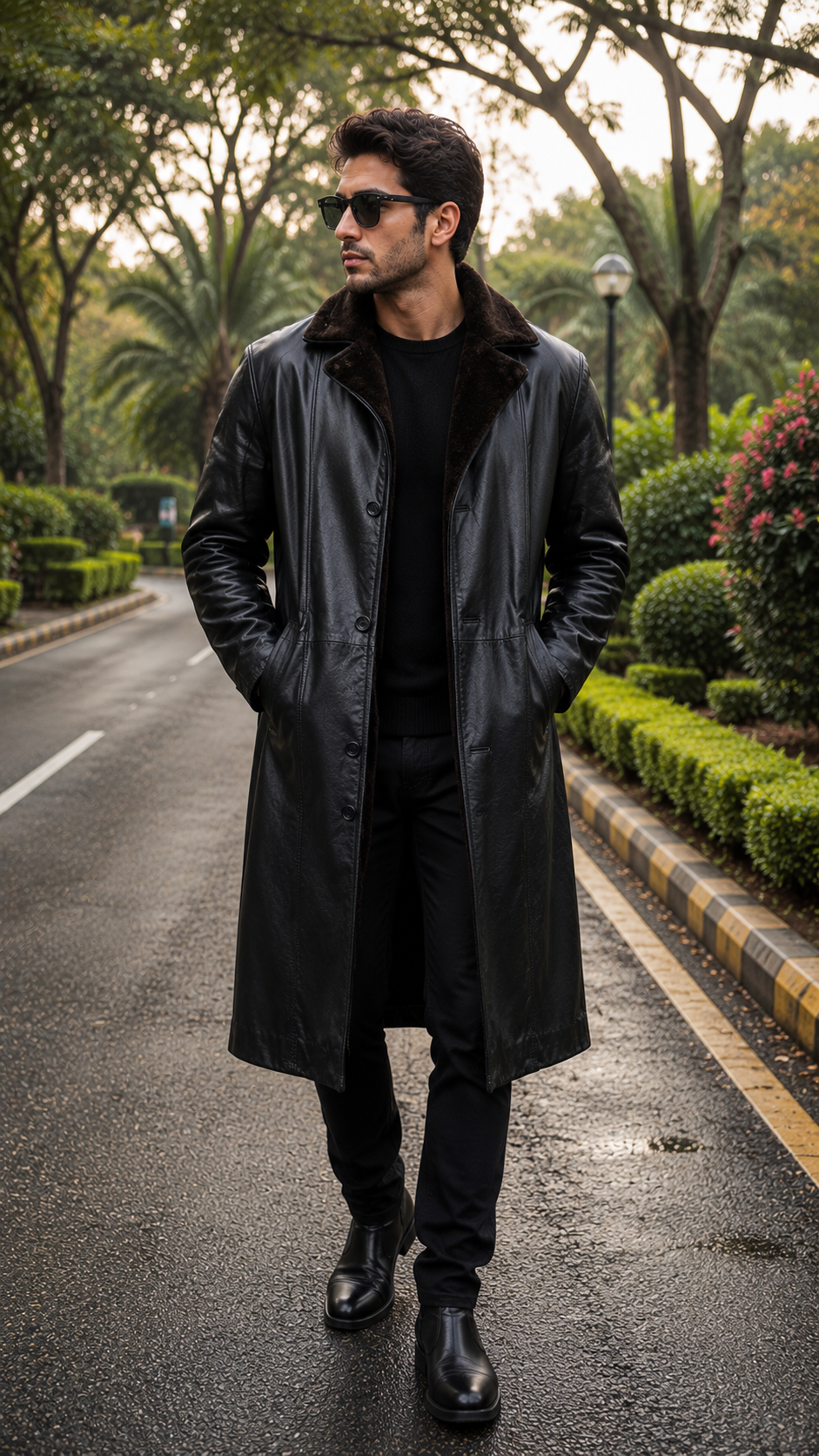
A leather coat generally takes an existing jacket silhouette, a biker cut, an aviator shape, a plain car coat line, and extends it to hip length or beyond, with extra room built through the chest and shoulders to fit over a sweater the same way a wool overcoat does. That's a different design goal than a leather jacket, which is cut to be the main layer rather than an outer one, and it's why sizing between a leather jacket and a leather coat in this catalog isn't directly interchangeable. The Mens Shearling Black Leather Coat pairs that extended coat length with a genuine shearling lining for real cold-weather insulation, while the Marsha Womens Cognac Leather Car Coat takes a shorter, more tailored car coat length instead, built for a smarter look rather than severe cold. The leather coats category covers the full range of this style, including shearling-lined, car coat and vintage-finish options.
How Coat Length Relates to Formality and Layering
Length is the fastest way to read how formal and how warm a coat is meant to be. A pea coat sits at the hip and reads casual to smart-casual, sized to layer over a sweater without much bulk. A trench coat or overcoat runs to the knee or below and reads as formal outerwear, built to go over a suit rather than casual clothing. A leather coat tends to land in between, warmer and more rugged than a trench but often shorter than a full overcoat, depending on the specific cut. None of these lengths is a strict upgrade over another; the right one depends on what's going underneath and how dressed up the rest of the outfit needs to look.
Choosing Between These Styles
Climate and what the coat needs to go over matter more than color when narrowing a style down. Genuinely cold, harsh weather points toward a heavier wool overcoat or a shearling-lined leather coat, where warmth matters more than a sleek profile. Milder cold and dressier occasions suit a classic trench coat or a tailored leather car coat instead. A pea coat works well as a middle ground, warmer than a plain jacket without the bulk or formality of a full-length coat. If a specific material is the deciding factor rather than length or occasion, the leather coats and wool coats categories narrow the catalog down to just that material.
Sizing and How Made-to-Order Works
Nothing in this category is pre-made and sitting on a rack; each coat is cut and sewn once your order comes in, built against the size chart posted on that specific product's page. Since a coat is meant to fit over other layers, it's worth ordering with what you'll actually wear underneath in mind rather than sizing it as if it were a standalone jacket. If your measurements fall outside the posted chart, email sales@marcojacket.com before ordering and we'll confirm what's adjustable. A leather piece built entirely around your own measurements, rather than an adjusted standard size, is handled separately through the Custom Leather Jacket page.
Caring for Different Coat Materials
Wool coats need a professional dry cleaner familiar with tailoring rather than a home wash, which risks shrinking or distorting the shape permanently. Leather coats take the same care as any genuine leather piece, a soft dry cloth for everyday dust, a leather-specific conditioner every few months, and a specialist for anything beyond light surface marks, never a washing machine or a standard dry cleaner. Shearling-lined leather coats need extra attention paid to the wool lining specifically, since it can felt or mat if it's handled the wrong way, so a specialist familiar with shearling rather than a standard leather cleaner is worth seeking out.
Frequently Asked Questions
Are any of these coats kept in stock, or is everything made to order?
Everything is made to order. There's no finished coat inventory sitting ready to ship the same day.
What actually separates a coat from a jacket in this catalog?
Mainly length and purpose. Coats run longer, usually to the hip at the shortest and the knee or below at the longest, and are cut to layer over an outfit rather than serve as the main piece.
Why does a trench coat have a belt and a shoulder flap?
Both trace back to the coat's origins as officer outerwear during the First World War, a belt to cinch the coat against wind and rain and a storm flap to keep equipment straps from chafing, rather than decorative details added later.
Why is a pea coat cut so much shorter than an overcoat?
It comes from naval work wear, where a hip-length hem was less likely to catch on rigging or deck equipment than a longer coat would. That practical origin is also why it reads more casual than a full-length overcoat today.
Is the leather in these coats genuine, or a synthetic alternative?
The product page for each leather coat states the material directly, so it's confirmed per item rather than assumed across the whole category.
Does this category ship to countries outside the US?
Yes, this category ships internationally in addition to the US. The shipping and delivery policy page lists current coverage and any excluded countries.
What happens if a coat doesn't fit the way I expected?
The returns and refund policy page walks through the process and timelines, including anything specific to made-to-order pieces.
How should the wool pieces be cleaned or cared for?
A professional dry cleaner familiar with tailoring is the safest route for the trench, overcoat, wool coat and pea coat styles. Spot cleaning at home works for minor marks, but a full wash at home risks shrinking or distorting the shape.
Can sizing be adjusted if I don't fit the standard chart?
Email sales@marcojacket.com with your measurements before ordering and we'll confirm what's possible, or use the Custom Leather Jacket page mentioned above for something built entirely around your own measurements.
Should I shop this category or go straight to a specific coat category instead?
Either works, but the style-specific categories, trench, wool, pea, leather, are the better starting point once you already know which length and material you want, since each one carries only that style.