A hood changes what a jacket is for. It's the difference between a piece that protects your head and neck in wind, rain or real cold and one that only covers the torso, and the way that hood is actually built, sewn into a knit fleece, cut from a technical shell, or stuffed with the same insulation as the body, changes how it performs almost as much as the jacket underneath it does. The styles currently available here cover three genuinely different approaches rather than one hood shape repeated across every build.
What Separates a Hood From a High Collar
A collar sits at the neck and stops there; a hood is cut with enough fabric to actually cover the crown of the head, usually with some way to adjust the opening so it doesn't slide back or let wind in around the face. That adjustment is normally a drawcord, sometimes paired with a toggle or cord lock so it holds its cinch instead of loosening as you move. A storm flap, an extra strip of fabric laid over a zipper, is a related but separate detail; it blocks wind and rain from working through the zipper teeth themselves, and several technical shells pair one with a hood for a reason, since a sealed hood does little good if water is getting in at the front closure instead.
Where the Hooded Jacket Actually Comes From
The hood as a garment feature predates modern outerwear by centuries. Arctic peoples including the Iglulik and Inupiat built pullover garments with an integrated hood as standard construction, not an add-on, using caribou hide for winter versions and sealskin for summer ones, with fur trim positioned near the neck opening on some regional designs to stop ice from building up around the wearer's breath. The English word "parka" traces to the Nenets language and first appears in an English text from 1625; "anorak," from Greenlandic, didn't enter English until 1924. Both describe the same basic idea, a pullover or closing garment built around a hood as the primary weather barrier, long before the word showed up on a retail tag. Marco Jacket's parka jackets category picks up that same hooded-outerwear lineage in a heavier, longer silhouette than anything grouped here.
Fixed, Detachable and Stowaway: Three Ways a Hood Attaches
Not every hood is sewn on the same way. A fixed hood is stitched permanently into the collar and can't come off, which usually means a cleaner wind seal since there's no seam or hardware where cold air can sneak through. A detachable hood connects with snaps, a zipper, or both, letting the wearer remove it entirely when it's not needed, a construction that traces back to military cold-weather design; the US fishtail parka's M-51 update added a detachable hood liner, and the later M-65 version kept that removable hood while dropping the fur trim earlier models used. A stowaway hood splits the difference, permanently attached but built to fold down and tuck into a pocket in the collar when it's not in use, so it's always there without flapping around on a day it isn't needed.
Fleece Hoods Built From a Knit, Not a Cut-and-Sewn Shell
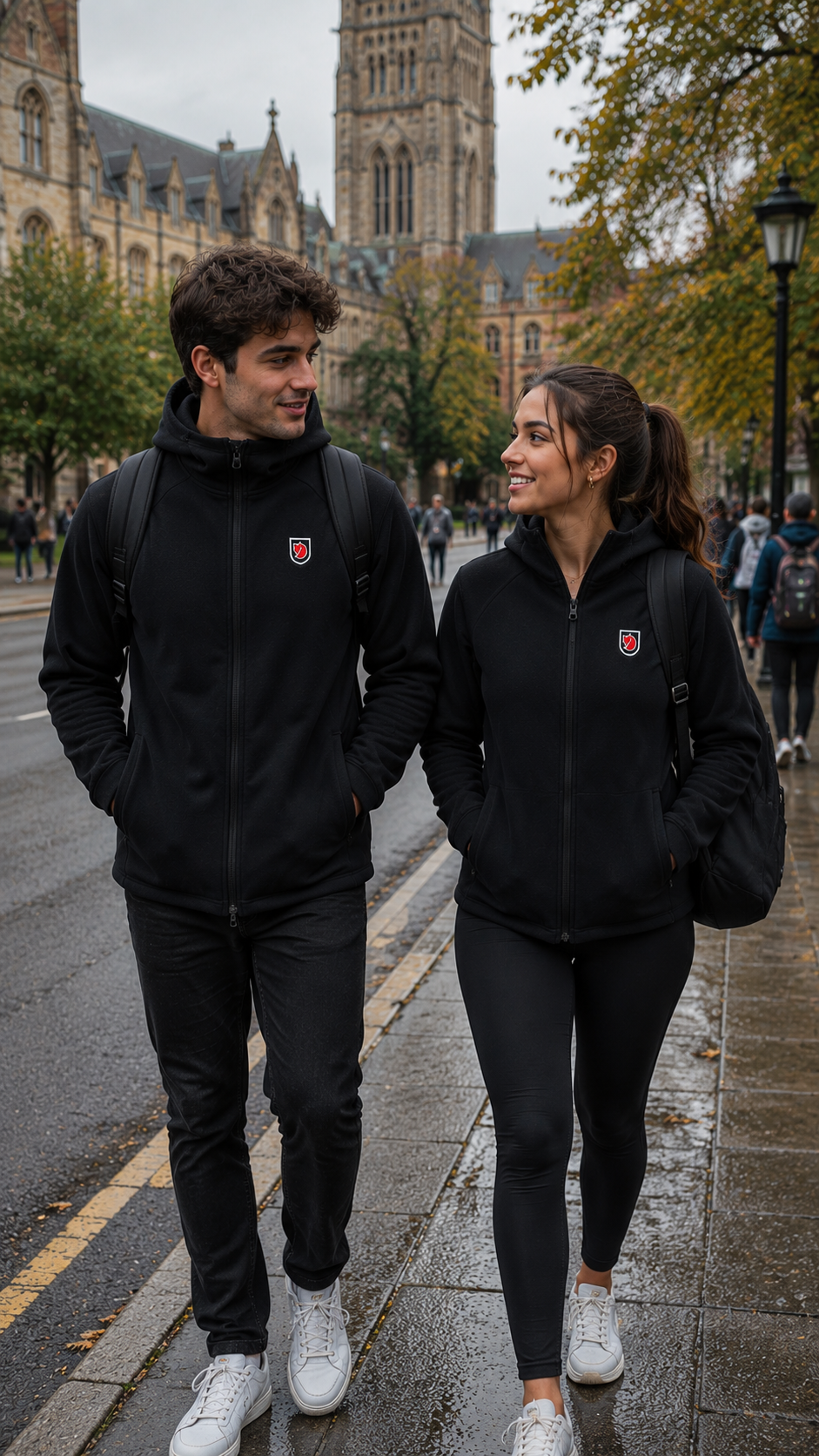
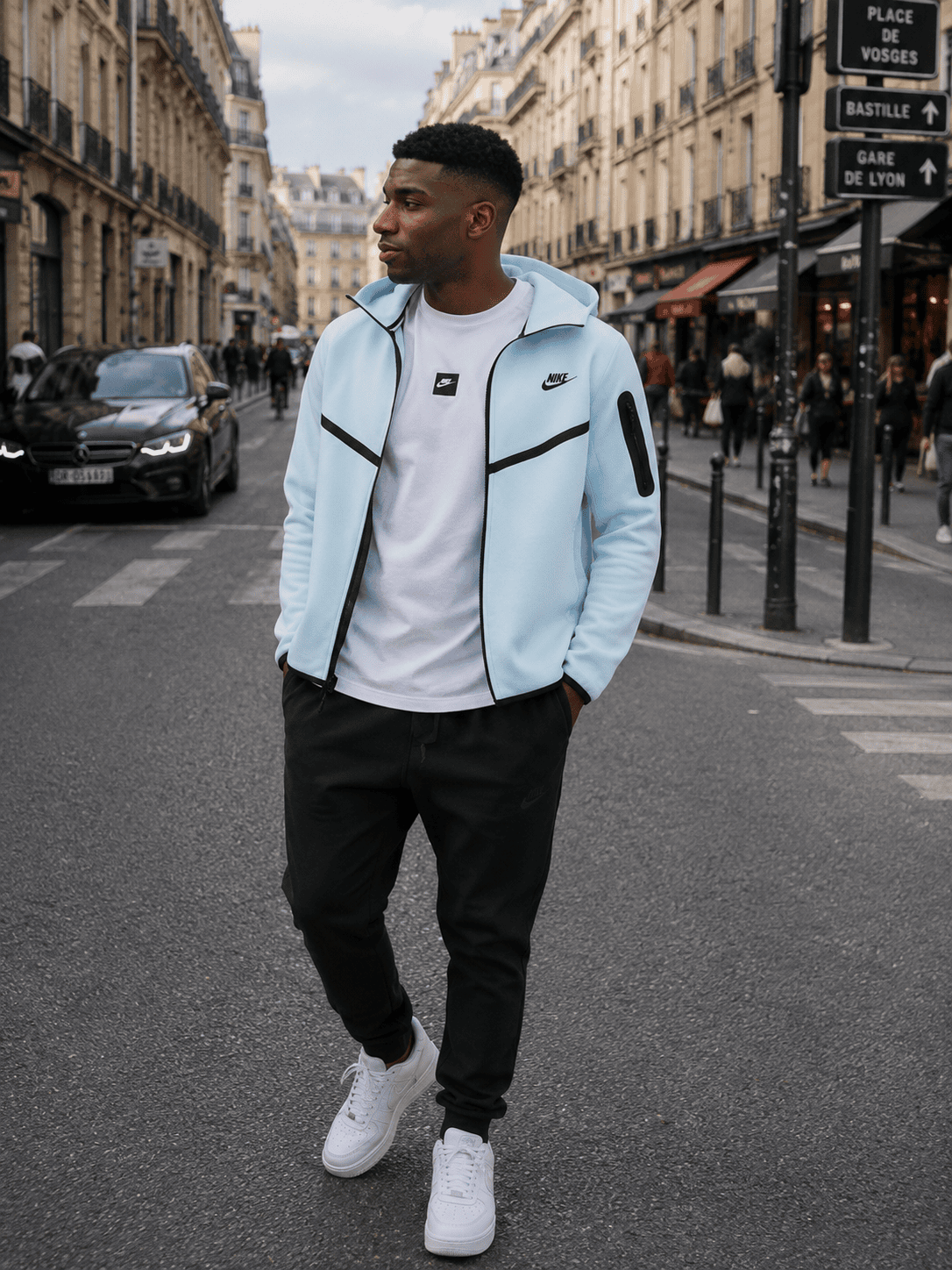
The Expedition Fleece Hoodie and the Keb Fleece Hoodie both build their hoods from the same brushed, high-loft fleece as the body of the jacket rather than switching to a separate shell fabric at the head. Both use a structured hood designed to hold its shape and stay in place during movement instead of collapsing flat, with an adjustable drawcord doing the actual cinching. Because fleece traps warmth through its knitted pile rather than a waterproof coating, a fleece hood reads as a cold-weather piece first and a rain piece second, better suited to wind and dry cold than a real downpour. The mens fleece jackets category goes deeper on that same brushed-knit construction across both hooded and non-hooded builds.
Technical Shell Hoods: Storm Flaps, Mesh Linings and a Snorkel Cut
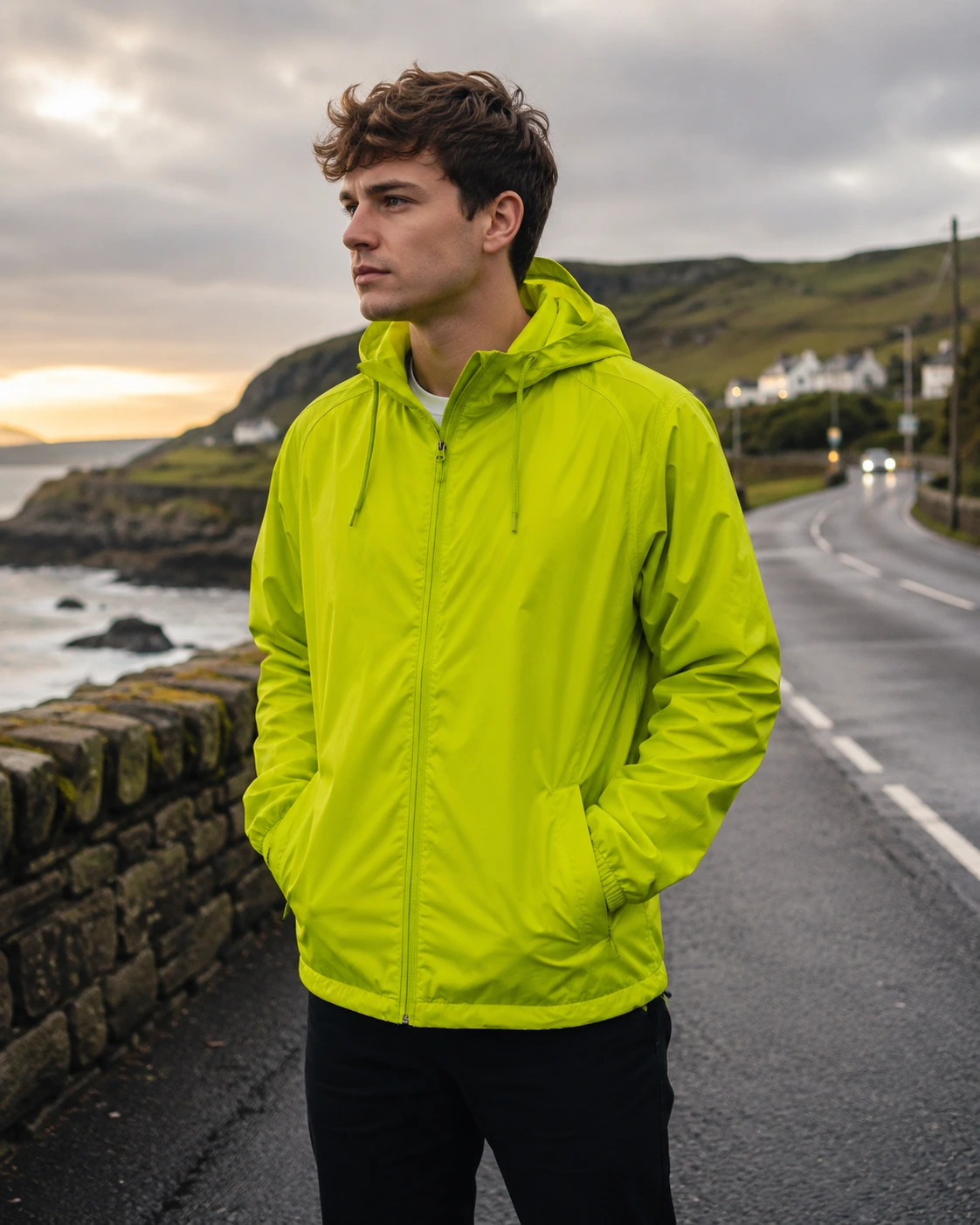
Woven shell fabric behaves differently under a hood than knit fleece does. The Hoodie-Style Zip Windbreaker Jacket pairs a mesh-lined hood with a storm flap over the main zipper, so the hood cinches down for genuine rain protection or sits open as a casual layer when the weather doesn't call for it. The Hooded Windbreaker Jacket uses an unlined hood built with real shape rather than a flat panel, holding its form when cinched instead of collapsing against the head. The Quarter Zip Windbreaker Jacket goes furthest in the other direction with a snorkel-style hood, cut deeper and more enclosing than a standard hood so it pulls up and forward for coverage against wind and driving rain, the same basic idea the US military's snorkel parka used in the early 1950s for genuinely extreme cold. The mens windbreakers category runs the same shell construction in non-hooded cuts as well.
Insulated Hood Versus Shell Hood: Not the Same Job
A hood built into an insulated jacket and a hood built into a shell aren't solving the same problem. An insulated hood usually carries the same fill as the jacket body, so it's warming the head and neck directly as part of one connected system, which is why it tends to sit closer and snugger than a shell hood does. A shell hood is often unlined and cut slightly roomier, sized to fit over a separate insulating layer, or even a hat, underneath, since its job is sealing out wind and water rather than generating warmth on its own. The Vegan Leather Hooded Puffer Jacket sits in the insulated camp, with a polyester-filled hood that removes entirely at a set of metal snaps, and a separate faux fur trim on that hood that comes off independently, so the same jacket runs with a full fur-trimmed hood, a bare hood, or no hood at all depending on the day. The mens puffer jackets category has more insulated builds without that same removable-hood detail.
Sizing a Hooded Jacket That's Cut and Sewn to Order
Nothing in this category comes off a shelf. Each jacket is cut and sewn once your order comes in, built against the size chart posted on that specific product's page, and a hood adds one more fit variable worth checking before you order, since a hood sized for a bare head sits differently than one meant to clear a hat or a hood worn over another jacket's collar. Outside that range, sales@marcojacket.com is the fastest way to find out before ordering whether a size can be tailored to fit.
Keeping a Hood in Shape Wash After Wash
A structured hood loses its shape fastest from high heat and rough handling, the same way the rest of a technical shell or fleece piece does. Cold water on a gentle cycle protects both the fabric and any wind or water-resistant finish, and air drying or a low tumble setting keeps a fleece hood's loft and a shell hood's shape intact far longer than repeated high-heat cycles. Snap and zip hardware on a detachable hood is worth checking periodically too, since that's the first part of the construction to loosen with regular use.
Frequently Asked Questions
What's actually the difference between a hood and a collar with a drawstring?
A hood is cut with enough extra fabric to cover the crown of the head instead of stopping at the neck, and it usually has its own drawcord separate from any hem or waist adjustment. A collar, even a high one, stops at the neck.
Are the hoods on these jackets all adjustable?
Most use a drawcord, sometimes with a toggle, so the opening can be cinched down against wind or left loose for a casual, open look. Check the specific product page for the exact hardware on that piece.
Can a hood be taken off if I don't want to wear it?
On the pieces built with a detachable hood, yes, it disconnects at the snaps built for that purpose. A hood sewn permanently into a fixed-hood jacket can't be removed without altering the garment.
Does a hood on a fleece jacket work the same way as one on a shell jacket?
Not quite. A fleece hood insulates through its knitted pile and handles wind and dry cold well, while a shell hood is built from a tighter woven fabric meant to block wind and shed real rain, generally at the cost of some warmth compared to fleece.
What is a snorkel-style hood?
A deeper, more enclosing hood cut to pull up and forward around the face rather than sitting back at the crown, a shape that traces to cold-weather military jackets designed for genuinely extreme conditions.
Is everything in this category made after I order, or is any of it in stock?
Made to order throughout. Nothing here ships from finished inventory sitting in a warehouse; production starts once your order is placed.
Does this category ship outside the United States?
Yes, orders go out to Canada, the UK, Europe and Australia in addition to the US, aside from a short list of currently excluded countries. The shipping and delivery policy page has the specifics.
What if a jacket doesn't fit once it arrives?
The returns and refund policy page covers the process and timelines, including anything specific to made-to-order pieces.
Can sizing be adjusted if my measurements don't match the standard chart?
Email sales@marcojacket.com with your measurements before ordering and the team will confirm what's possible for the specific piece you want.