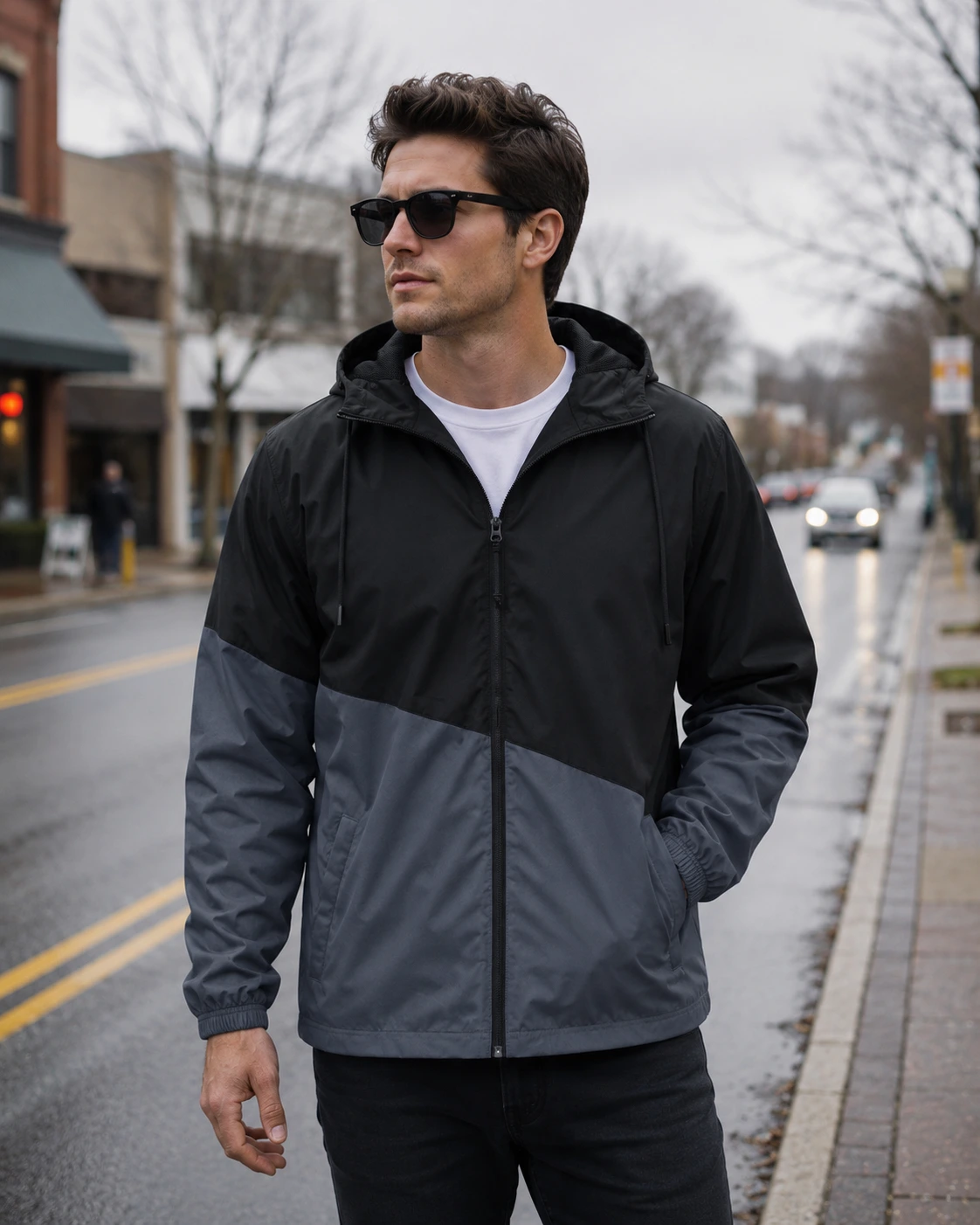
A windbreaker gets judged on one thing: how much weather it blocks for how little jacket it actually is. Fold it small enough to disappear into a bag, and it still has to stand between you and a gusty commute or a sudden shower without adding the bulk a real coat would. The pieces currently available in this category chase that same goal through a few different builds, closed with snaps or a zipper, hooded or bare at the neck, so the sections below cover what actually separates them before getting into fit and care.
The Word Came From an Actual Trademark, Not a Description
"Windbreaker" started life as somebody's brand name rather than a generic term for the garment. Federal trademark records show Chicago outerwear maker John Rissman & Son claiming first use of the word in commerce on January 15, 1918, covering a line of jackets, coats, blouses and shirts made of any material except leather; the filing itself doesn't spell out a specific fabric or cut, but the underlying goal, sealing wind out at the waist, wrists and neck, is the same basic problem the shells in this category still solve with different materials. The company registered the name federally in 1948, and it stayed a protected trademark for more than four decades until it expired in 1992 and passed into ordinary use, which is exactly why "windbreaker" can now describe any jacket built to block wind on the market rather than one company's product line specifically.
From Gabardine to Nylon: How the Shell Fabric Changed
The original Rissman jacket relied on tightly woven gabardine, a wool or cotton twill, since that was the tightest, most wind-resistant fabric widely available at the time. Nylon, first synthesized by Wallace Carothers at DuPont in 1935, changed that math almost entirely. Wartime demand pulled most of the country's nylon output into parachutes, tents and rope during the 1940s, but once that production capacity opened back up to civilian use after the war, nylon's combination of a tight, smooth weave, low weight and a fiber that dries quickly made it the obvious replacement for gabardine in a wind shell. Every piece currently in this category is built from that same nylon lineage, either straight nylon or a closely related woven polyester, rather than the wool and cotton gabardine the word originally described.
What the Denier Number on a Spec Sheet Is Actually Measuring
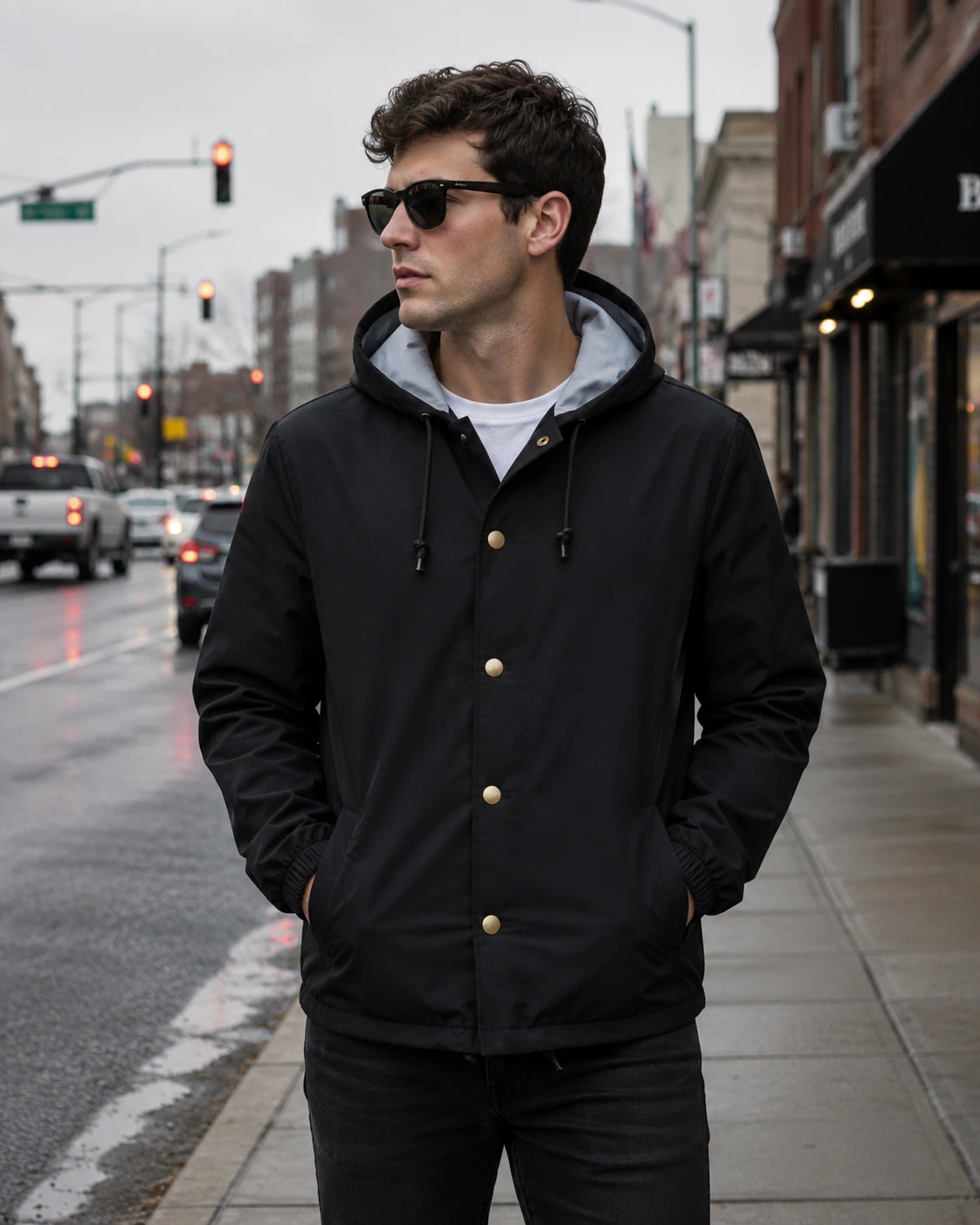
Denier measures the weight of the individual fiber a fabric is woven from, specifically how many grams a 9,000-meter length of that single strand weighs, so a higher number means a thicker, heavier fiber and a lower number means a finer one. The Coach Windbreaker Jacket uses a 33D nylon shell, a fine, lightweight weave chosen for packability and a soft hand, while the Hooded Windbreaker Jacket steps up to 330D, ten times the fiber weight, trading some packability for a noticeably tougher, more abrasion-resistant shell. The Quarter Zip Windbreaker Jacket runs a 2-ounce, 100% nylon shell instead, using fabric weight per square yard rather than denier as its stated spec, while the plain Windbreaker Jacket uses a 2 oz/yd² polyester pongee, a smooth, tightly woven fabric with roots in silk weaving long before it was made in polyester. Neither weight system is more accurate than the other; they're just two different ways manufacturers describe how substantial a shell fabric actually is.
Snap-Front, Full-Zip and Pullover: Three Different Ways In
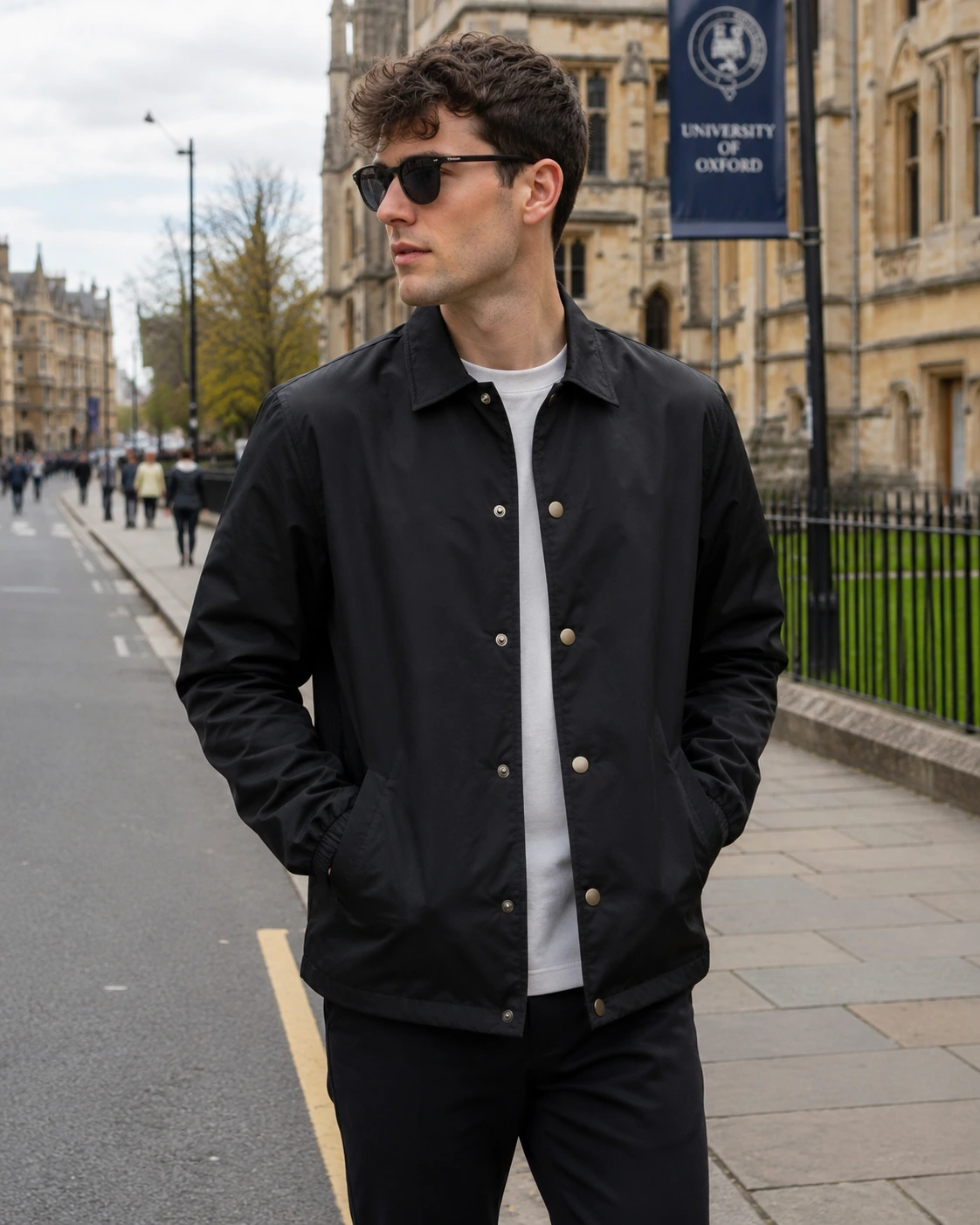
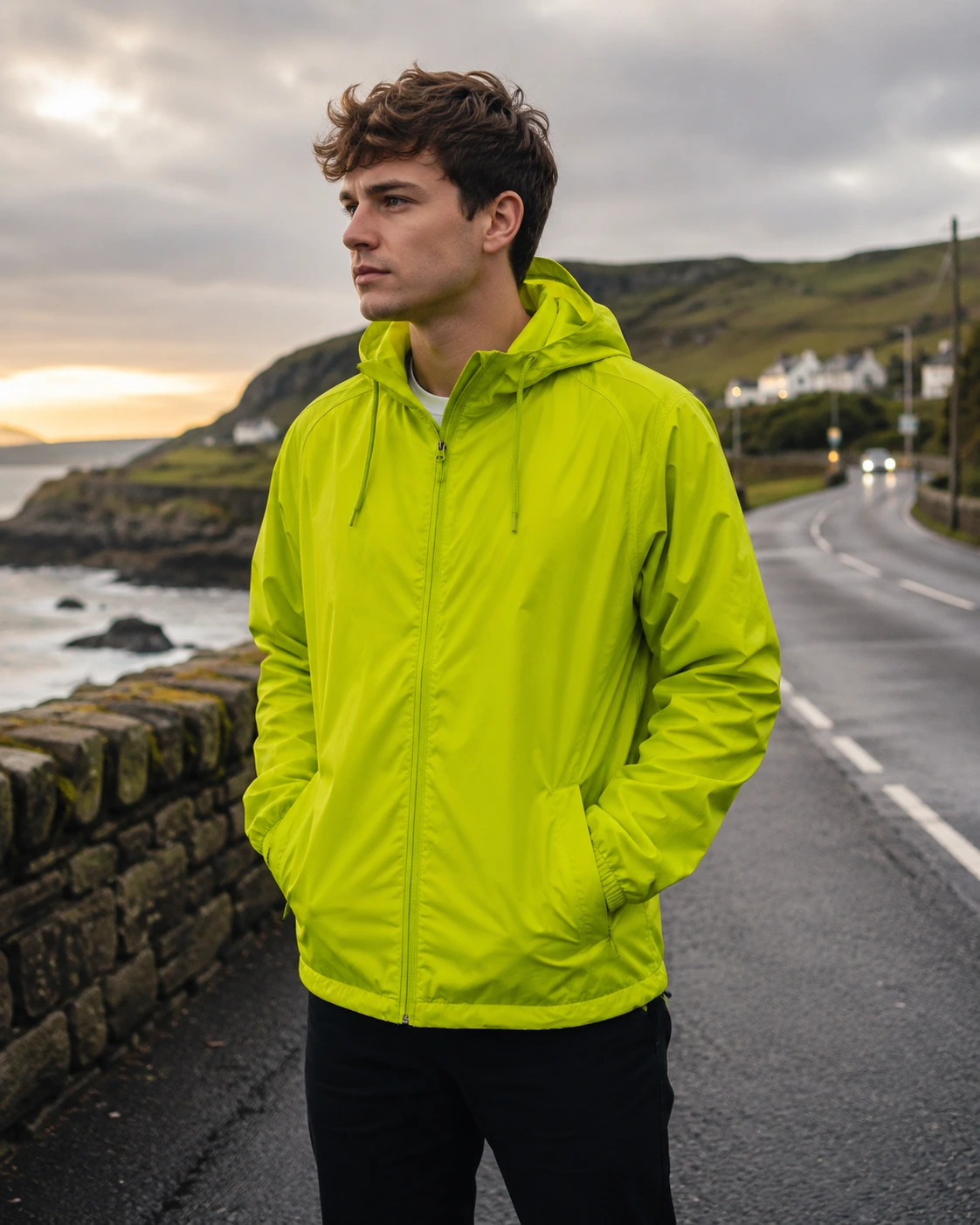
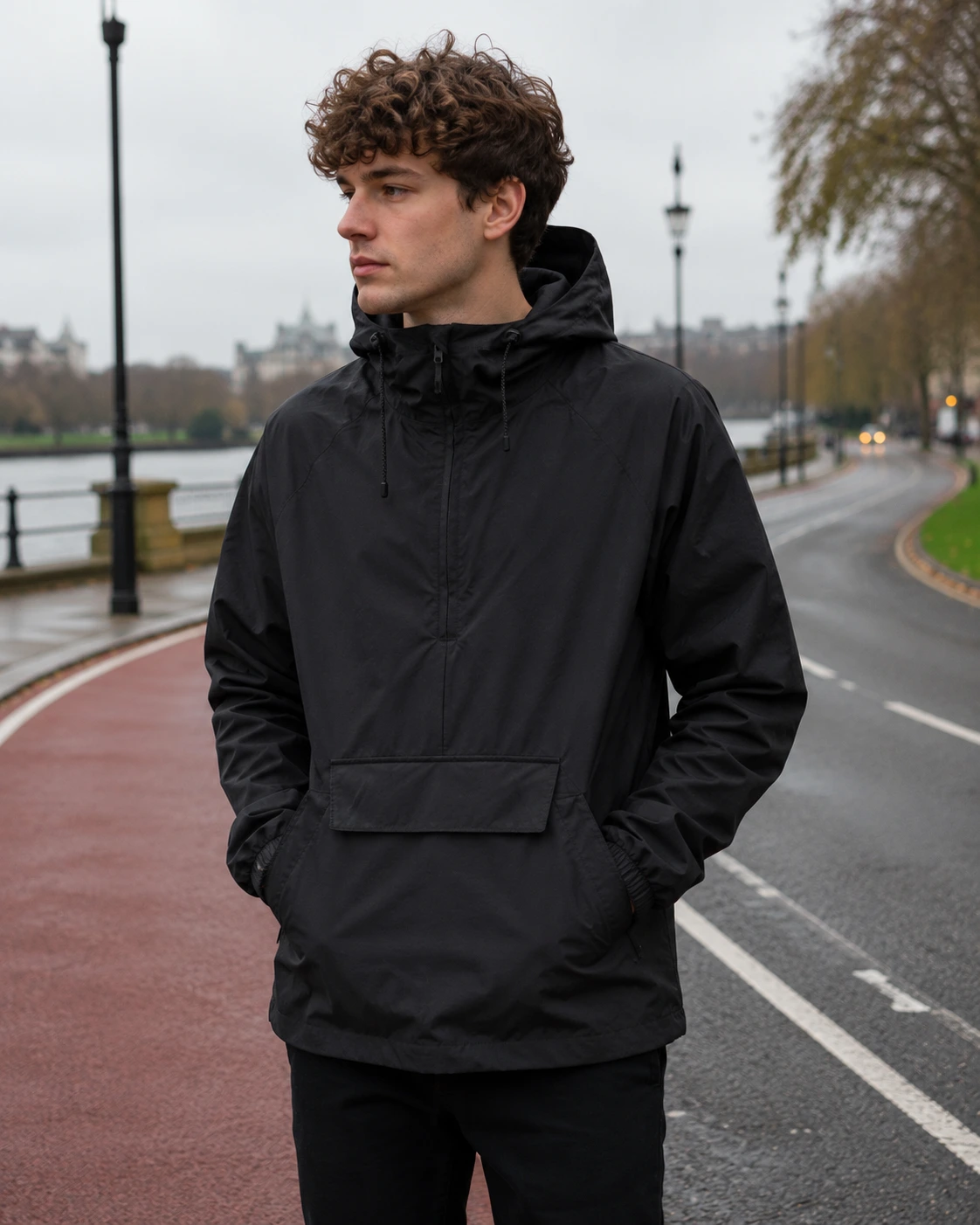
How a shell closes changes how it actually gets used. The Coach Windbreaker Jacket closes with six antique brass snaps down a boxy body styled after old coaching and stadium jackets, built to layer over a sweatshirt without pulling tight, the same silhouette that made a snap closure a fixture on the sidelines for decades. The plain Windbreaker Jacket runs a full front zipper instead, with reflective piping worked into the seams and a relaxed cut through the body, tuned more for running or cycling in low light than for standing still on a cold sideline. The Quarter Zip Windbreaker Jacket skips a full closure altogether, pulling on over the head through a short zip at the neck, and its front pocket doubles as a stow pouch that the entire jacket packs down into, closer in spirit to an anorak than a shell that opens all the way down the front.
Hood or No Hood Is a Separate Question From "Windbreaker"
What makes a jacket a windbreaker is the shell fabric and the construction that blocks wind, not whether a hood comes with it. The plain Windbreaker Jacket and the Coach Windbreaker Jacket both skip a hood entirely, closing at a plain collar instead, while the Hooded Windbreaker Jacket adds an unlined hood, adjustable with a drawcord, to the same lightweight nylon build, and the Hoodie-Style Zip Windbreaker Jacket pairs a mesh-lined hood with a storm flap over the main zipper for a step up in coverage. The Quarter Zip Windbreaker Jacket goes further still with a snorkel-style hood built deeper than a standard one. Because a hood is a separate design decision layered onto a windbreaker shell rather than a defining trait of it, the fuller range of hood constructions across the whole catalog, fleece hoods, insulated hoods, and these same windbreaker hoods, lives over in mens hooded jackets, while this category groups by the shell construction itself.
Waterproof Rating Versus What a Windbreaker Is Actually For
Two of the pieces here, the Coach Windbreaker Jacket and the Hooded Windbreaker Jacket, list a specific waterproof rating on their own product pages: roughly 10,000mm of hydrostatic head with a breathability rating near 5,000g, achieved through a PU coating on the inside face of the shell rather than a surface treatment alone. That number describes how many millimeters of standing water the fabric can hold before it seeps through in a lab test, and 10,000mm is genuinely capable of handling sustained rain rather than only a passing shower. The plain Windbreaker Jacket instead uses a water-resistant finish on its polyester pongee shell without a stated hydrostatic rating, positioning it closer to the classic windbreaker job of blocking wind and light drizzle rather than standing in for a dedicated rain shell. Either way, none of these are insulated, so the protection they add is against wind and water, not cold on its own.
Where to Go Instead When It's Actually Cold
A windbreaker's whole design brief is staying thin, and that same thinness is why it stops being enough once real cold sets in. Winter jackets covers genuinely insulated builds for real cold instead, shearling-lined leather jackets, longer shearling coats and wool-blend pieces meant to hold up past a mild fall evening, a different job entirely from anything cut from nylon in this category. For a middle step, something to trap warmth without the weight of a winter coat, mens fleece jackets covers half zip and full zip fleece builds, including hooded options, that work well worn under one of these shells or on their own on a cool day when wind is the only real problem.
Fit, Layering and Sizing to Order
Because a windbreaker's whole job is sitting over other clothing without adding bulk, the cut matters as much as the fabric. The Coach Windbreaker Jacket runs slightly boxy by design, room enough to layer over a sweatshirt without the shoulders binding, and the plain Windbreaker Jacket is built the same way for movement rather than a slim, fitted line, both meant to be sized close to a normal fit rather than sized up. Everything here is cut and sewn once your order comes in against the size chart posted on that specific product's page, in a size range that runs from extra small through 5XL depending on the piece, so checking that chart against your own measurements matters more than guessing from a usual jacket size. If a measurement falls outside what's posted, sales@marcojacket.com is the fastest way to find out what can be adjusted before you order.
Washing a Shell Without Wrecking the Finish
A water-resistant nylon or polyester shell loses performance long before the fabric itself wears out, usually from heat and rough handling rather than age. A cold-water wash on a gentle cycle with a mild detergent, snaps or zipper fastened, protects both the fabric and the coating doing the actual water-blocking work, and air drying rather than a hot dryer keeps that coating from breaking down early. Skip bleach entirely, and keep a folded shell away from sharp edges in storage, since a coated fabric creases and can crack at a sharp fold line over time in a way a heavier coat fabric doesn't.
Frequently Asked Questions
What does the 10,000mm waterproof rating on some of these jackets actually mean?
It's a hydrostatic head measurement, how many millimeters of standing water the fabric can hold before water seeps through in a lab test. 10,000mm is genuinely capable of handling sustained rain, well beyond a light drizzle, and it comes from a PU coating on the inside of the shell rather than a surface spray alone.
What's actually different between a snap closure and a full zip here?
Mostly how fast you can get in and out and how the front sits. A snap closure like the Coach Windbreaker Jacket's opens in one motion and sits a little boxier, while a full front zipper seals more completely against wind and adjusts more precisely partway open.
Why do some windbreakers here have a hood and others don't?
A hood is an added feature on top of the windbreaker shell, not something that defines it. Pieces without one keep a plain collar for a cleaner look with nothing extra at the neck, while the hooded builds trade that for extra coverage in wind or rain around the head and neck.
What does the denier number in the fabric description mean?
It's a measure of individual fiber weight, so a higher number means a thicker, more durable strand and a lower number means a finer, more packable one. A 330D shell runs noticeably tougher than a 33D shell from the same category, at some cost to how small it packs down.
Will a windbreaker from this category keep me warm once it's actually cold out?
Not on its own. Nothing here carries insulation, so it's built to block wind and moisture rather than generate warmth; layer a fleece piece underneath on a cool day, or move to winter jackets once temperatures drop for good.
Can I order one of these for running, cycling or another active use?
Yes. The lighter, full zip and pullover builds in this category, with features like reflective piping and a packable stow pocket, are built with exactly that kind of movement in mind rather than a purely casual fit.
Is everything in this category made after I order, or is any of it in stock?
Made to order throughout. Nothing here ships from finished inventory sitting in a warehouse; production starts once your order is placed.
Does this category ship outside the United States?
Yes, orders go out to Canada, the UK, Europe and Australia in addition to the US, aside from a short list of currently excluded countries. The shipping and delivery policy page has the specifics.
What if a jacket doesn't fit once it arrives?
The returns and refund policy page covers the process and timelines, including anything specific to made-to-order pieces.
Can sizing be adjusted if my measurements don't match the standard chart?
Email sales@marcojacket.com with your measurements before ordering and the team will confirm what's possible for the specific piece you want.