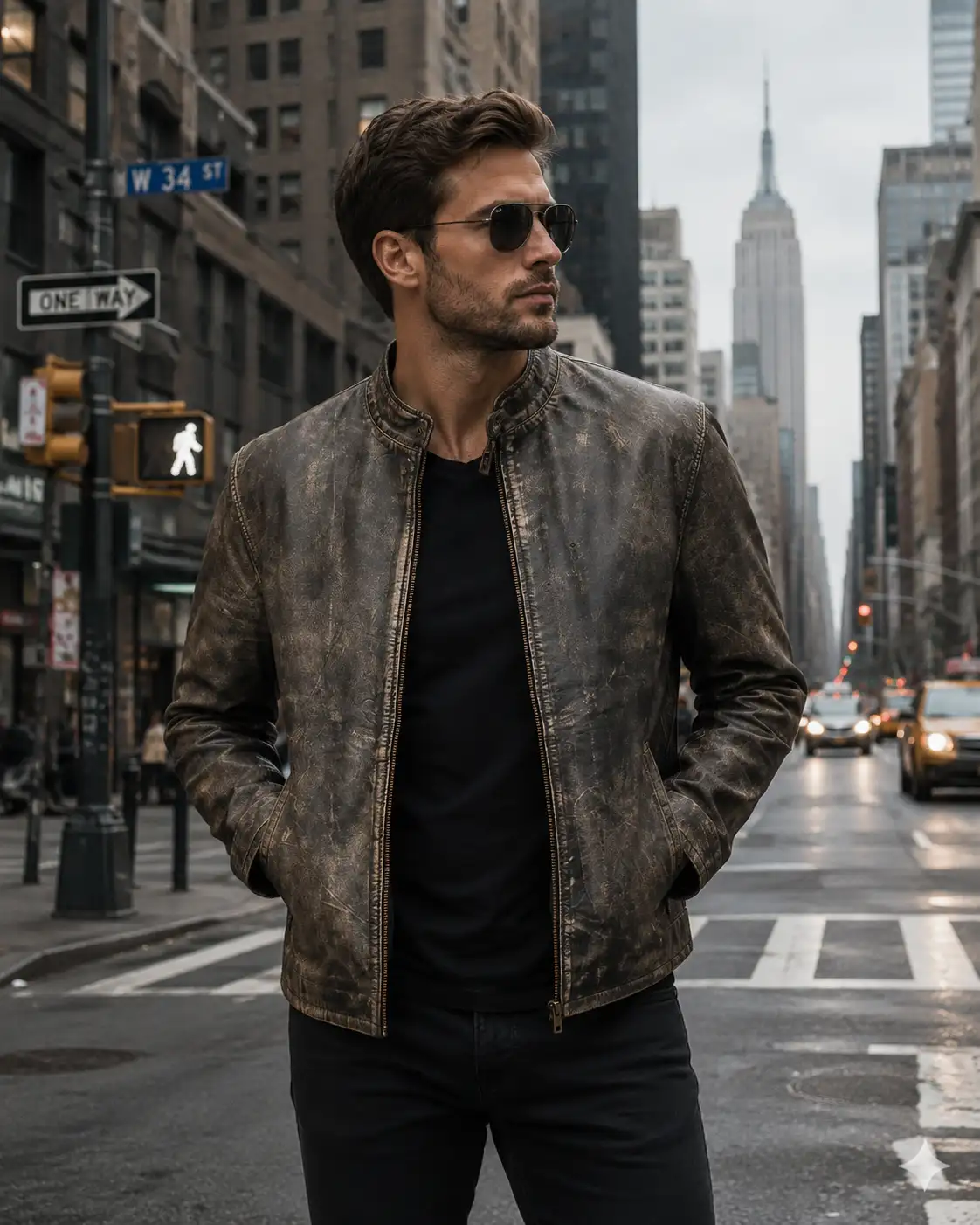
"Distressed" gets used loosely enough in clothing that it is worth being precise about what it means on this page specifically: a leather surface that has been aged, roughed, or lightened on purpose during or after tanning, applied to a jacket that is otherwise built new to your order. It has nothing to do with the jacket's shape. A cut can be brand new in its proportions and still carry a heavily worked, aged-looking hide, which is exactly the split this category is built around.
A Surface Treatment That Doesn't Care What Cut It's On
Because distressing happens to the hide rather than the pattern pieces, the same finish can sit under almost any silhouette on the site. A biker jacket, a bomber, an aviator, or a slim cafe racer can each carry an aged leather surface without changing what the jacket actually is underneath, and each of those cut-specific pages shows the clean-finish options alongside anything aged. This page exists specifically for shoppers who already know the surface treatment matters more to them than the shape.
Getting a Worn Look Out of a Hide That's Never Been Worn
Tanneries have a few ways to build an aged surface into leather before it ever becomes a jacket. Pull-up leather is stock finished with oils and waxes that shift color wherever the hide bends, so creases at the elbow or seam lighten in a way that mimics years of flexing on day one. Large drums are also used to tumble hides against each other, roughing and softening the grain unevenly rather than in a uniform pattern, which reads closer to real wear than a flat, all-over treatment would. Either method changes tone and texture at the surface only; the hide's actual strength underneath is unaffected; it holds up the same as an equivalent piece finished clean.
Hand Distressing: Tools Instead of a Vat
A second route skips the tannery drum entirely and roughs up the leather by hand, piece by piece. Wire brushes, sandpaper, and even a plain awl get worked into corners, cuffs, and seams to break up the surface exactly where a jacket would naturally wear first. Dampening the hide with a light solvent before working it lets the leather crease and fold in ways that set once it dries, and a low, careful pass of heat can do the same thing to fibers that resist folding cold. It is slower and more labor-intensive than a tannery batch process, which is part of why hand-finished pieces tend to carry a higher price than a factory-aged equivalent leather jacket of similar quality.
Punk's DIY Roots Are Part of Why This Look Still Sells
Deliberately battered leather did not start as a manufacturing technique; it started as customization. Through the 1970s, bands and their audiences on both sides of the Atlantic, the Sex Pistols out of the UK punk scene and the Ramones out of New York's, took ordinary leather jackets and worked them over by hand with studs, spikes, and patches, roughing up the surface as part of the point rather than a byproduct. That do-it-yourself instinct, an intentionally worked-over jacket as a statement rather than an accident, is the same instinct a tannery or a hand finisher is replicating on purpose today, just applied consistently instead of one jacket at a time in someone's bedroom.
Distressed, Vintage, and Naturally Broken In Are Three Different Things
It is easy to blur these together and worth separating out. A distressed finish is manufactured aging, set at a fixed level before the jacket ever ships. A vintage jacket, as that category defines it on its own page, is about a cut borrowed from a named historical style, an aged finish is only one of two ways a jacket earns that label there, not the defining trait. A natural patina is neither of those; it is untreated leather actually changing over years of wear, oils, and light exposure, and it keeps shifting gradually in a way a manufactured finish does not. All three can look similar in a photo. Only one of them is what you are actually buying on this page.
Where a Coat-Length Piece Fits Instead
Distressed leather is not exclusive to jackets on this site, and garment length matters for where something belongs. The Unisex Vintage Distressed Leather Coat uses a genuinely hand-buffed, deliberately aged cowhide finish, confirmed on its own listing, but it is cut to a mid thigh coat length and marketed without shaping specific to one gender, so it sits under leather coats and vintage jackets rather than here. A jacket-length cut aimed at mens sizing is what belongs on this specific page.
Keeping the Aged Look From Turning Into Actual Wear
A distressed hide is already at the look it is supposed to have, so the goal in caring for it is holding that steady rather than accelerating it further. Direct sun for long stretches can fade a lighter pull-up finish unevenly, more at the shoulders and back than underneath a collar, so hanging it out of direct light matters more here than it would on a plain-finished jacket. A small amount of leather conditioner keeps the hide from drying and cracking at the exact creases the finish is built around, but heavy or frequent conditioning can smooth out the texture the treatment was designed to leave rough. Standard household cleaners and machine washing are both off the table for any genuine leather piece, distressed or otherwise; a cleaner made for leather or a professional who actually works with hides is the safer route for anything beyond a light wipe down.
Ordering and Sizing
Every piece here starts cutting only after an order comes in, checked against the size chart posted on that specific product's own page rather than a universal one. If your own numbers land outside that range, it's not a dead end, just email sales@marcojacket.com ahead of ordering and the team will tell you what can be shifted. A request built around choosing the color and finish yourself, not adjusting a size on an existing listing, is what the separate Custom Leather Jacket page is actually for.
Frequently Asked Questions
What actually makes a jacket "distressed" instead of just a dark or worn-looking leather?
A distressed jacket has been through a deliberate aging process, either at the tannery through oils, waxes, or tumbling, or by hand with tools and light abrasion, that changes the surface texture and tone on purpose. A leather that simply looks dark or matte from its dye alone, with no roughening or lightened crease pattern, is not the same thing.
What is the difference between mens distressed jackets and vintage jackets on this site?
Vintage jackets is built around a cut borrowed from a named historical style, an aged finish is only one route into that category, not a requirement. This page is specifically about the surface finish and covers it across whatever cut you pick, whether or not that cut has any particular historical reference point.
Does a distressed finish make the leather weaker or more likely to crack?
No. Distressing is a surface and tone change, not damage to the hide's structure, so a distressed jacket wears and holds up the same as an equivalent piece in a clean finish. Cracking is a separate risk tied to the leather drying out over time, which ordinary conditioning addresses regardless of finish.
Is the leather in this category always genuine, or does any of it use faux material?
Genuine cowhide and lambskin are the standard here, confirmed on each product's own listing. If a specific piece ever mixes in a faux material, that listing states it directly, so checking the individual product page before ordering is the reliable way to confirm.
The Unisex Vintage Distressed Leather Coat turns up when I search for this category. Why isn't it listed here?
That piece genuinely has a distressed leather finish, but it is a mid-thigh coat rather than a jacket, and it is styled without gender-specific shaping. It belongs under leather coats and vintage jackets instead, both of which fit its actual length and styling more accurately.
Will the worn look keep changing the longer I wear the jacket, or is it fixed at delivery?
It is fixed. The finish is set during manufacturing or hand-finishing and holds at that level with normal wear. A genuine, untreated patina is what keeps developing gradually over years; a manufactured distressed finish is a look you get immediately and keep, not a head start on an ongoing process.
How do I clean a distressed leather jacket without smoothing away the worn look?
Stick to light wiping and a small amount of leather-specific conditioner rather than a full scrub. Machine washing and household dry cleaning both risk stripping the oils the finish depends on, and over-conditioning or heavy buffing can flatten the texture the distressing was built to leave uneven.
Can sizing be adjusted if my measurements dont match the standard chart?
Email sales@marcojacket.com with your measurements before ordering and the team will confirm what can be shifted, or use the Custom Leather Jacket page instead if what you actually want is your own choice of color and finish.
What if a jacket doesnt fit once it arrives?
The returns and refund policy page covers the process and timelines, including how made-to-order pieces are handled.
Does this category ship outside the United States?
Yes. The shipping and delivery policy page has current timelines and any country-specific restrictions.