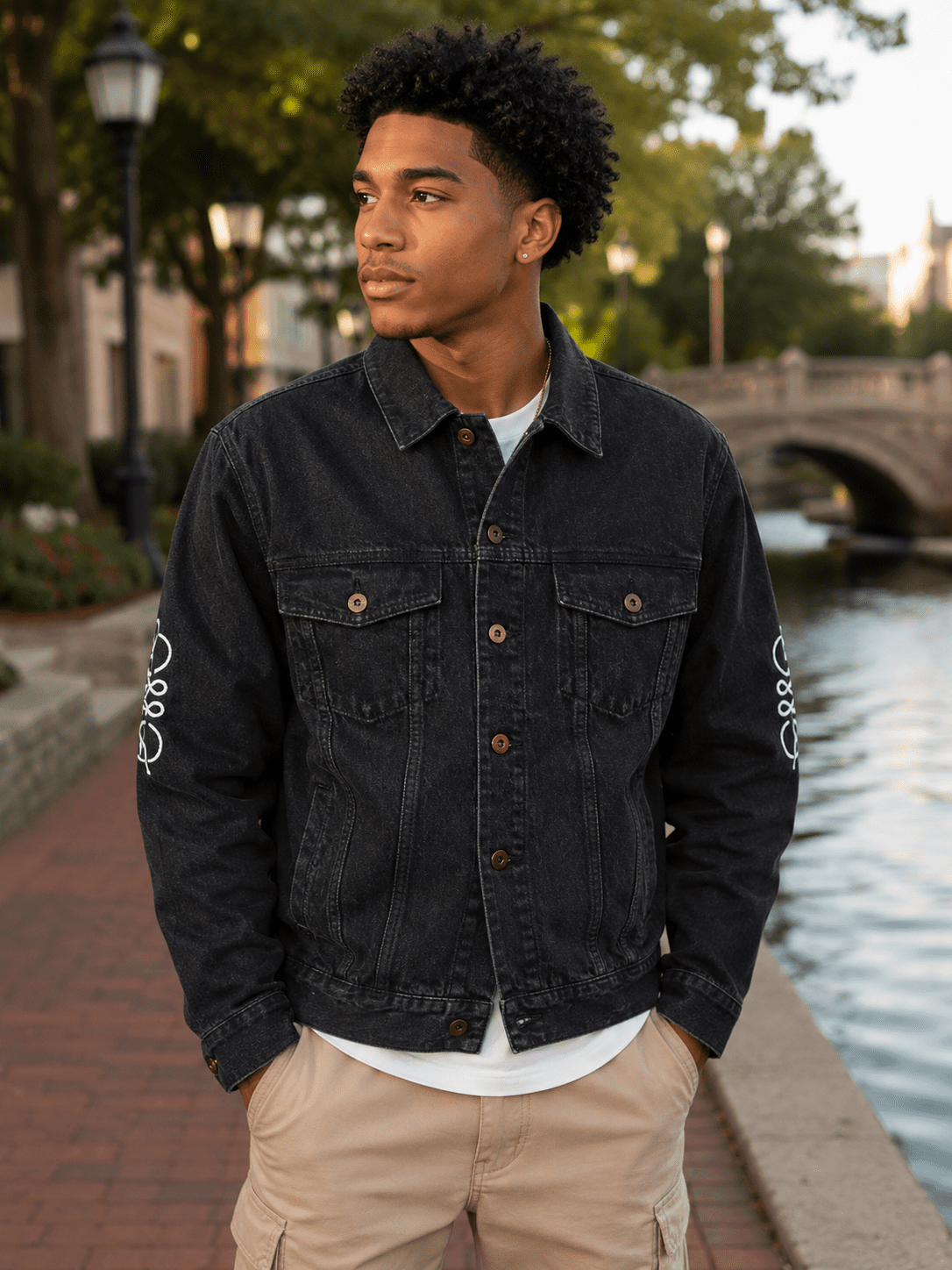
A denim jacket earns its place in a mens wardrobe rotation the same way a good pair of boots does: it looks better the more it gets worn. Marco Jacket's mens denim jackets are made to order in cotton denim, with construction details such as structured shoulders, reinforced stress points, and chest pockets closed with button flaps that have defined the style since it moved off railroad crews and onto city streets. Below is a closer look at what actually goes into a denim jacket, how the trucker cut came to dominate the category, and what to expect when a piece is cut and sewn specifically for one person.
What Actually Makes a Jacket Denim
Denim is a cotton twill weave, defined by the way it is constructed rather than by its color alone. The diagonal rib visible on the surface comes from the weft yarn passing under two or more indigo-dyed warp yarns before crossing back over one, a structure that also explains why the inside of a denim jacket is noticeably paler than the outside: only the warp threads take the indigo dye, while the weft stays undyed or bleached white. That same construction is why a denim jacket fades unevenly along elbow creases, cuff folds, and any seam under repeated friction, since abrasion wears through the dyed layer faster in those spots than anywhere else on the garment.
Beyond the weave, a handful of details separate a denim jacket built to last from one that is only denim-colored. Structured shoulders and a straight, boxy body keep the jacket from collapsing into a shapeless shirt. Bar tack stitching, a dense zigzag reinforcement, holds pocket corners and pull points together under repeated stress. Chest pockets closed with a button flap, rather than left as open patch pockets, keep small items in place during movement. The Mens Classic Denim Jacket currently in this category carries all three, cut from a sturdy denim meant to soften with wear instead of wearing thin.
Denim Weight and Wash Explained
Denim is measured in ounces per square yard, and that number says more about how a jacket will feel and age than the wash does. Fabric in the 7 to 10 ounce range counts as lightweight, more common in shirt-jackets and warm-weather pieces than in true outerwear. Most denim jackets sit in the 11 to 14 ounce range, heavy enough to hold structure in the shoulders and collar without turning stiff or hot to layer under a coat. Anything above 16 ounces moves into heavyweight territory, closer to armor than jacket until months of wear break it in.
Wash is a separate variable from weight. Raw or dry denim is unwashed after dyeing and starts dark and stiff, developing fade lines that map to exactly how the wearer moves. Stonewashing and acid washing use abrasion or bleach to fake that broken-in look from day one. Sandblasting once did the same job faster, but most major denim brands phased it out in the early 2010s after independent reporting linked the process to silicosis among garment workers, and laser etching and chemical spraying have largely replaced it since.
From Work Coat to Trucker Jacket: A Short History
Levi Strauss and Co. built the first widely worn denim jacket in the 1880s as workwear for miners, ranch hands, and railroad crews, cut for durability rather than fit. The version collectors now call the Type I, cataloged as lot 506XX from 1905 onward, had a single chest pocket and a cinch strap buckled across the lower back to take in a baggy fit. The Type II arrived in 1953 under lot 507XX, trading the cinch for waist adjusters and adding a second chest pocket with a button flap, a layout much closer to what is still used today.
The jacket most people picture when they hear "denim jacket" is really the Type III, finalized under lot number 70505 in 1967. Designer Jack Lucier dropped the pleats and copper rivets that had marked Levi's jackets since the 1880s and cut two V-shaped seams into the front panels, tapering the fit and creating the pointed pocket flaps still associated with the style. Because the cut allowed a full range of motion, it picked up the nickname "trucker jacket," and the pattern has stayed close to Lucier's original since, with side pockets added in the 1980s as the main later change. Wrangler and Lee built their own competing versions around the same decades, and the silhouette later moved from work sites into film and music, worn by figures from James Dean to John Lennon. Vintage Type I and Type II pieces are still chased by collectors today, which is part of why the vintage jackets category leans on that same older, boxier reference point.
Trucker Cut vs Other Denim Jacket Silhouettes
The trucker jacket is not the only denim jacket shape worth knowing, even though it is the most recognizable one. A trucker jacket sits at or just below the waist, boxy through the body, with the pointed yoke seams and button-flap pockets described above, and it is also the cut that the mens trucker jackets category name refers to specifically. Chore coats and denim work jackets, by comparison, run slightly longer and looser, closer to French workwear roots than to American ranch gear, and are often built with patch pockets instead of flapped ones. Sherpa-lined and shirt-jacket versions use the same denim shell but add warmth or drop the structured shoulder for a softer, more relaxed fit. Distressed and heavily faded interpretations lean on the wash rather than the cut, which is why a jacket can be trucker-shaped and still look decades old the day it ships; the mens distressed jackets category covers that end of the spectrum in more depth.
Styling a Denim Jacket Through the Seasons
A midweight denim jacket layers over a t-shirt in spring and fall without much thought, but the same piece works through a cold snap once there is a sweater or flannel underneath it, since the boxy trucker cut was built to allow that kind of layering in the first place. Denim-on-denim, once treated as a styling mistake, has read as a deliberate look for years now, provided the two washes are different enough that they do not blend into one field of blue; a dark jacket over lighter jeans, or the reverse, comes across as intentional rather than accidental. Pairing tan, charcoal, or black trousers with a denim jacket dresses the top half down without pulling the rest of the outfit into pure workwear territory, and for anyone shopping for two people at once, a matching womens denim jacket follows the same seasonal logic.
Made to Order Sizing and Custom Fit
Standard sizing for a denim jacket typically runs from XS through 3XL, but a trucker cut is unforgiving on anyone whose chest and shoulder measurements do not land neatly inside one size bracket: too big and the boxy shape turns shapeless, too small and the shoulder seams pull across the back. Because every mens denim jacket in this category is made to order, chest and shoulder measurements can be submitted directly instead of guessing between two adjacent sizes on a standard chart, and the jacket is cut to match rather than altered afterward. That takes longer at checkout than pulling a jacket off a rack, but it removes the two most common denim jacket fit complaints before the fabric is even cut.
Caring for Denim So It Ages Well
Indigo-dyed denim fades a little every time it gets washed, which is part of the appeal but also a reason to wash a denim jacket less often than other garments in a rotation. Cold water and a turned-inside-out cycle slow the rate of color loss and protect any topstitching from abrasion in the machine. Air drying instead of tumble drying prevents the shrinkage that a hot dryer causes in cotton denim, and it keeps reinforced stress points from loosening under repeated heat cycles. Hanging a denim jacket by the collar, rather than folding it into a drawer, also helps the shoulders keep their structure between wears.
What is the difference between a denim jacket and a trucker jacket?
A trucker jacket is a specific denim jacket silhouette, boxy through the body, hitting at or just below the waist, with pointed yoke seams and button-flap chest pockets that trace back to Levi's Type III design from 1967. Every trucker jacket is a denim jacket, but not every denim jacket, including longer chore coats and shirt-jacket cuts, follows the trucker pattern.
How should a denim jacket fit through the shoulders and chest?
The shoulder seam should sit right at the edge of the shoulder bone rather than drooping past it, and there should be enough room across the chest to layer a t-shirt or thin sweater underneath without the button-front pulling. A jacket that fits well seated should still allow full arm movement, since the boxy trucker cut is meant to move with the wearer instead of hugging the torso.
What denim weight works best for a jacket instead of jeans?
Jackets are usually cut from denim in the 11 to 14 ounce range, heavy enough to hold shape in the collar and shoulders without becoming too stiff or too hot to layer under a coat. Jeans can comfortably go heavier, since they are not folded, layered, and moved through the same range a jacket sleeve and shoulder see every day.
Will a dark or raw denim jacket bleed color onto other clothing?
Raw and dark-wash denim can transfer some indigo dye during the first several wears, especially onto light-colored shirts worn underneath, before the surface dye stabilizes. Washing the jacket once in cold water before heavy wear, or simply expecting some early crocking, reduces the risk of staining lighter fabrics.
How many washes does it take before a denim jacket starts to visibly fade?
Visible fading, especially at the elbows, cuffs, and collar fold, typically starts to show somewhere between ten and twenty wash cycles in, though the exact number depends on denim weight and how often the jacket gets worn between washes. Washing less often and air drying both slow that timeline for anyone chasing a darker, less-faded look.
Can a denim jacket replace a light coat in cooler weather?
On its own, a denim jacket sits closer to a midlayer than a true winter coat, since the fabric does not block wind the way a shell or wool coat does. Layered over a sweater or flannel shirt, though, a midweight denim jacket handles cool fall and spring temperatures reasonably well.
Is everything in this category made after I order, or is any of it in stock?
Every mens denim jacket in this category is cut and sewn to order rather than pulled from pre-made stock, which is why chest and shoulder measurements can be submitted at checkout instead of choosing only from a standard size chart. Production begins once an order is placed, so turnaround includes the time it takes to make the jacket in addition to the time it takes to ship it.
Does this category ship outside the United States?
Yes, mens denim jackets ship internationally in addition to domestic orders within the United States. Delivery timelines vary by destination, and the shipping-delivery-policy page covers current timeframes and regional details.
What if a jacket doesn't fit once it arrives?
Because every jacket is made to the measurements provided at checkout, a fit issue should be reported so it can be handled as a construction problem rather than a simple exchange. The returns-and-refund-policy page outlines the process and timeframe for reporting a fit problem after delivery.
Can sizing be adjusted if my measurements don't match the standard chart?
Yes, chest and shoulder measurements can be provided directly instead of selecting a standard size, and the jacket is cut to match those numbers rather than sized off the rack. This is especially useful for anyone who falls between two sizes on a typical XS-to-3XL chart or needs a fit that a boxy trucker cut does not naturally accommodate.