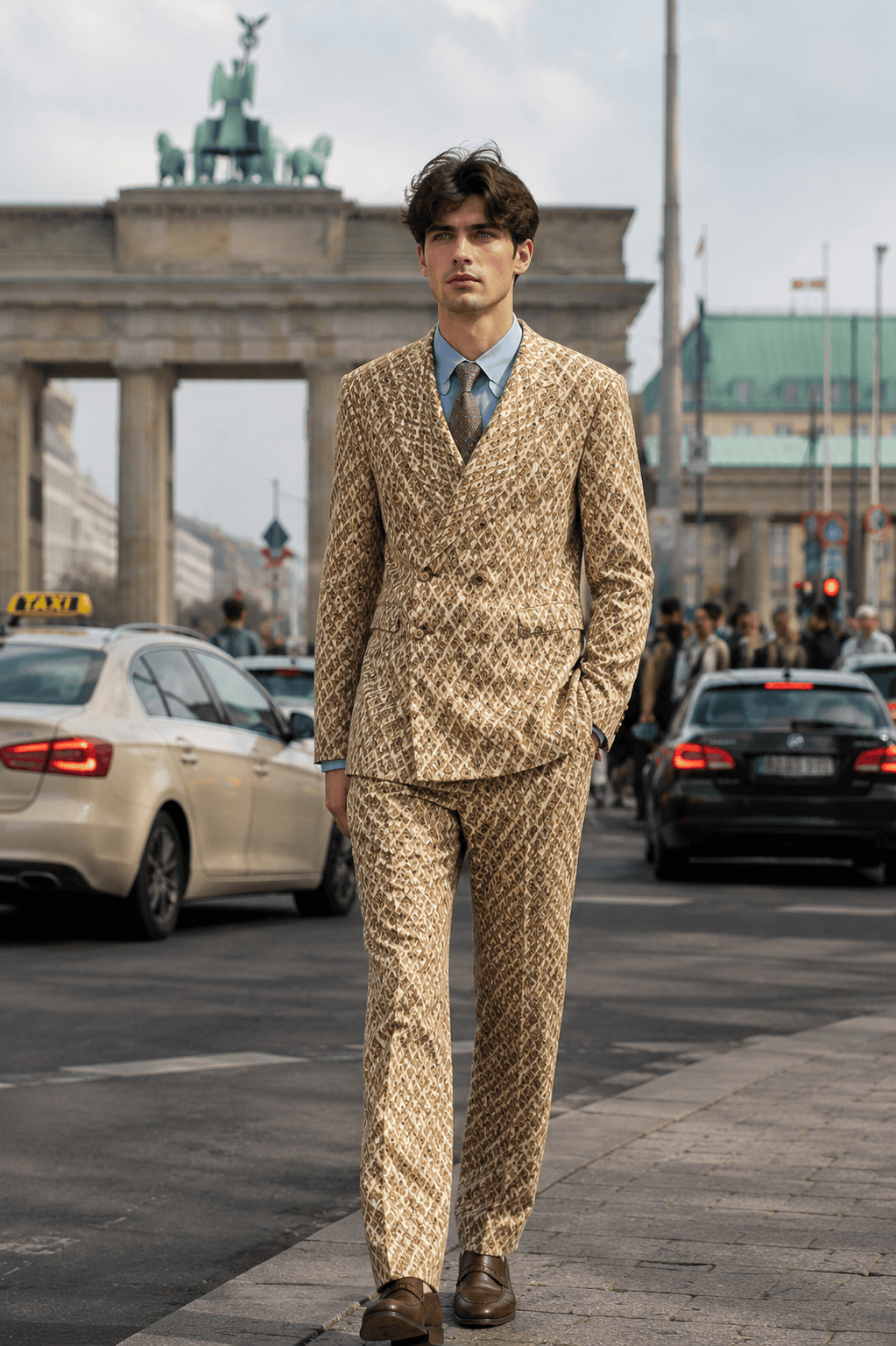
A blazer sits in an odd spot in a wardrobe: too structured to count as a casual jacket, too unmatched to count as half a suit. It carries a jacket's shape, a defined shoulder, a lapel, a shaped waist, without the trouser it was cut to pair with, which is exactly what lets it move between a dinner and a Tuesday desk without looking wrong at either. Marco Jacket's own take on it swaps the traditional navy wool or flannel for leather and suede, keeping the tailoring intent while trading the fabric that usually defines the garment.
The Rowing Clubs Behind the Name
The word itself is generally traced to Cambridge rowing, specifically the Lady Margaret Boat Club at St. John's College, founded in 1825, whose oarsmen wore a bright red flannel jacket that got called "blazing" and then simply "blazer." A Daily News writer in 1889 already used the word this way, describing it plainly as the red boating jacket worn by that club. A separate naval story also circulates, pointing to HMS Blazer and its crew's blue-and-white striped jackets from around 1837 as the source of the word instead. Wikipedia's own account of the garment states outright that the naval claim "is not borne out by contemporary sources," so while both stories get repeated, only the Cambridge rowing origin has real documentary support behind it.
Blazer, Sport Coat, or Suit Jacket: Where Each One Actually Sits
A suit jacket is built to a matching pair of trousers cut from the same cloth in the same production run, which is the one trait that most clearly separates it from everything else in this comparison. A sport coat, sometimes called an odd jacket, was never meant to match anything, historically a countryside piece in tweed or another textured, patterned cloth with a looser, less padded shoulder and patch pockets standing in for a more formal flap. A blazer lands between those two: as structured through the chest and shoulder as a suit jacket, standalone like a sport coat, and traditionally solid in color or striped rather than tweedy, often finished with contrasting metal or mother of pearl buttons on the classic wool navy version. Marco Jacket keeps its matched, two piece tailoring in a dedicated suits listing rather than folding it into this one, so a blazer bought here is meant to be worn against trousers a person already has, not trousers cut to match it.
Single-Breasted or Double-Breasted: A Blazer's Front Tells on It
A single breasted front closes with one column of buttons and a narrower overlap, the more common layout and the one that suits the widest range of body types. A double breasted front, sometimes called a reefer front for its naval reefer jacket roots, overlaps further and closes with two columns instead, squaring the shoulder line and reading noticeably more formal even in identical fabric. Neither of the three product pages in this lineup states its front style outright in the written copy; going by the photography alone, all three currently run the narrower, single column front rather than the wider reefer overlap, so anyone for whom that detail is the deciding factor should confirm it directly before ordering.
Lapels and Buttons: The Small Details That Separate a Blazer from a Plain Jacket
A notch lapel, the small V-shaped break where collar meets lapel, is the default on the large majority of blazers and reads as the most versatile of the standard shapes. A peak lapel, angled up toward the shoulder, shows up more often on a double breasted front because the wider shape balances the extra fabric across the chest. Classic wool blazers also lean on hardware as a visual signal, gold or silver metal buttons, sometimes stamped with an anchor or a club crest, deliberately contrasting against the cloth rather than matching it. None of Marco Jacket's current leather and suede pieces publish their button material or lapel shape as a stated spec, so that detail is worth confirming on the product's own listing or by writing in before ordering if it matters to the finished look.
Why Leather Doesn't Take a Blazer's Structure the Same Way Wool Does
A wool blazer usually gets its shape from a layer of interlining, horsehair canvas in better-made pieces, stitched into the chest and lapel so the fabric can roll and drape with the body instead of sitting flat. Leather and suede don't respond to that same needle-and-canvas approach; hides are typically shaped instead with a lighter fusible or foam interlining at the shoulder and chest, combined with a bag-construction method where the outer shell and lining get joined and turned right-side out rather than hand-canvassed piece by piece, since stitching a floating canvas layer into a stiffer material tends to pucker rather than roll smoothly. The tradeoff is a blazer that holds its shoulder line firmly from day one without the multi-year break-in a canvassed wool jacket needs, at the cost of some of that same jacket's long-term reshaping flexibility. Marco Jacket doesn't publish which specific interlining method its blazers use, so that construction detail isn't asserted here beyond what's generally true of leather tailoring.
Natural Brown, Maroon, and Suede: What's Actually in the Lineup Right Now
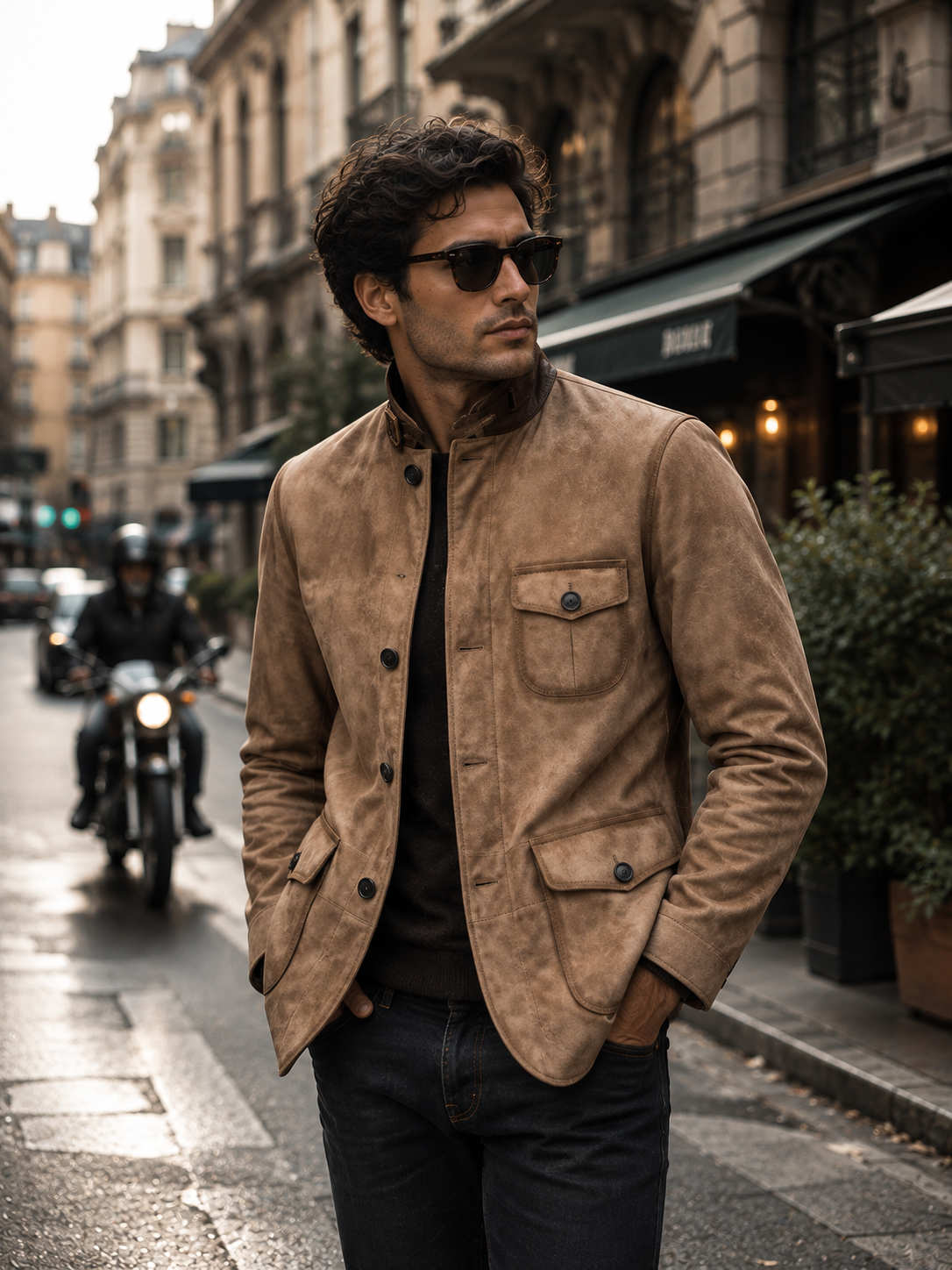
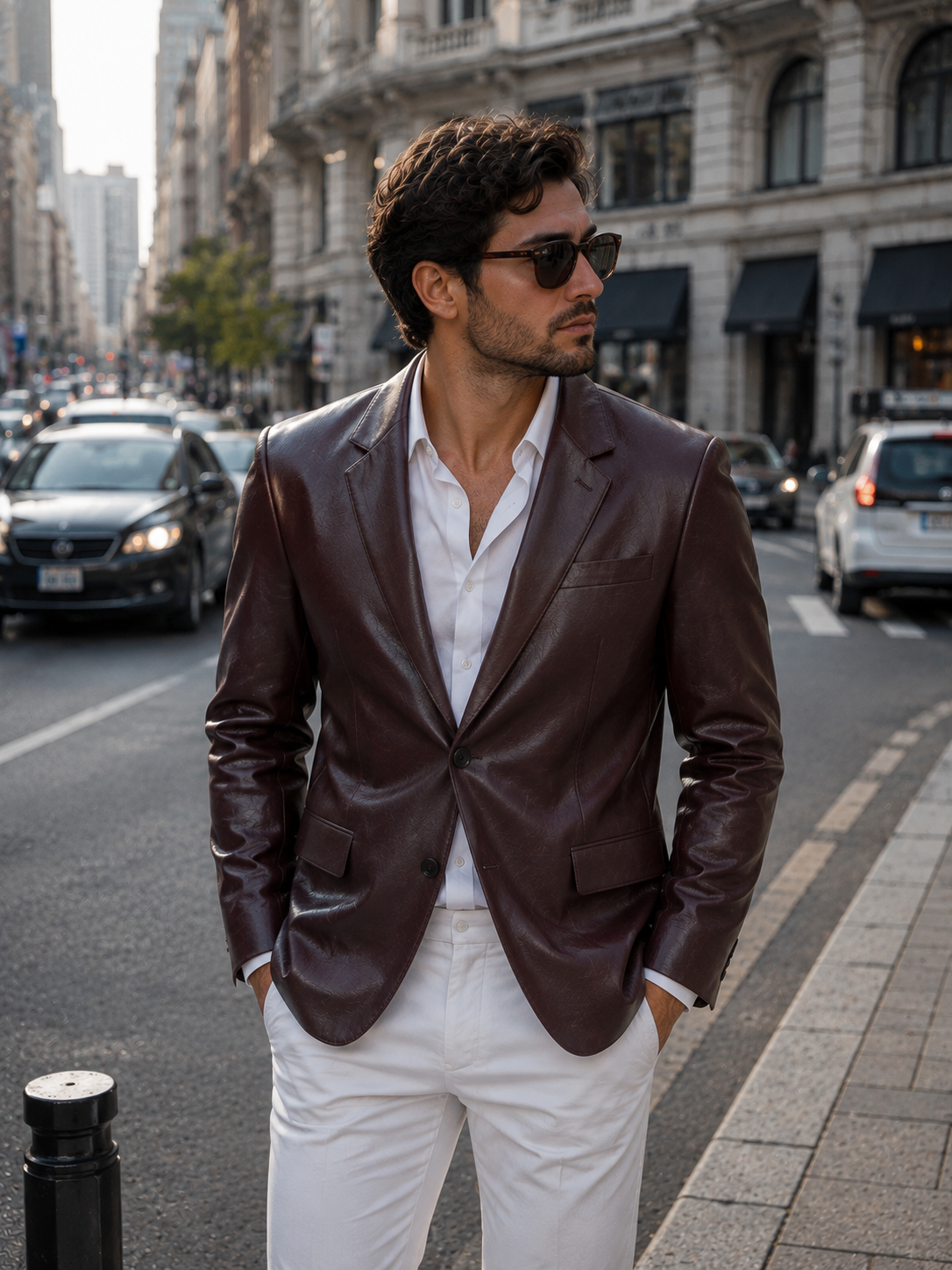
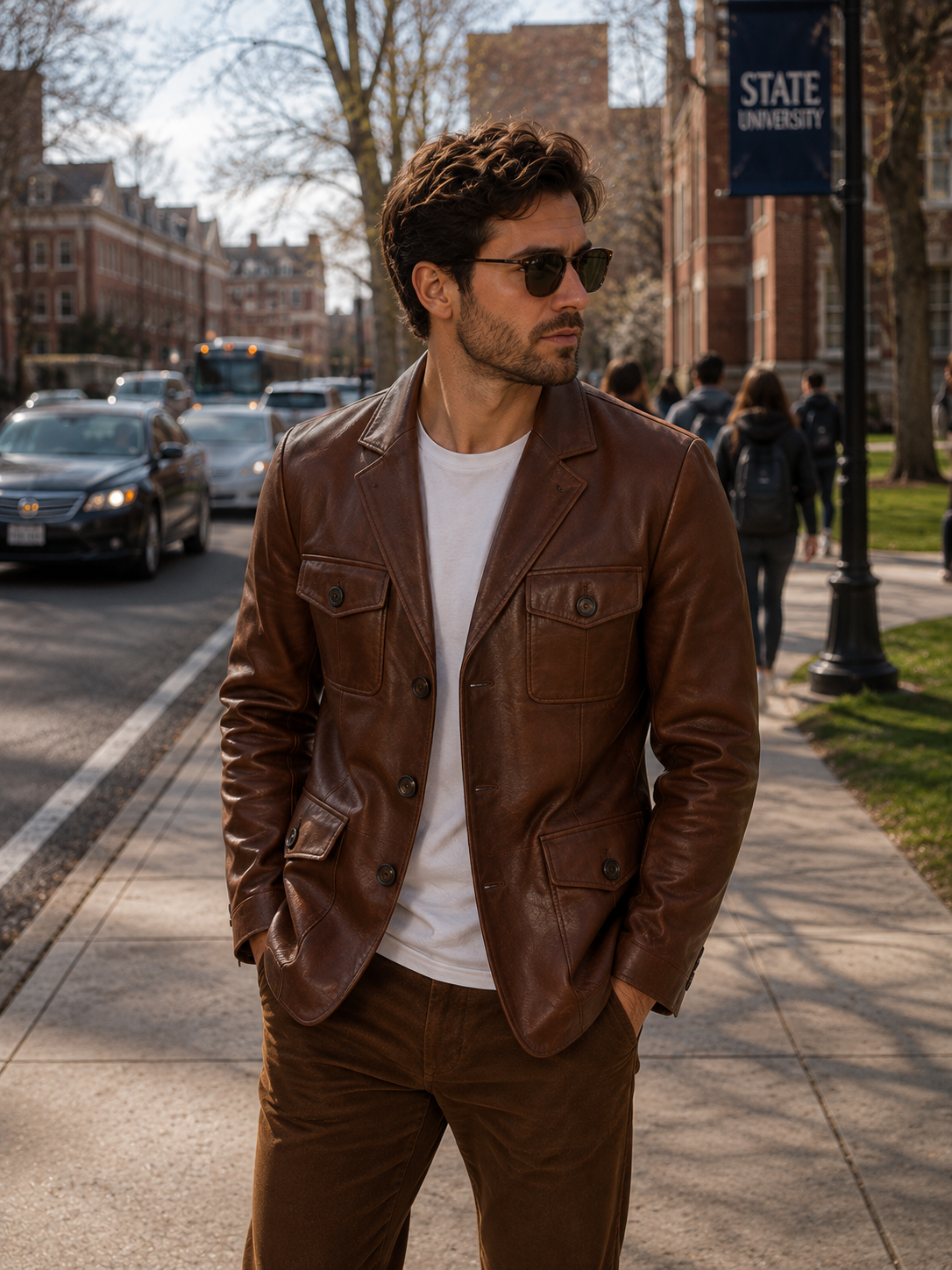
The natural brown leather blazer keeps its hide in an unfussy, close-to-original tone and leans on structured lapels and a fitted waist to do the formality work rather than a bold color statement. The maroon leather blazer takes the opposite approach, using a deeper, richer color specifically because leather's texture keeps a strong shade from reading as costume-like the way a flatter fabric might. The suede blazer swaps the smooth grain for suede's brushed, matte nap, which softens a blazer's usual formality just enough to make it easier to wear open over a t-shirt without looking like it wandered off from a suit. Anyone wanting the same brushed-nap material without the tailored lapel and fitted waist should look at the mens suede jackets listing instead, since that category covers plain jacket cuts in the same finish rather than blazer construction. All three currently run a standard XS through 5XL size range.
Getting the Fit Right Before Ordering
Because a blazer's whole silhouette depends on the shoulder seam sitting exactly where it should and the waist tapering in the right place, a chest and shoulder measurement matters more here than it would on a looser, unstructured jacket where a size or so of slack barely shows. Anyone whose numbers land between the posted sizes, or outside the XS-5XL range entirely, can write to sales@marcojacket.com ahead of ordering to work out what the pattern can accommodate. For a build where the color, lining, and hardware get chosen individually rather than picked from what's already listed, that kind of design-level customization runs through the separate custom leather jacket page rather than through the standard sizing process described here.
Keeping a Leather or Suede Blazer Looking Right Between Wears
Suede asks for the most upkeep of the two finishes here: a suede brush run in one consistent direction lifts dust and flattened nap after normal wear, a protectant spray applied before the first wear cuts down on water spotting, and any stain is better treated with a suede eraser or dry method than with water, which tends to leave a permanent dark ring. The smooth leather pieces need less routine attention, a barely damp cloth for surface dirt and a leather conditioner worked in every few months so the hide doesn't dry out and crack at the fold lines. Both finishes do better on a wide, shaped hanger than a wire one, and both should stay out of direct sun for long stretches, since UV exposure fades and dries hide faster than almost anything else. The site's own leather jacket upkeep guide goes further into stain-specific fixes if something more stubborn comes up.
Frequently Asked Questions
Is everything in this category made after I order or is any of it in stock?
Yes, every blazer currently listed here is cut and finished after an order is placed rather than pulled from finished stock kept on hand.
What actually makes a blazer different from a suit jacket?
A suit jacket is cut from the same cloth as its matching trousers, made as one matched set. A blazer is built to stand on its own against trousers a person already owns, which is why it's kept in its own listing separate from the suits category here.
Is a blazer the same thing as a sport coat?
Related but not identical. A sport coat traditionally uses a textured, patterned cloth like tweed with a softer shoulder and patch pockets, while a blazer keeps a firmer, more structured build and, in its classic wool form, often solid coloring with contrast buttons.
Do these blazers come in single breasted or double breasted styles?
Based on current product photography, all three leather and suede blazers in this lineup run a single breasted front rather than the wider double breasted overlap. Anyone for whom that detail matters should confirm it on the specific product page before ordering.
Can sizing be adjusted if my measurements dont match the standard chart?
It can be. Email sales@marcojacket.com with your numbers before placing the order so the team can confirm what the pattern allows for that specific style.
Whats the difference between a leather blazer and a regular leather jacket?
Structure and intent, mainly. A blazer holds a tailored lapel and a shaped waist meant to echo suiting, while a plain leather jacket is generally cut looser through the body with a simpler collar and no attempt at that tailored silhouette.
How long does a made-to-order blazer take before it ships?
Production generally runs 10 to 12 business days before a blazer ships, with transit time added on top depending on the shipping method chosen at checkout. Unusually high demand or a peak season can push that window out further.
Does this category ship outside the United States?
Yes, international shipping is available to a wide range of destinations. The shipping and delivery policy page lists carrier options, estimated transit windows, and a few address types certain carriers can't reliably reach.
What if a piece doesnt fit once it arrives?
The returns and refund policy page covers the return window and the condition items need to be in. Since these are cut to order rather than pulled from stock sizes, double-checking the chart before buying matters more than it would with off-the-rack sizing.