Trends cycle rapidly, but certain leather jacket silhouettes have remained relevant for nearly a century. These designs emerged from functional necessity—motorcycle protection, military aviation, wartime utility—yet evolved into cultural icons worn by movie stars, musicians, and style enthusiasts decades later.
Investing in vintage-inspired or authentic secondhand leather offers benefits beyond aesthetics. Older jackets often feature heavier hides, more substantial hardware, and construction techniques that prioritize longevity over fast fashion speed. Here are the vintage styles worth hunting for in thrift stores, heritage collections, and reproduction lines.
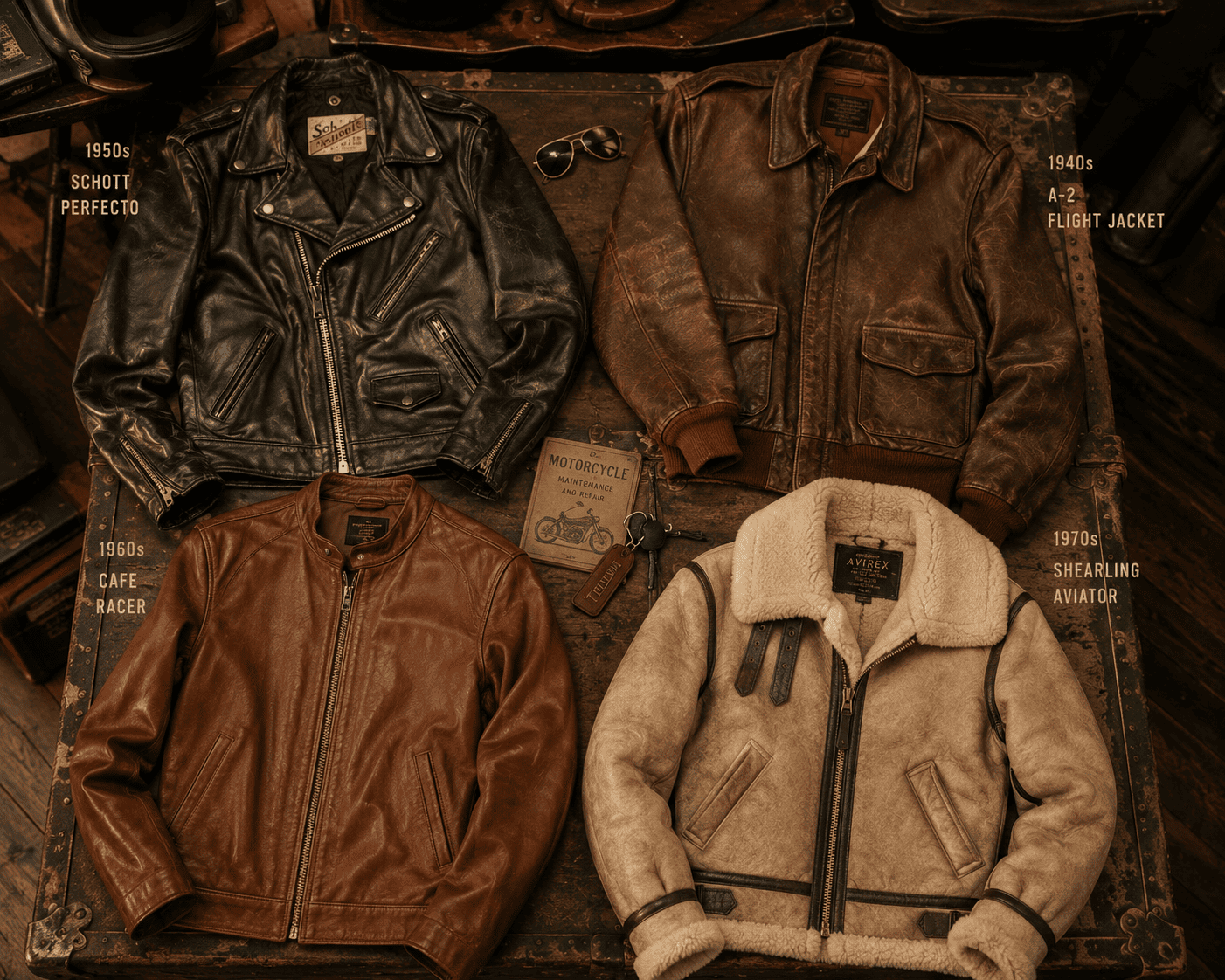
The Schott Perfecto: The Original Biker
Introduced in 1928 by Irving Schott, the Perfecto defined the asymmetrical motorcycle jacket. Named after his favorite cigar, this design featured the first-ever zipper on outerwear, positioned diagonally to allow motorcyclists to lean forward without the zipper biting into the stomach.
Key identifying features include the wide notched lapels with snap-down points, zippered sleeves, belted waist, and shoulder epaulets. The asymmetrical front zipper became the template for every biker jacket since. When Marlon Brando wore one in The Wild One (1953), it cemented the jacket as the uniform of rebellion.
Vintage Perfectos from the 1950s through 1970s used heavy horsehide or steerhide that feels substantially thicker than modern lambskin versions. The hardware typically features brass Talon or Conmar zippers that still function smoothly sixty years later.
The A-2 Flight Jacket: Military Heritage
Developed in the early 1930s for the United States Army Air Corps, the A-2 bomber jacket served pilots through World War II. Unlike later nylon flight jackets, the A-2 used genuine horsehide or goatskin with a simple button-front closure, knit cuffs and waistband, and two front patch pockets.
The back panel features a single piece of leather without shoulder seams, allowing greater arm mobility for pilots operating aircraft controls. Many vintage examples feature hand-painted squadron patches or mission tallies on the back or chest, adding personalized history.
The A-2 offers a boxier, more relaxed silhouette than fitted biker styles, making it versatile for layering over sweaters. The knit trim provides snugness against wind while the leather body offers abrasion protection.
The Cafe Racer: Streamlined Speed
Emerging from British motorcycle culture in the 1960s, the café racer jacket stripped away the heavy hardware of American biker styles in favor of minimalism and aerodynamics. Riders racing between transport cafés needed lightweight protection without flapping belts or bulky lapels slowing them down.
Identifying features include the band collar (also called a mandarin or snap collar), a straight front zipper, minimal pockets, and a slim, cropped fit. The design hugs the body to reduce wind resistance while riding.
Vintage café racers often used softer horsehide or early steerhide that breaks in quickly. The simplicity of the design means fewer zippers to fail and less hardware to polish, making these jackets remarkably durable. Steve McQueen popularized this style both on and off screen, cementing its association with effortless masculinity.
The Shearling Aviator: Winter Warmth
The B-3 flight jacket, developed for high-altitude bomber crews in World War II, represents the pinnacle of shearling-lined leather outerwear. Using thick sheepskin with the wool left attached to the hide, these jackets weigh several pounds and provide insulation against freezing cockpit temperatures.
Distinctive features include the wide shearling collar that buttons at the throat, leather welted seams visible on the exterior, and substantial leather straps at the collar and waist. The leather exterior typically uses chrome-tanned sheepskin rather than cowhide for flexibility.
Authentic vintage B-3 jackets from the 1940s command high prices due to historical significance and the quality of wartime materials. Later military-issue jackets from the 1950s through 1970s offer similar construction at more accessible price points. The patina developed on aged shearling creates a depth of color impossible to replicate artificially.
The Double Rider: 1950s Rebellion
While similar to the Perfecto, the double rider specifically refers to the 1950s evolution featuring more aggressive styling: larger lapels, more zippers, and sometimes zippered chest pockets. These jackets emphasized attitude over pure function.
British manufacturers like Lewis Leathers produced versions favored by rockers and later punk musicians. The “Lightning” model with its diagonal chest zip became particularly iconic. These jackets often used heavier hides than American counterparts and featured quilted linings for comfort.
Finding and Authenticating Vintage Pieces
When hunting for authentic vintage leather, check for union labels, military contract numbers, or manufacturer tags that indicate era. Pre-1960s jackets often used Talon zippers with distinctive pulls, while later decades used YKK or Ideal hardware.
Examine the lining for wear—satin or rayon linings from the 1940s and 1950s often shatter with age, while cotton and wool linings survive better. Check stitching integrity at stress points and ensure zippers operate smoothly. Minor scuffs add character, but avoid jackets with tears through the leather or separated seams unless you are prepared for expensive restoration.
Styling Vintage Leather Today
The key to wearing vintage styles without looking costumed lies in pairing them with modern basics. Wear a 1950s Perfecto with raw denim and plain white sneakers rather than head-to-toe rockabilly attire. Layer an A-2 flight jacket over a minimalist grey hoodie instead of full military regalia. Let the jacket be the statement while everything else remains contemporary and clean.
Frequently Asked Questions
What era produced the best quality vintage leather jackets?
Many enthusiasts consider the 1940s through early 1960s the golden age due to heavy hides and robust construction. However, 1970s and 1980s jackets offer excellent quality at lower prices, often using lighter but still durable materials.
How do I date a vintage leather jacket?
Check the zipper manufacturer (Talon dominated before 1960s), union labels (ILGWU tags changed designs through decades), and hardware details. Military jackets feature contract numbers indicating manufacture year. Leather tanning methods also evolved; older jackets often smell differently due to vegetable tanning versus modern chrome tanning.
Are vintage leather jackets worth the investment?
Authentic vintage pieces from reputable makers like Schott, Aero, or military contractors often appreciate in value while providing decades of continued wear. However, ensure the leather is not dried out or cracked, as restoration costs can exceed the jacket’s value.
How do I restore a vintage leather jacket?
Start with professional cleaning if heavily soiled. Condition the leather with products specifically for aged hides to restore oils without darkening excessively. Replace failed zippers with period-appropriate hardware rather than modern plastic. Avoid DIY painting or dyeing, which often ruins vintage patina.
Why do vintage jackets feel heavier than modern ones?
Older jackets typically used thicker hides—often 1.2mm to 1.4mm thickness compared to modern 0.8mm to 1.0mm fashion leathers. Additionally, many vintage military and motorcycle jackets used horsehide, which is denser and heavier than modern cowhide or lambskin.
Can women wear vintage men’s leather jackets?
Absolutely. The oversized, boxy fit of vintage men’s jackets creates a desirable borrowed-from-him silhouette on women. Many women specifically seek vintage men’s sizes for the relaxed drape and longer sleeves. Conversely, vintage women’s jackets from the 1940s and 1950s often feature tailored waists that work well on smaller frames.
What is the “vintage patina” everyone mentions?
Patina refers to the natural darkening, softening, and glossing of leather that occurs through oxidation, body oils, and sunlight exposure over years. It creates unique color variations and sheen that indicate authenticity and age. Fake patina looks painted-on or uniform, while genuine aging appears organic and varied.
How should I store a vintage leather jacket?
Store on wide, padded hangers to maintain shoulder shape. Avoid plastic garment bags which trap moisture; use breathable cotton instead. Keep away from direct sunlight and heat sources. Condition every six months to prevent the old leather from drying out and cracking.