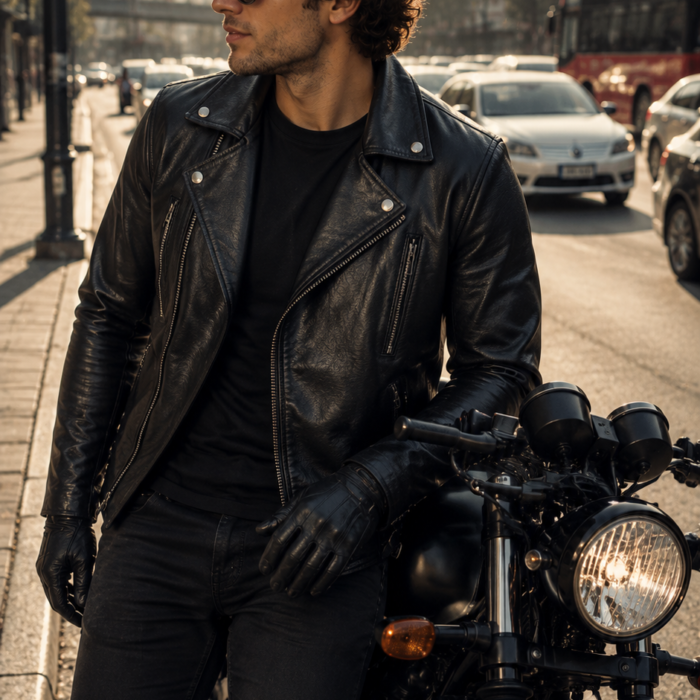
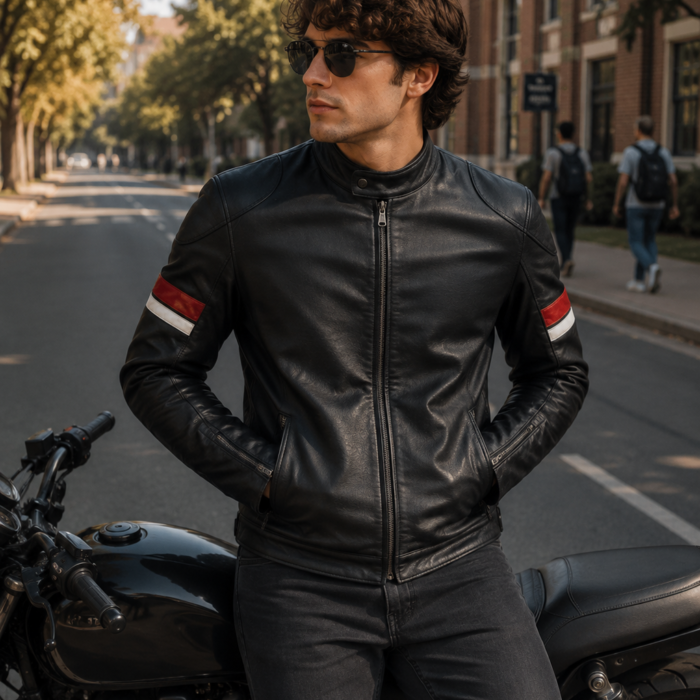
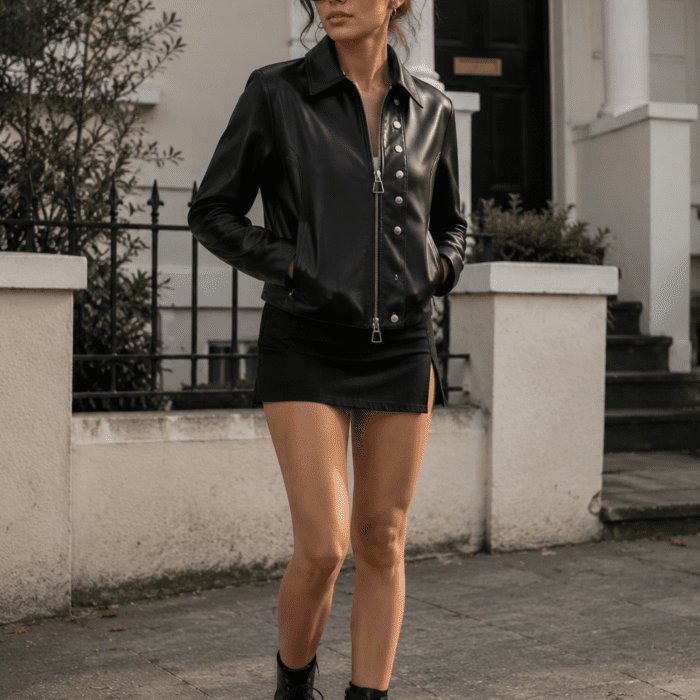
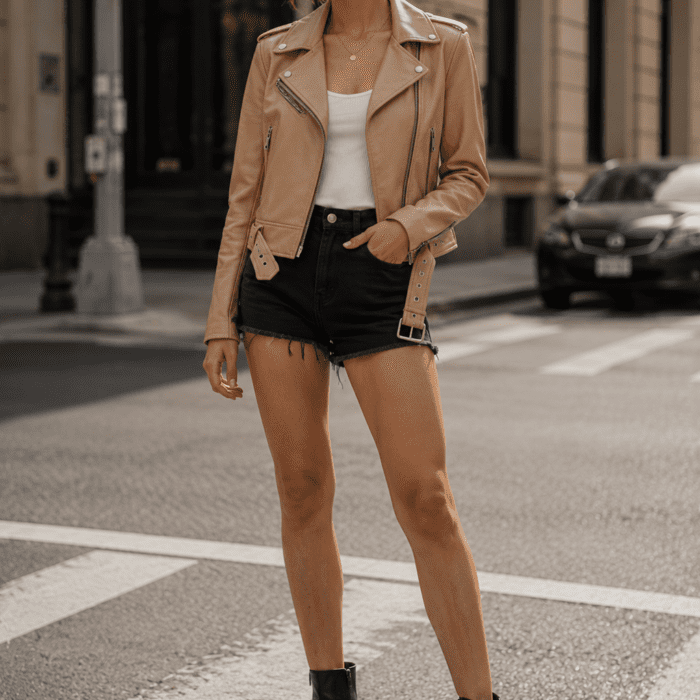
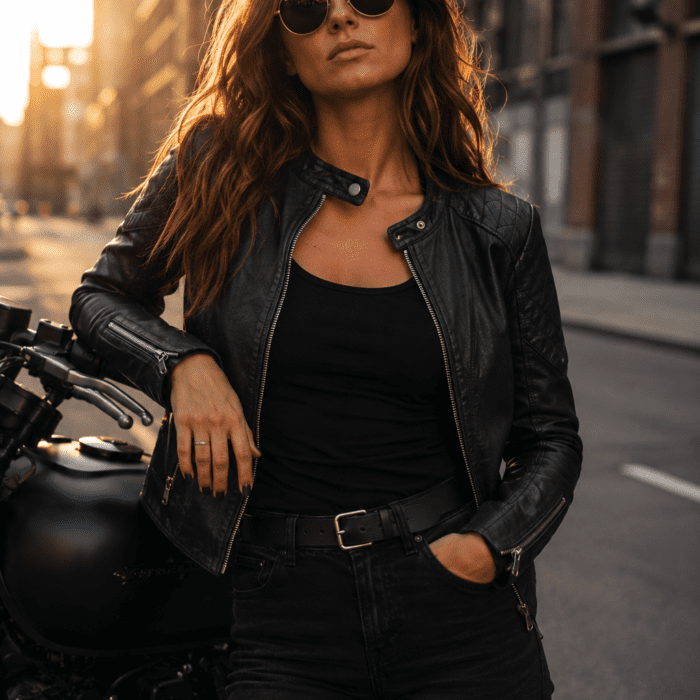
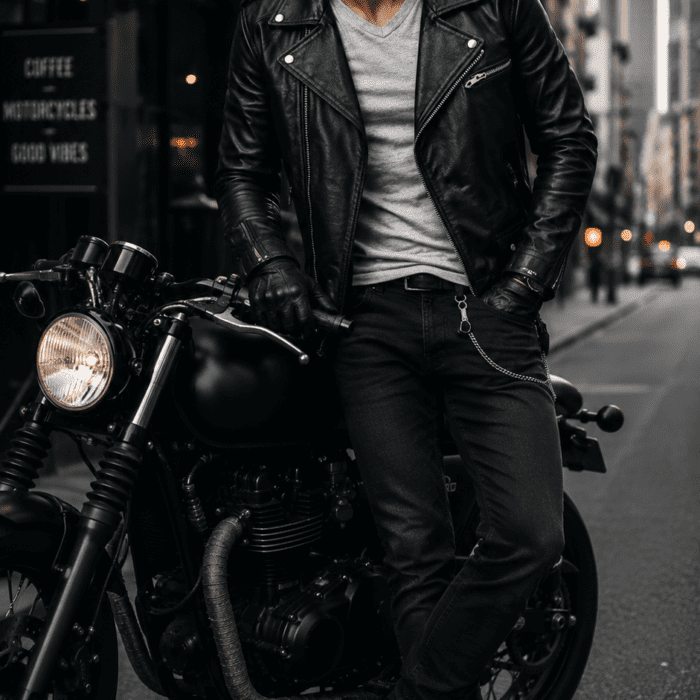
A brand new leather jacket fresh out of the box is beautiful. It is also stiff, uncomfortable, and feels like it belongs to someone else.
That stiffness is temporary. Leather is a natural material that softens and molds to your body over time. The breaking in process takes what is essentially a piece of animal hide and transforms it into your jacket. Something that fits your shoulders, your arms, your posture, and your movements.
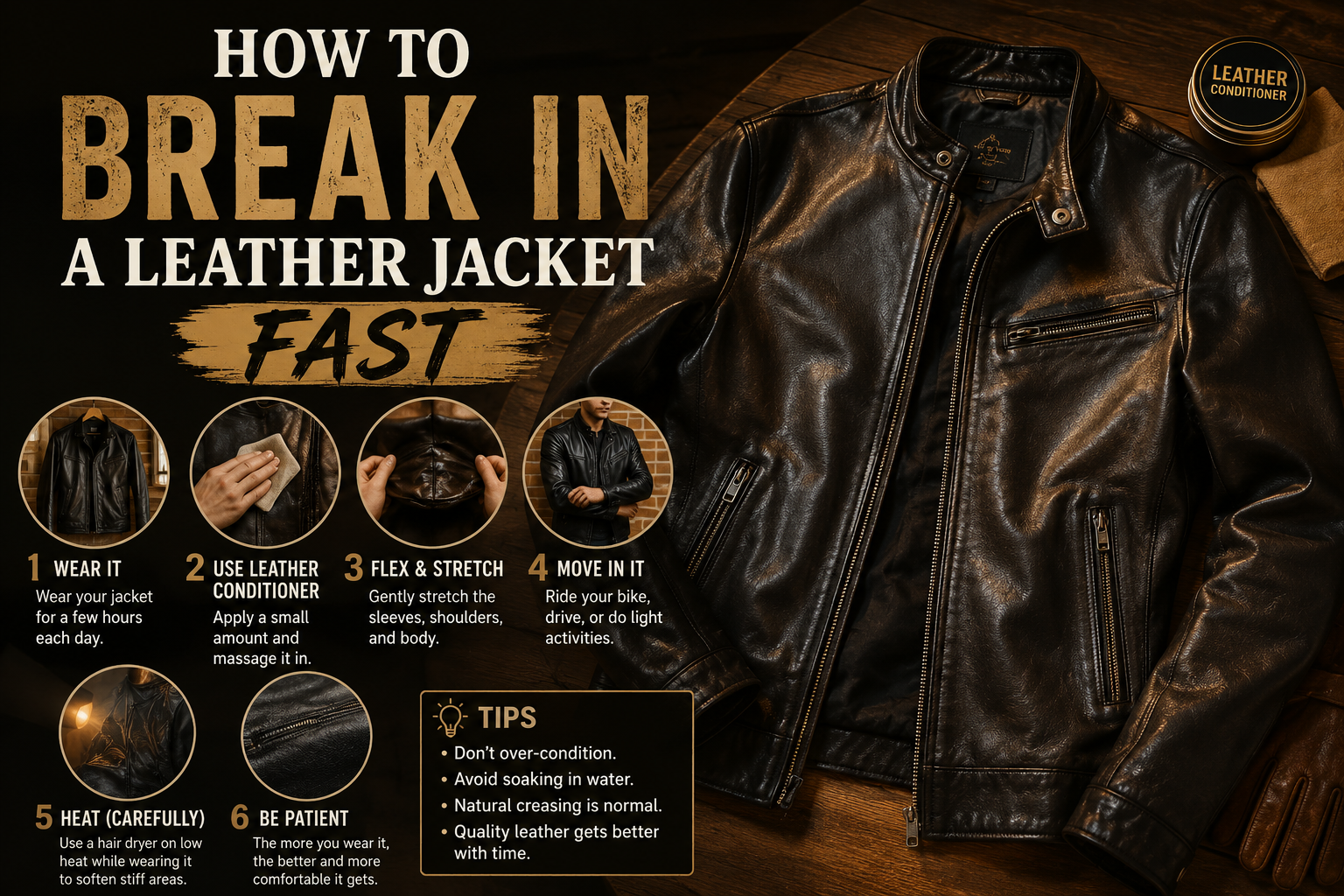
The natural break in process takes weeks or months of regular wear. But if you want to speed things up there are methods that work in days or even hours without damaging the leather.
This guide covers exactly how to break in a stiff leather jacket fast using methods that range from passive to active depending on how quickly you want results.
Why New Leather Jackets Are Stiff
Understanding why leather is stiff helps you break it in properly. Leather comes from animal hide composed of interlocking protein fibers. During the tanning process these fibers are preserved and treated but they remain tightly bound together.
Wearing the jacket causes these fibers to flex and stretch. Over time the fibers loosen and realign to match your body movements. This is what breaking in actually means. The leather fibers are literally reshaping themselves to match you.
Full grain and top grain leather take longer to break in because the outer hide layer has denser fiber structure. Genuine leather breaks in faster because the inner split layers have less fiber density. This is one reason premium leather lasts longer. The same density that makes it stiff initially makes it durable forever.
Method 1: Just Wear It
This is the traditional method and still the best for long term results. Put the jacket on and go about your normal day. Wear it around the house. Wear it on errands. Wear it while watching television. The more hours it spends on your body the faster it breaks in.
The natural heat and moisture from your body warms the leather fibers and makes them more pliable. Your movements create creases in exactly the right places. There is no way to replicate this precision with any shortcut method.
Timeline: One to four weeks of daily wear for noticeable softening.
Method 2: The Towel Roll Trick
This method applies gentle sustained pressure to specific areas that need flexibility.
When you are not wearing the jacket roll it loosely into a clean dry bath towel. Do not fold the jacket. Roll it gently like a sleeping bag with the towel acting as a cushion between the leather layers. Leave it rolled overnight. Unroll it in the morning and wear it.
The gentle sustained pressure helps the fibers relax without creasing or damaging the leather. This is the safest accelerated method available.
Timeline: Repeat for three to five nights for noticeable results.
Method 3: Targeted Flexing by Hand
Find the areas that feel stiffest. Usually the elbows, shoulders, and collar. Work these areas by hand while watching television or sitting at your desk.
Gently bend and flex the leather in your hands. Massage the stiff areas with your thumbs using circular pressure. Work the leather back and forth in the direction it needs to flex when you wear it. Do not pull or stretch aggressively. The goal is repeated gentle movement not one time force.
Timeline: Fifteen to twenty minutes per day for three to five days.
Method 4: The Damp Wear Method
This is the most effective accelerated method but requires caution. Moisture temporarily relaxes leather fibers. Wearing the jacket while slightly damp allows it to mold to your body as it dries.
Use a clean spray bottle filled with lukewarm water. Lightly mist the exterior of the jacket from about twelve inches away. Do not soak the leather. You want the surface to be slightly damp not wet. Put the jacket on and wear it until it dries completely. Move your arms, bend your elbows, and go about normal activities.
The jacket will mold to your body shape as it dries. The creases that form during drying will become permanent flex points that match your actual movements.
Important: Never use hot water. Never soak the jacket. Never use this method on suede or unfinished leather. Never put a damp leather jacket near a heat source to dry faster.
Timeline: Results in one session. Repeat if needed.
Method 5: The Leather Conditioner Softening
Leather conditioner does more than protect. It actively softens stiff leather by reintroducing oils into the fibers.
Apply a quality leather conditioner to the entire jacket according to product instructions. Work it into the leather with a clean cloth using circular motions. Pay extra attention to stiff areas like the elbows and collar. Let the jacket absorb the conditioner for several hours or overnight.
The oils penetrate the leather fibers and lubricate them. This allows the fibers to slide against each other more easily when flexed. The leather will feel noticeably softer after conditioning.
Important: Use only leather specific conditioner. Never use food oils, hand lotion, or petroleum based products. Test on a hidden area first to check for color change.
Timeline: Noticeable softening after one application.
Method 6: Wear It in the Rain
If you are caught in light rain while wearing your jacket do not rush inside. Light rain combined with body heat creates the perfect natural breaking in environment.
The rain lightly dampens the exterior. Your body heat warms the leather from inside. Your movements create creases. This combination softens and molds the jacket faster than any other method. This is how leather jackets were broken in for decades before specialty products existed.
Once you get home wipe the jacket down with a dry cloth. Hang it on a wide padded hanger at room temperature to dry naturally. Condition the leather after it dries completely.
Important: Only use this method with finished leather jackets. Do not use with suede or unfinished leather. Do not intentionally soak the jacket in heavy rain.
Timeline: One good light rain shower makes a noticeable difference.
Method 7: The Shower Steam Method
This method uses steam rather than direct moisture. Hang the jacket on a wide padded hanger in the bathroom while running a hot shower. Close the bathroom door and let the room fill with steam.
The steam gently relaxes the leather fibers without saturating them. After fifteen to twenty minutes remove the jacket from the bathroom and wear it immediately. Flex your arms and move around as the jacket cools and dries.
The combination of steam relaxation and body heat molding creates fast results with minimal risk to the leather.
Important: Do not hang the jacket directly in the shower stream. Steam only not water contact. Wear the jacket until it is completely cool and dry.
Timeline: Results in one or two sessions.
Method 8: The Weighted Stretch
For areas that need specific stretching like tight sleeves or a snug chest use gentle weighted stretching.
Lay the jacket flat on a clean surface. Place a heavy book or a soft weight on the area that needs stretching. Leave it for several hours or overnight. The sustained gentle pressure encourages the leather fibers to relax in that direction.
Important: Never hang the jacket with weights attached as this will stretch the shoulders and collar unevenly. Always lay the jacket flat for this method.
Timeline: Results in one or two overnight sessions.
Method 9: The Professional Break In
Some leather shops and dry cleaners offer professional leather softening services. They use commercial grade conditioning treatments and specialized equipment to break in leather quickly and safely.
This is worth considering if you have a very expensive jacket and want guaranteed results with zero risk. The cost ranges from thirty to eighty dollars depending on the provider.
Timeline: Usually twenty four to forty eight hours.
Method 10: Just Keep Wearing It
This returns to the first method but it bears repeating. There is no substitute for time in the jacket. Every hour you wear it the leather molds a little more. The creases get a little deeper. The fit gets a little more personal.
The breaking in period is not an obstacle to overcome. It is the beginning of a relationship with a piece of clothing that will get better every year you own it. Enjoy the process.
What Never to Do When Breaking In Leather
Never use heat
Hairdryers, radiators, ovens, and direct sunlight all damage leather permanently. Heat shrinks leather fibers and causes cracking. There is no repair for heat damaged leather.
Never soak the jacket
Damp is useful. Wet is destructive. Soaking leather causes it to lose natural oils and can lead to permanent stiffness when it dries incorrectly.
Never use oil or petroleum products
WD-40, olive oil, coconut oil, baby oil, and similar products will ruin leather. They go rancid, attract dirt, and can permanently discolor the finish.
Never fold or crease aggressively
Deliberately creating sharp folds to break in leather creates permanent crease lines that look like damage not patina.
Frequently Asked Questions
How long does it take to break in a leather jacket naturally?
Two to four weeks of daily wear for noticeable softening. Two to three months for the jacket to feel fully broken in and molded to your body. Premium full grain leather takes longer than genuine leather due to higher fiber density.
Can you break in a leather jacket without wearing it?
Yes using the towel roll method combined with hand flexing and conditioning. The results will not match wearing the jacket because your body heat and movement patterns create the most precise molding. But significant softening is possible without wearing.
Does conditioning help break in a leather jacket?
Yes. Leather conditioner lubricates the fibers inside the hide allowing them to flex more easily. Conditioning a new stiff jacket will accelerate the break in process noticeably.
Will rain ruin my leather jacket while breaking it in?
Light rain is fine and actually helps the break in process. Heavy soaking rain can damage leather if the jacket is not dried properly. Wipe off excess water and let the jacket dry naturally at room temperature. Condition after it dries completely.
How do I break in leather jacket sleeves quickly?
The damp wear method works best for sleeves. Lightly mist the sleeves with water, put on the jacket, and bend your arms repeatedly for an hour while the leather dries. The creases that form at the elbow will become permanent flex points.
Final Thoughts
Breaking in a leather jacket is not a problem to solve. It is the process that transforms a jacket you bought into your jacket. The stiffness, the slight discomfort, the feeling that it is not quite yours yet. These are temporary. What comes after is a jacket that fits your body better than anything else you own.
Be patient. Wear it often. Let time and movement do the work.
Browse new premium leather jackets ready to be broken in at Marco Jacket. Every jacket is crafted from full grain and top grain leather that rewards the breaking in process with decades of character and patina.