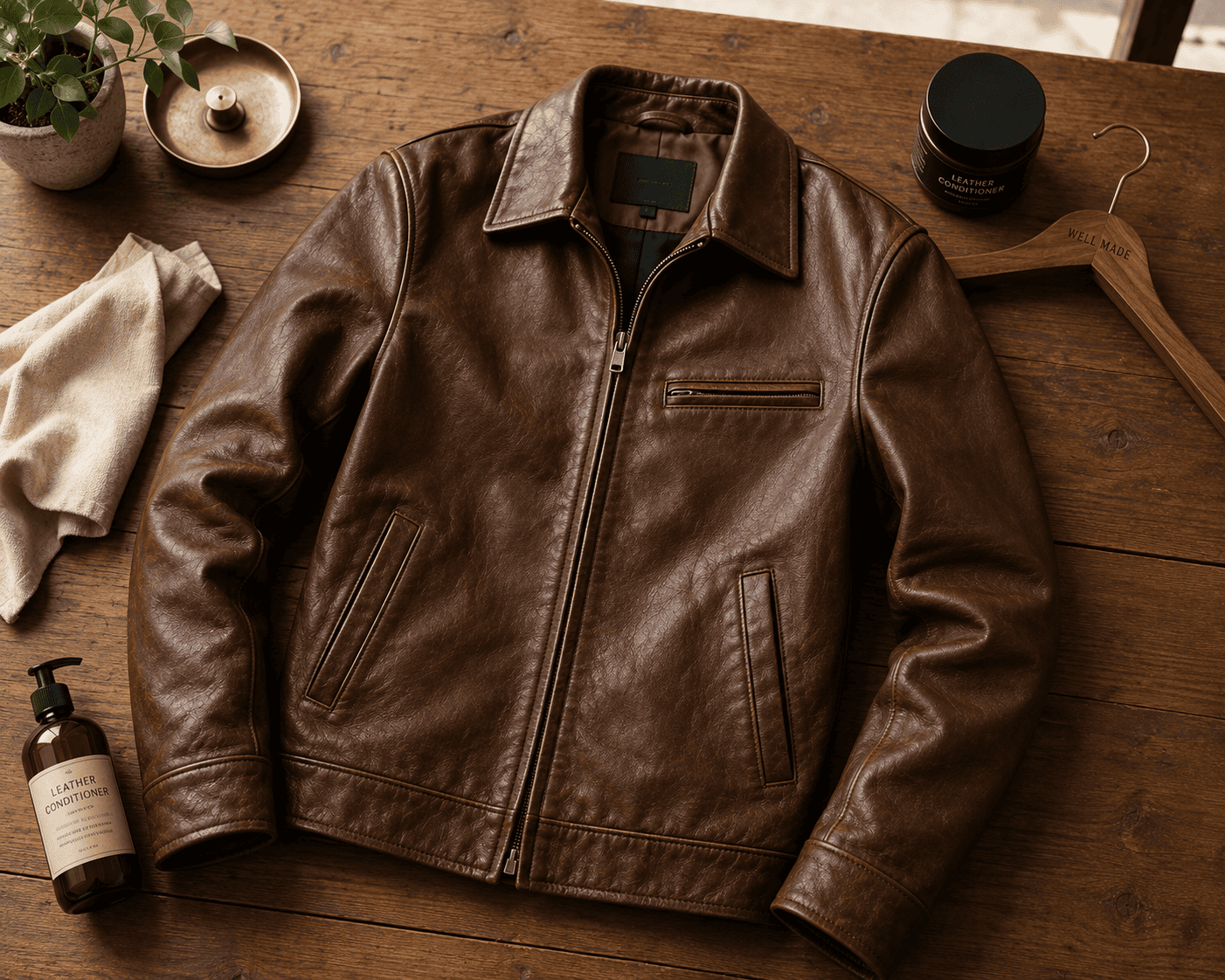
Understanding Your Leather Type Before You Start
Before grabbing any cleaning product, it’s essential to identify what kind of leather your jacket is made from. Different hides require different approaches, and using the wrong method can cause irreversible harm.
Common Leather Varieties
- Full-grain leather – The most durable and premium option. It develops a natural patina over time and responds well to conditioning.
- Top-grain leather – Slightly thinner and more processed, but still high quality. It needs regular moisturizing to prevent drying.
- Suede and nubuck – These textured leathers are far more delicate and require specialized brushes and protectant sprays instead of traditional creams.
- Faux leather (vegan leather) – Made from synthetic materials, it demands gentler cleaning solutions and shouldn’t be treated with oil-based conditioners.
Always check the manufacturer’s care label before applying any product. When in doubt, test on a small, hidden area first.
How to Clean a Leather Jacket the Right Way
Regular cleaning prevents dirt buildup, body oil stains, and premature cracking. You don’t need expensive professional services for routine upkeep — a few household items and some patience go a long way.
Step-by-Step Cleaning Process
- Wipe down the surface using a soft, lint-free microfiber cloth dampened with lukewarm water. This removes surface dust and light grime.
- Prepare a mild cleaning solution by mixing a few drops of gentle dish soap or saddle soap into warm water.
- Gently scrub problem areas with a soft sponge using circular motions. Avoid soaking the leather — excess moisture can warp and discolor the material.
- Rinse the cloth and wipe away any soap residue thoroughly.
- Pat dry with a clean towel and allow the jacket to air dry naturally at room temperature. Never use a hairdryer, radiator, or direct sunlight, as heat causes leather to crack and fade.
Removing Stubborn Stains from Leather
Different stains call for different remedies:
- Ink marks – Dab gently with a cotton ball soaked in rubbing alcohol. Don’t rub aggressively, or the ink will spread.
- Grease and oil spots – Sprinkle baking soda or cornstarch over the stain, let it sit overnight to absorb the oil, and brush it off the next morning.
- Water stains – Dampen the entire panel evenly with a wet cloth so the watermark blends in as it dries uniformly.
- Mold or mildew – Mix equal parts water and white vinegar, apply with a cloth, and let the jacket dry in a well-ventilated space.
For deep-set or unknown stains, consulting a professional leather cleaner is always the safest bet.
Conditioning Your Jacket to Maintain Softness
Think of leather conditioner as moisturizer for your jacket. Just like skin, leather loses its natural oils over time, leading to dryness, stiffness, and eventually cracking.
How Often Should You Condition Leather?
A good rule of thumb is to condition your jacket every three to six months, depending on how frequently you wear it and the climate you live in. Dry, arid environments demand more frequent conditioning, while humid climates require less.
Choosing the Right Leather Conditioner
Look for products that contain natural ingredients like beeswax, lanolin, or mink oil. Avoid anything with silicone or petroleum-based chemicals, as these can clog the leather’s pores and create a greasy, unnatural sheen.
Apply a small amount of conditioner to a soft cloth and work it into the leather using gentle, even strokes. Let it absorb for 15 to 20 minutes, then buff away any excess with a dry cloth. Your jacket should feel noticeably softer and look refreshed.
Proper Storage Tips to Prevent Damage
How you store your leather jacket matters just as much as how you clean it. Poor storage habits are one of the leading causes of warping, creasing, and deterioration.
Best Practices for Storing Leather Outerwear
- Use a wide, padded hanger — Wire or thin plastic hangers distort the shoulders over time. A broad wooden or padded hanger preserves the jacket’s natural shape.
- Cover it with a breathable garment bag — Cotton or muslin bags allow air circulation while keeping dust away. Never use plastic bags, which trap moisture and promote mold growth.
- Store in a cool, dry closet — Avoid basements, attics, or areas prone to temperature fluctuations and humidity.
- Give it breathing room — Don’t cram your jacket between other garments. Leather needs space to maintain its form.
Seasonal Storage Advice
If you’re putting your jacket away for the warmer months, clean and condition it first. This creates a protective barrier that keeps the leather nourished while it sits idle. Check on it periodically throughout the off-season to ensure no moisture issues have developed.
Everyday Maintenance Habits That Make a Difference
Beyond cleaning and conditioning, a few simple daily habits can dramatically extend the lifespan of your leather jacket.
- Avoid prolonged sun exposure — UV rays fade color and dry out the material faster than almost anything else.
- Stay away from perfumes and hairsprays — Alcohol-based sprays strip natural oils and leave permanent marks on leather.
- Handle rain smartly — If your jacket gets wet, blot the water immediately and let it dry naturally. Apply conditioner once it’s fully dry to replenish lost moisture.
- Rotate your wardrobe — Wearing the same jacket every single day accelerates wear. Alternating between pieces gives leather time to breathe and recover.
Frequently Asked Questions
Can I wash a leather jacket in a washing machine?
No, machine washing is extremely damaging to leather. The agitation, excess water, and detergent strip away natural oils and can permanently warp the shape. Always hand clean using a damp cloth and mild soap.
How do I get rid of a musty smell from my leather jacket?
Hang the jacket outdoors in fresh air for several hours, avoiding direct sunlight. You can also place crumpled newspaper or baking soda inside to absorb lingering odors overnight.
Is it safe to use olive oil as a leather conditioner?
While olive oil can temporarily soften leather, it tends to go rancid over time and may darken the material unevenly. It’s better to use a product specifically formulated for leather care.
How long does a well-maintained leather jacket last?
With proper cleaning, conditioning, and storage, a high-quality leather jacket can last 20 years or more. Many vintage pieces are still in excellent condition after several decades of mindful care.
Can a cracked leather jacket be repaired?
Minor surface cracks can often be improved with a good leather conditioner or restoration cream. For severe cracking or peeling, a professional leather repair specialist can restore the jacket using color-matching dyes and fillers.
Taking care of a leather jacket doesn’t require a lot of time or money — just consistency and the right techniques. By cleaning gently, conditioning regularly, and storing thoughtfully, you’ll keep your jacket looking effortlessly sharp season after season.