The market overflows with jackets labeled “leather” that range from premium full-grain hides to plastic composites barely distinguishable from vinyl. Sellers use confusing terminology—bonded leather, genuine leather, PU leather, bi-cast—to obscure what you are actually purchasing.
Knowing how to authenticate real leather protects you from overpaying for synthetics and ensures you receive the durability and aging characteristics you expect. These verification methods work whether you are shopping in stores, browsing thrift shops, or examining jackets purchased online.
Understanding Label Language
Start with the tag, but read skeptically. Terms like “genuine leather” technically indicate real hide but often represent the lowest quality grade made from bonded scraps. “Full-grain” or “top-grain” indicates higher quality real leather. “PU leather,” “faux leather,” “vegan leather,” or “pleather” indicate synthetic materials containing no animal products.
“Bonder leather” occupies a middle ground—it contains real leather fibers mixed with polyurethane binders, but performs like plastic and cannot be repaired like solid hide. If the label simply says “leather” without qualification, examine further.
The Visual Inspection
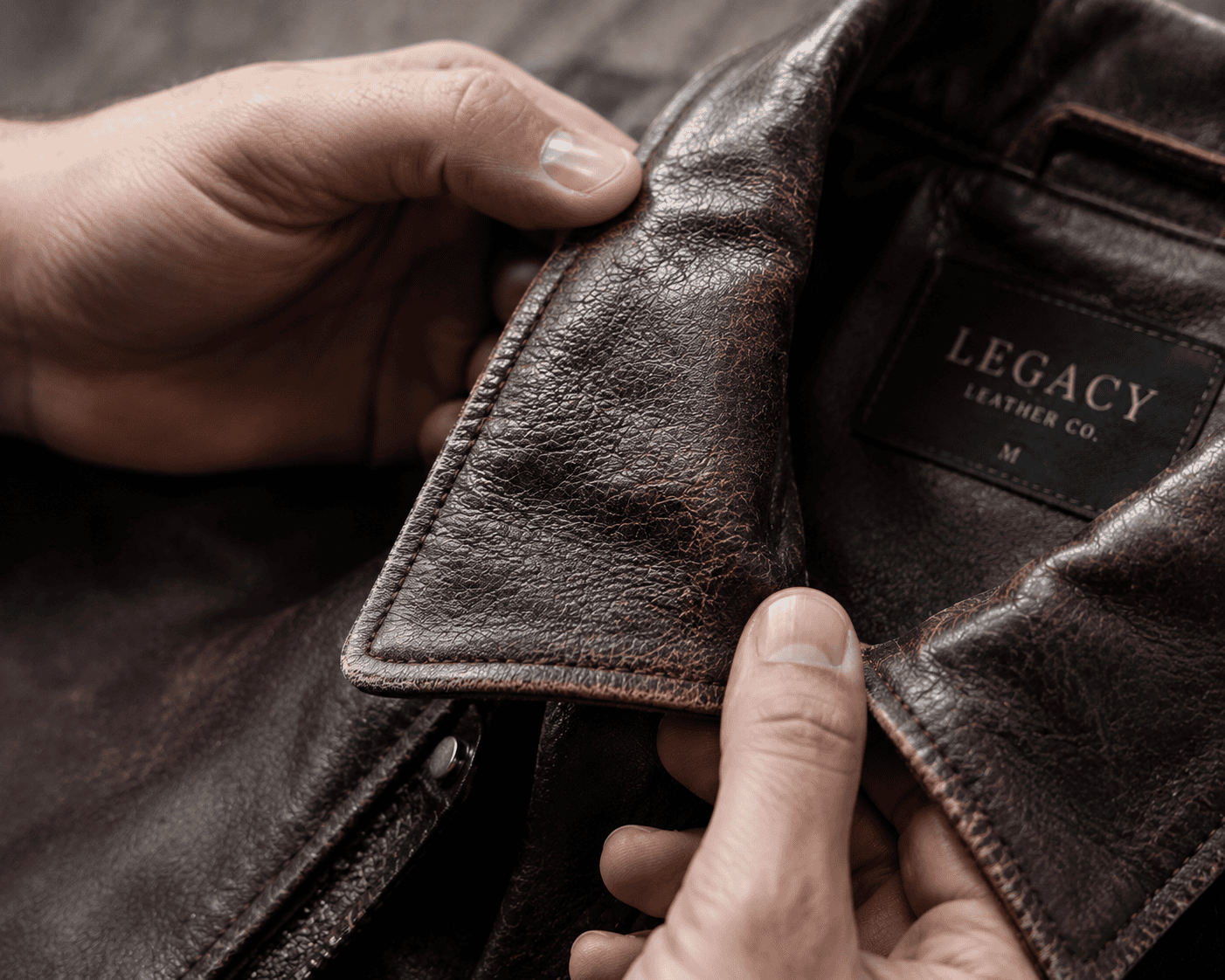
Pore Patterns: Real leather displays random, irregular pore structures and minor imperfections across the surface. Using a magnifying glass or your phone’s macro lens, look for natural variation in the grain. Fake leather shows perfectly uniform embossed patterns that repeat mechanically.
Edge Examination: Examine cut edges where panels meet or at interior seams. Real leather reveals fibrous, suede-like texture within the material thickness—it looks like dense felt or compressed hair. Synthetic materials show woven fabric backing sandwiched between plastic layers, often with visible glue lines or foam cores.
Surface Sheen: Real leather reflects light softly and variably depending on the grain. Fake leather often has a consistent plastic shine or overly uniform matte finish that looks manufactured.
The Tactile Tests
Temperature Check: Press your palm against the material for five seconds. Real leather absorbs body heat quickly, feeling warm thereafter. Synthetic materials feel cooler or maintain room temperature, often feeling slightly clammy or plastic-like.
The Pinch Test: Pinch the material between your fingers. Real leather wrinkles slightly and shows flexible give, with a subtle grainy texture under your fingertips. Fake leather feels stiffer, springs back immediately without wrinkling, or feels rubbery.
The Flex Test: Bend a sleeve or panel sharply. Real leather creases naturally with minimal noise. Fake leather often makes a cracking sound as the plastic coating stresses, and may show white stress marks where the coating separates from the fabric backing.
The Definitive Smell Test
Real leather possesses a distinct, rich, organic scent reminiscent of earth, wood, and dried leaves. It is subtle but unmistakable. Synthetic materials smell like chemicals, vinyl, or new plastic. Some manufacturers spray fake leather with leather-scented perfumes, but these fade quickly to reveal the underlying artificial odor.
Trust your nose—if it smells like a chemistry set rather than a tack shop, it is not real hide.
The Water Drop Test
Place a single drop of water on an inconspicuous area (inside hem or under the collar). Real leather absorbs water slowly, darkening temporarily before drying back to normal. The water should sink in within thirty seconds to a minute.
Synthetic materials repel water entirely, with droplets beading up and rolling off. Note that some heavily treated or coated real leather may also repel water initially, so combine this test with others.
The Fire Test (Use Extreme Caution)
Only perform this on loose threads or scrap material, never on the main garment. Hold a lighter flame to a small edge for two seconds. Real leather chars and smells like burning hair or flesh, producing ash. Synthetic materials melt, bubble, and smell like burning plastic or chemicals.
This test is definitive but risky—only attempt if you have permission to slightly damage the material, such as on an interior seam allowance.
Price and Context Clues
Real leather jackets rarely retail below $200 due to material and tanning costs. If a “leather” jacket costs $50, it is synthetic or bonded at best. Exceptionally expensive jackets ($500+) should be scrutinized for brand authenticity to ensure you are not paying luxury prices for mid-grade materials.
Weight and Drape
Real leather has substantial weight—lightweight jackets feel insubstantial compared to quality hides. When hung, real leather drapes naturally with soft folds. Stiff, plastic-like rigidity indicates synthetic materials or heavily corrected grain.
Frequently Asked Questions
Does real leather always have a rough side on the back?
Quality leather jackets have suede-like napped backs where the flesh side of the hide is visible. However, some lined jackets cover this, so check at vent openings or under armholes. If the backing is woven fabric or foam, the material is synthetic.
Can fake leather look exactly like real leather?
High-quality PU leather can mimic appearance convincingly initially, but fails on smell, temperature response, and aging. After six months of wear, fake leather shows cracking and peeling that real leather does not. The differences become obvious over time even if not immediately apparent.
Is bonded leather considered real leather?
Legally yes, practically no. Bonded leather contains only 10-20% leather fibers mixed with polyurethane. It looks and behaves like plastic, peeling within years. It qualifies as “real” for labeling purposes but offers none of the longevity or repairability of solid hide.
Why do some real leather jackets feel like plastic?
Heavy finishes, pigments, and coatings used on corrected-grain leather can create a plastic-like surface. While technically real leather, these heavily processed hides lack the breathability and aging characteristics of full-grain. They are real but low quality.
Can you tell by the price if leather is real?
Generally, yes. New genuine leather jackets under $100 are extremely rare and usually indicate bonded leather or sales of old stock. Quality real leather typically starts around $200-$300 for basic styles. Prices significantly lower suggest synthetic materials.
Does real leather scratch easily?
Real leather scratches, but these marks often buff out or blend into the patina. Fake leather shows surface damage that reveals white or colored backing beneath. Real leather damage looks like color lightening; fake leather damage looks like peeling paint.
Is genuine leather better than PU leather?
For longevity and repairability, yes. Genuine leather lasts decades and can be restored. PU leather lasts 2-5 years and cannot be repaired. However, for vegan ethics or strict budgets, high-quality PU offers a temporary alternative with less initial cost.
What does full grain leather feel like?
Full grain feels substantial, with visible natural texture and slight imperfections. It is neither perfectly smooth nor plastic-like. It warms to touch, smells organic, and shows depth when you look closely at the grain. It feels alive rather than manufactured.