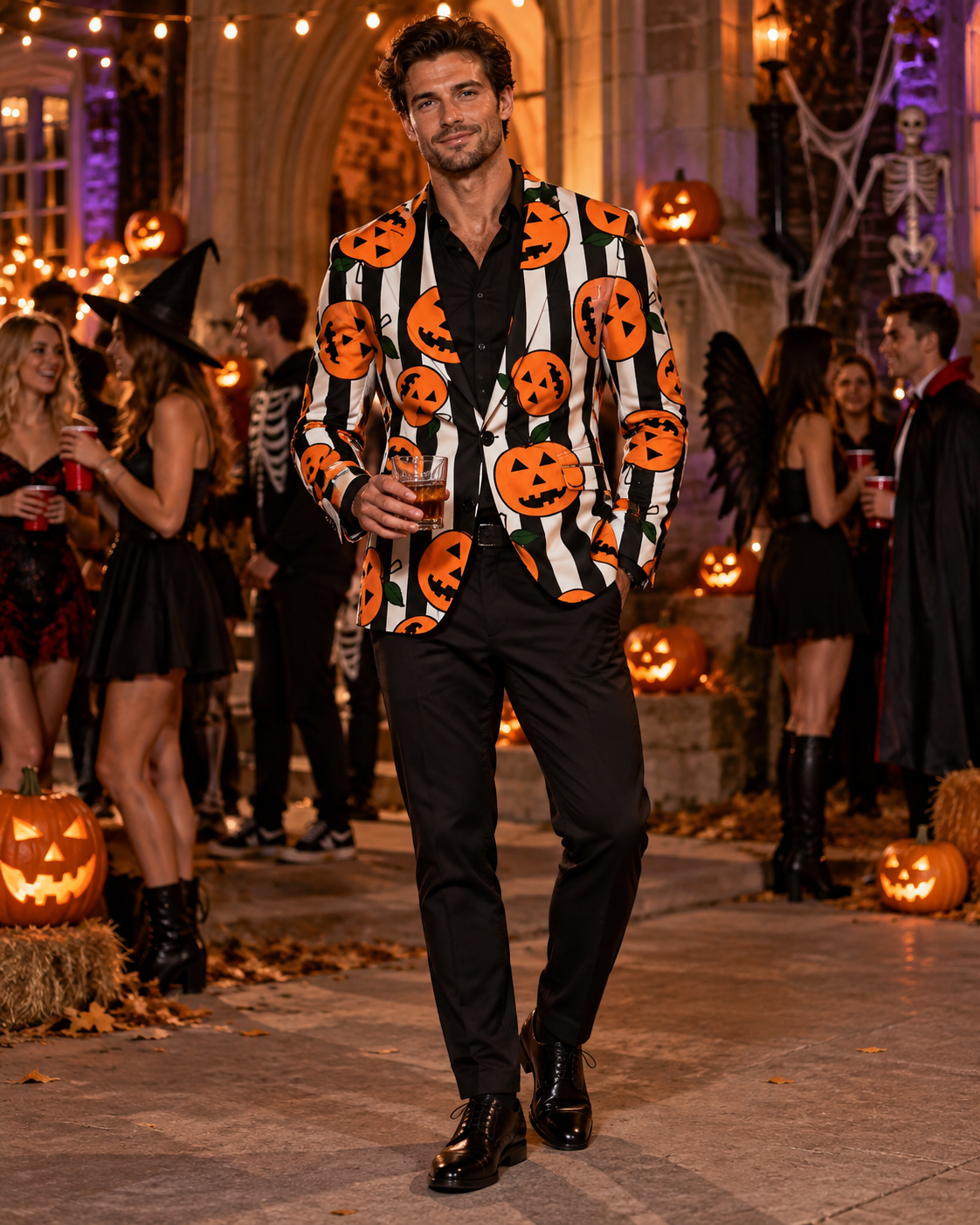
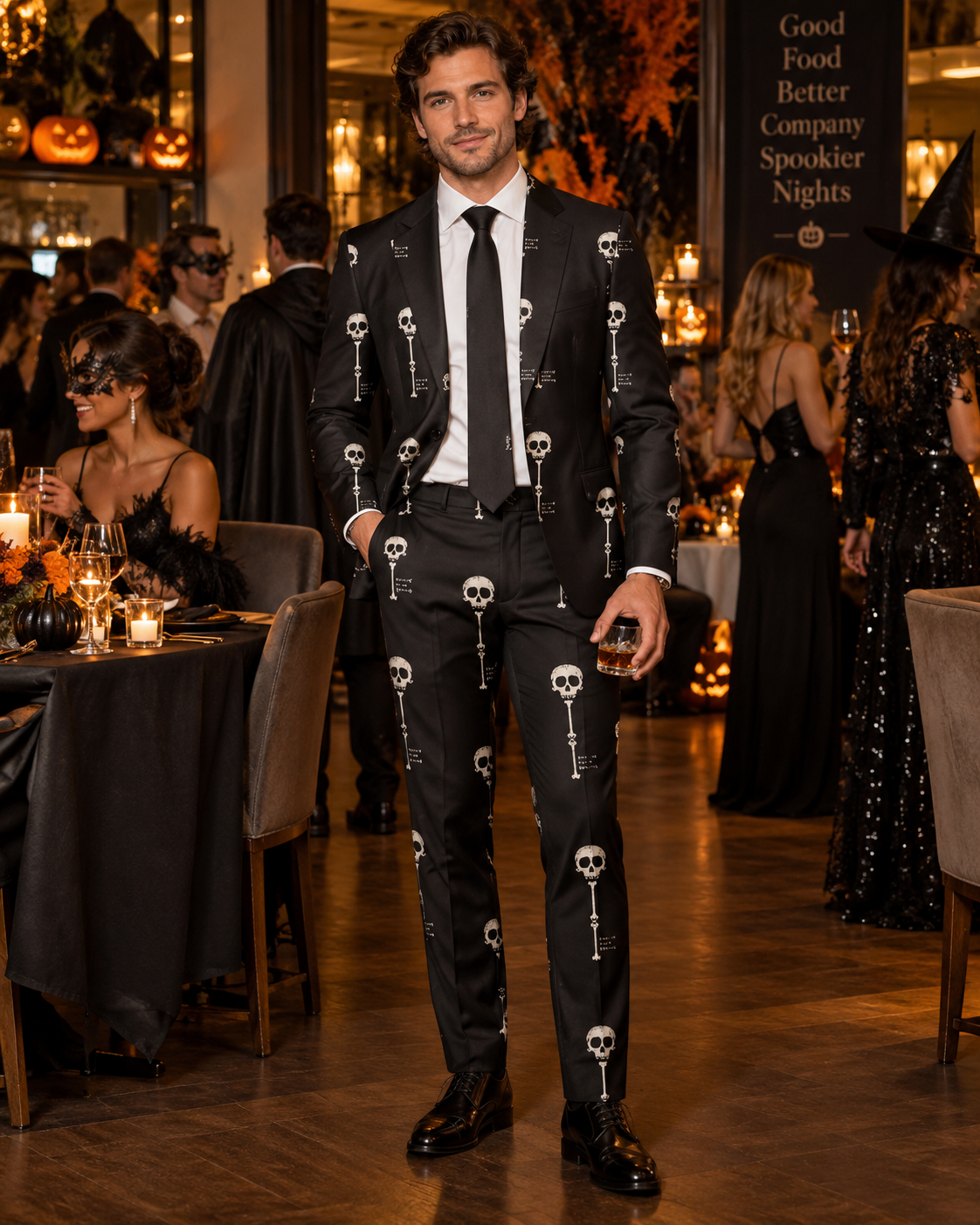
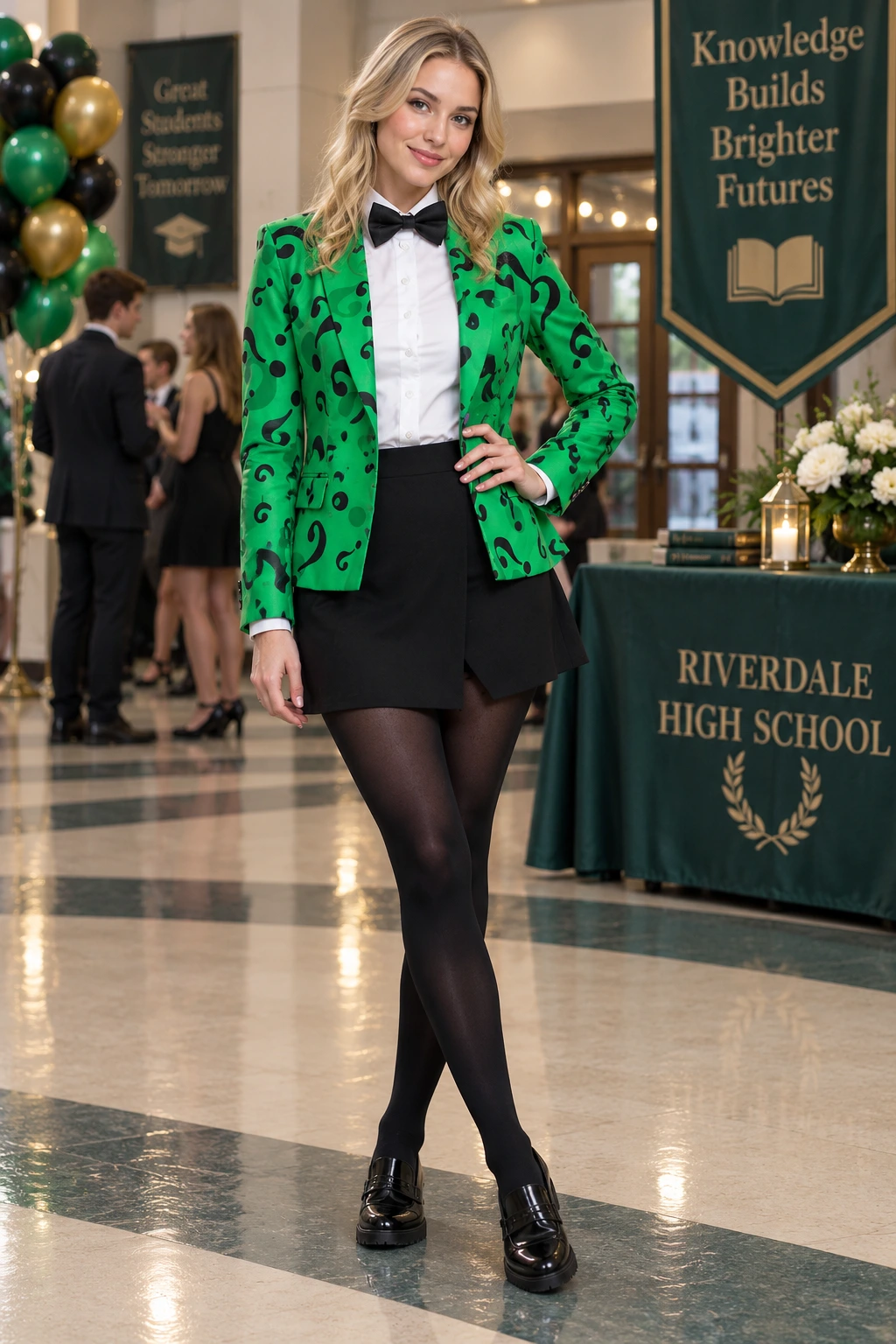
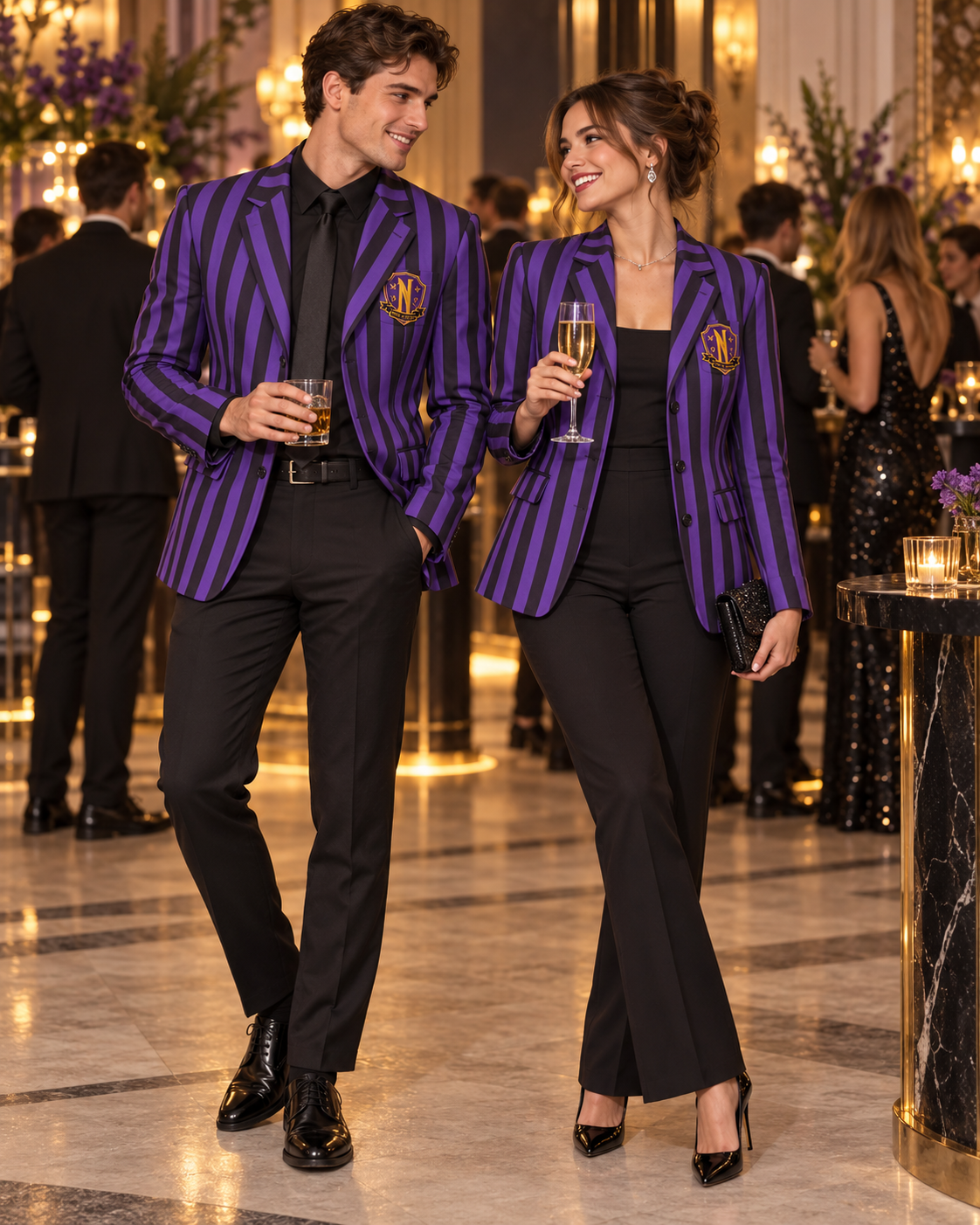
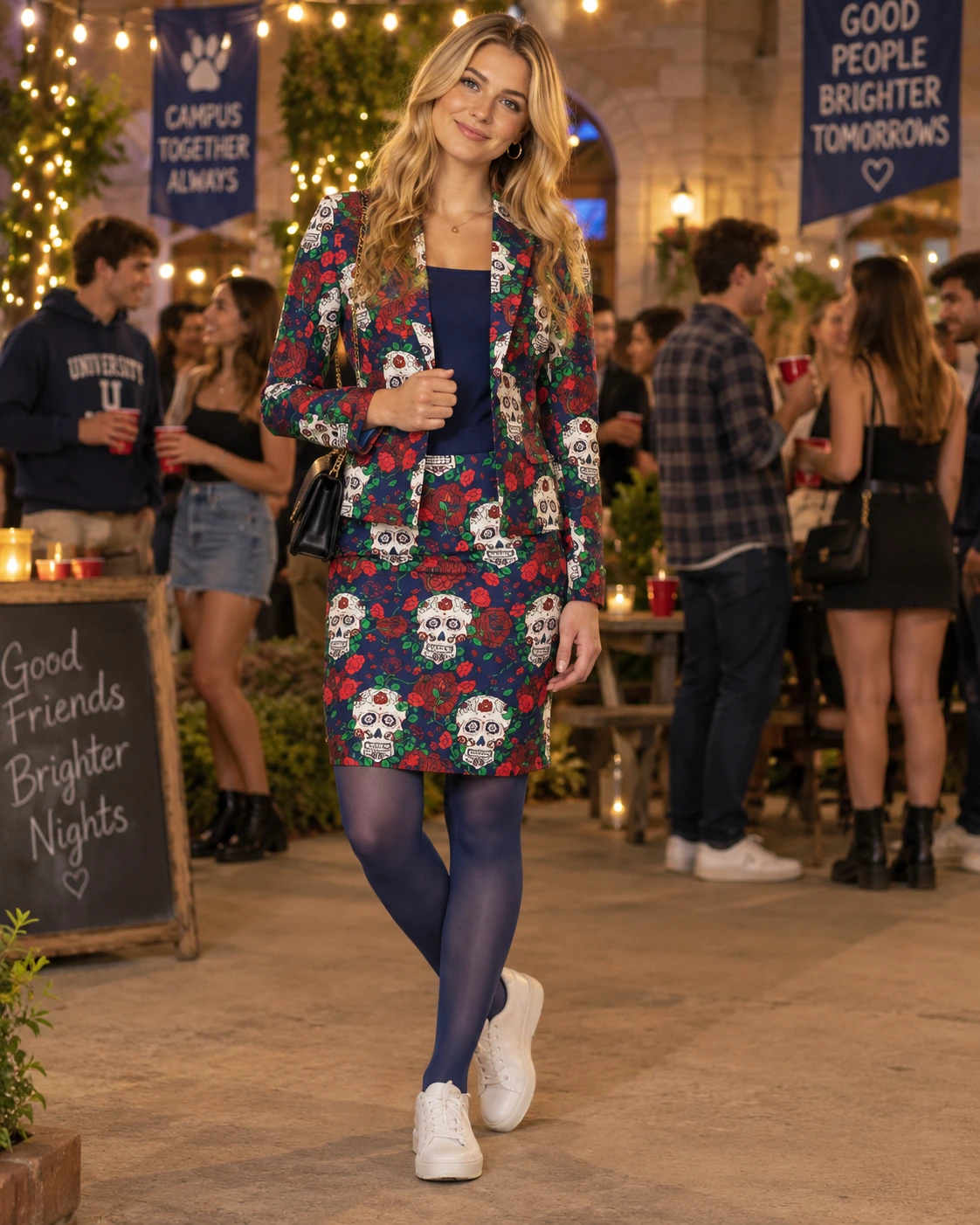
Dressing up on Halloween is a habit most people never stop to question, but it's a genuinely old one with a debated history behind it, and knowing a little of that history is useful before choosing a costume, since it explains why some costume types are built for a quick disguise and others for a full night of comfortable wear. This category covers both ends of that range at Marco Jacket: full costumes made to order for a single night, and a smaller set of character-inspired jackets that double as a costume-party look while still holding up as regular outerwear afterward. Because new costumes get added to this category regularly, the guidance below is organized around what actually makes a costume worth wearing rather than around whatever specific pieces happen to be listed today.
Where Dressing Up for Halloween Actually Comes From
The tradition is old enough, and documented unevenly enough, that historians genuinely disagree on some of the details, so it's worth treating any confident, specific-year explanation with some skepticism. What's more widely agreed on is that the roots trace back to ancient Celtic harvest festival traditions marking the turn toward winter and darker months, a season when the boundary between the living world and the world of spirits was believed to thin. Out of that belief came guising and mumming, the practice of disguising yourself as a spirit, animal or otherworldly figure, often going door to door performing a song, verse or trick in exchange for food, partly for entertainment and partly, by some accounts, to blend in with the wandering dead rather than be recognized by them. A related custom called souling, tied to All Souls' Day in the Christian calendar, had people going door to door for small cakes in exchange for prayers, and some historians treat that as a separate but overlapping thread rather than the same tradition under another name. How directly any of this connects to modern costuming is genuinely debated among historians and folklorists, and some scholars argue the pagan Celtic throughline gets more credit in popular retellings than the evidence actually supports, so it's fairest to say the practice has disputed but plausible roots reaching back centuries rather than a single confirmed point of origin.
How a Regional Custom Became a Mass-Market Night of Costumes
Waves of Irish and Scottish immigration carried guising-style customs across the Atlantic, where they blended with existing American harvest celebrations and community traditions, and similar door-to-door customs under other names, souling in parts of England, belsnickeling in some German-American communities, fed into the same general mix. Exactly when this settled into the trick-or-treating ritual now associated with American Halloween isn't something sources agree on precisely, but the shift from a home-made disguise to a purchased costume tracks alongside the rise of mass manufacturing and retail more generally over the twentieth century, as companies began producing ready-made costumes at a scale individual households never had before. That's the same shift that put a costume aisle in most department stores every autumn, stocked with inexpensive, single-use pieces meant to survive one night rather than several years. A costume built to be worn once and thrown away is a reasonable choice for plenty of people, but it's a genuinely different product from something cut and sewn for a specific body and meant to be worn again, which is closer to what guising costumes actually were before mass production took over.
What Actually Separates a Durable Costume From a Flimsy One
The difference usually comes down to a handful of things: fabric weight, how the seams are finished, and whether structured details are actually sewn in rather than glued on. An adult neon clown costume built from a heavier, opaque fabric holds its color and shape through a full night in a way the thin, see-through polyester common in bagged costume-aisle sets doesn't. Structure matters too: the adult Day of the Dead skeleton suit costume relies on paneled construction across the torso to keep its printed detail from warping with movement, while the lighter skeleton hoodie costume trades that structure for a soft pullover build, a reasonable tradeoff if what you want is comfort over a fully sculpted silhouette. Finished edges and closures matter on anything with a hard surface too; a piece like the adult chrome metallic mask costume needs a properly finished shell so the metallic surface doesn't crack or flake after a few hours of wear, and the alien bounty hunter costume depends on the same kind of structured paneling to hold its shape rather than collapsing into a shapeless drape by the end of the night.
Layering and Comfort for a Full Night of Trick-or-Treating or a Party
Late October evenings run cold in a lot of places, which turns costume choice into a real comfort question and not just a styling one. A costume that only works as a single thin layer forces a choice between looking right and staying warm, so anything close-fitting enough to layer a thermal shirt underneath without ruining the silhouette has a real advantage, which is part of why a suit-style piece like the purple and green villain suit or the sinister ringmaster costume tends to layer more easily than a bulkier costume would. A rugged Santa vest costume works the opposite way, doubling as an outer layer over a sweater rather than something to layer under. Visibility after dark matters just as much as warmth, especially for kids moving between houses on unfamiliar streets, which is exactly the kind of practical detail built into a piece like the kids glow-in-the-dark clown costume. Fit matters for safety too; a costume that's loose enough to trip over or a mask that blocks peripheral vision is a real hazard once you're walking unfamiliar ground in low light, so checking fit and range of motion before the night itself is worth the extra few minutes.
Matching a Costume Style to the Night You're Actually Having
Not every costume is trying to do the same job, and it helps to think about which category actually fits your plans. Some pieces here are built around a recognizable type rather than a specific licensed character, which keeps them flexible for a party, a school event or a night of trick-or-treating alike; the adult yellow minion-style costume and the villain suit and ringmaster costume linked above are good examples of that broader, non-franchise-specific approach. The clown range covers a wider spread than most people expect, from the friendlier neon clown costume mentioned earlier to a genuinely unsettling kids red-haired evil clown costume, so it's worth deciding in advance how far into "unsettling" you actually want to go, particularly for younger trick-or-treaters. On the sci-fi end, the alien bounty hunter costume and a green alien baby costume lean on the kind of extraterrestrial imagery that's shown up across decades of science fiction rather than one specific film's creature design, and both show up under Movie Outfits as well for anyone browsing from that angle. A lot of these pieces are also filed under Cosplay Outfits, since a costume built around a general type rather than a single franchise genuinely fits more than one shelf on this site at once.
Character-Inspired Jackets That Work As a Costume and as Real Outerwear
A full costume and a character-inspired jacket are built to solve different problems, and it's worth being clear on which one you actually want before ordering. A costume meant for a single night leans on lighter fabric, foam detailing and a looser fit that goes on quickly over regular clothes, since surviving years of wear was never the point. A character-inspired jacket is built the opposite way, in a durable fabric or genuine leather shell meant to hold up as everyday outerwear long after October, with the reference kept to a color, cut or patch rather than an exaggerated costume silhouette. The Ben 10-inspired racer jacket and the Attack on Titan-style jacket both fall into this second category, styled after a recognizable look without being produced or licensed by the shows they reference, and both work as a costume-night piece and as a jacket you'd reach for in November. More jackets built along the same lines live under Movie Outfits, TV Show Outfits, Cosplay Outfits and Celebrity Outfits.
Looking for a Specific Character Instead?
If a particular film, show, game or public figure is what you actually have in mind rather than a generic costume type, Movie Outfits and TV Show Outfits cover live-action characters, Cosplay Outfits covers anime, games and generic convention costumes, and Celebrity Outfits covers real-world wrestling, red carpet and stage style. All four work the same way this category does: made to order, styled after a look, never sold as licensed merchandise.
Sizing and How Made-to-Order Works
Nothing in this category is pre-made and sitting in seasonal storage; each costume and jacket is cut and sewn once your order comes in, built against the size chart listed on that specific product's page. If your measurements fall outside that chart, email sales@marcojacket.com before ordering and we'll confirm what's adjustable. Since everything here is made to order, ordering well ahead of the date you need it is worth doing rather than waiting until the last week of October.
Caring for a Costume So It Survives to Next Year
Most costume pieces hold up fine to a gentle wash, though checking the care label first is worth doing since finishes and trims vary piece to piece. The character-inspired jackets take the same care as any regular jacket in that material, a leather piece needs a soft cloth and leather-specific conditioner rather than a washing machine, while a fabric jacket generally tolerates a cold, gentle cycle. Between uses, storing a costume flat or on a wide hanger rather than balled up in a bin helps foam or structured details keep their shape from one Halloween to the next, and keeping pieces out of direct sunlight and damp storage helps printed and metallic finishes last more than one season.
Frequently Asked Questions
Is it actually true that Halloween costumes came from ancient Celtic tradition?
That's the most commonly cited explanation, tracing back to Celtic harvest festival customs and practices like guising and mumming, but historians genuinely disagree on how direct that line is, and some argue the connection gets more credit in popular retellings than the historical record fully supports. It's fair to call the origins old and disputed rather than settled.
How far in advance should I order to have a costume ready for Halloween?
As early as possible. Everything here is made after you order rather than pulled from seasonal stock, so ordering weeks ahead rather than days ahead gives production and shipping enough time to work with.
Are these costumes officially licensed by any film, show or franchise?
No. Every piece is built around a general costume type or character look, not produced, sold or endorsed by any studio, network or rights holder.
What actually makes one costume more durable than another?
Mostly fabric weight, seam construction and whether structured details are sewn in rather than glued on. A heavier, properly finished piece holds its shape and color through a full night and repeat wear, where a thin costume-aisle piece tends to sag, tear or fade quickly.
Are the clown and skeleton costumes sized for adults, kids, or both?
Both, but not every listing covers every age range. Check the specific product page for the sizing it's built for rather than assuming.
Why do some of these costumes also appear under Cosplay Outfits or Movie Outfits?
A costume built around a general type, a clown, an alien, a villain, genuinely fits more than one category on this site. It's still a single product, just listed everywhere it makes sense rather than being duplicated.
Are the character-inspired jackets warm enough to wear as actual outerwear after Halloween?
Yes, they're built as real jackets rather than costume-only pieces, so they hold up as everyday wear once the season's over, unlike the lighter fabrics used in most full costumes.
Does this category ship outside the United States?
Yes, aside from a short list of currently excluded countries. The shipping and delivery policy page has the specifics.
What's the process if a costume doesn't fit once it arrives?
The returns and refund policy page covers the process and timelines, including anything specific to made-to-order pieces.
Can sizing be adjusted if I don't match the standard chart?
Email sales@marcojacket.com with your measurements before ordering and we'll confirm what's possible for that specific costume or jacket.