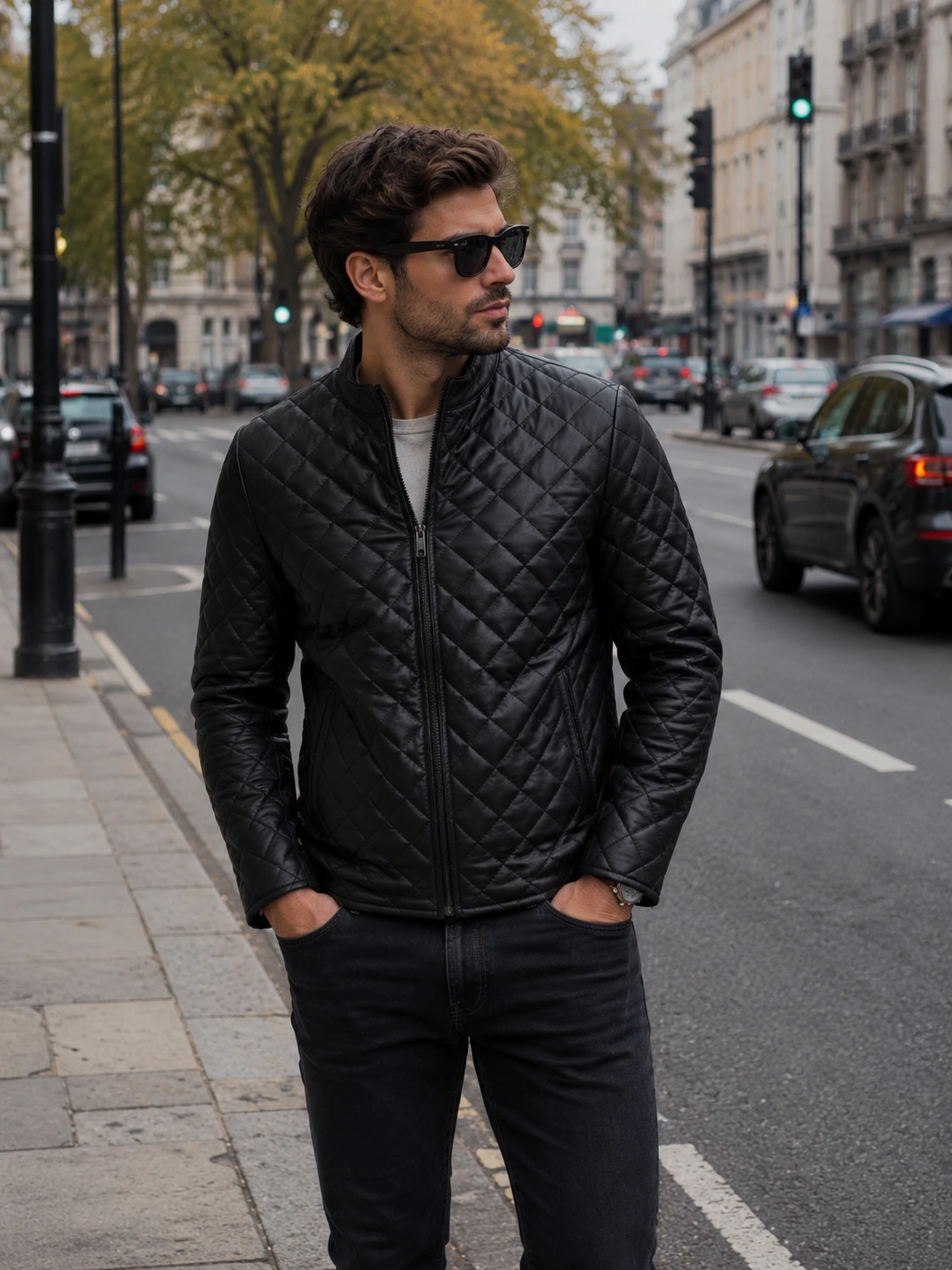
A leather jacket is one of the few garments where the details that look purely decorative, an asymmetric zip, a shawl collar, a ribbed cuff, actually started out solving a real problem. This category spans biker and cafe racer cuts, aviator and shearling-lined styles, bombers and heavier patrol-style pieces, built in genuine cowhide, lambskin or shearling for both mens and womens fits. Everything here is made to order rather than pulled from finished stock, so what follows covers how the category is organized, where each of these cuts actually comes from, what separates the leather types, and what to check before you order.
How This Category Is Organized
This page brings every leather jacket cut together in one place, but if you already know which fit you want, mens leather jackets and womens leather jackets each carry their own size chart and the full range of cuts inside that fit, a faster starting point than browsing product by product here. A handful of styles cut across both collections rather than sitting inside one gender specifically, and a single jacket can belong to more than one collection at once. Cafe racer jackets covers the slimmer, stripped-down cut on both sides, motorcycle jackets groups styles built around an actual rider's fit and movement rather than just a biker look, and vintage jackets covers the distressed, deliberately aged finishes that show up across several of the cuts below.
Costume and Character-Inspired Leather
Some leather jackets on the site are built around a specific film, show or performer look rather than a standalone cut, and those sit under their own hubs instead of here: movie outfits, TV show outfits, celebrity outfits and cosplay outfits. Several of those pieces are genuine leather too; they're simply organized by the character or role they're built around rather than by cut.
The Biker Jacket's Origins and the Asymmetric Zip
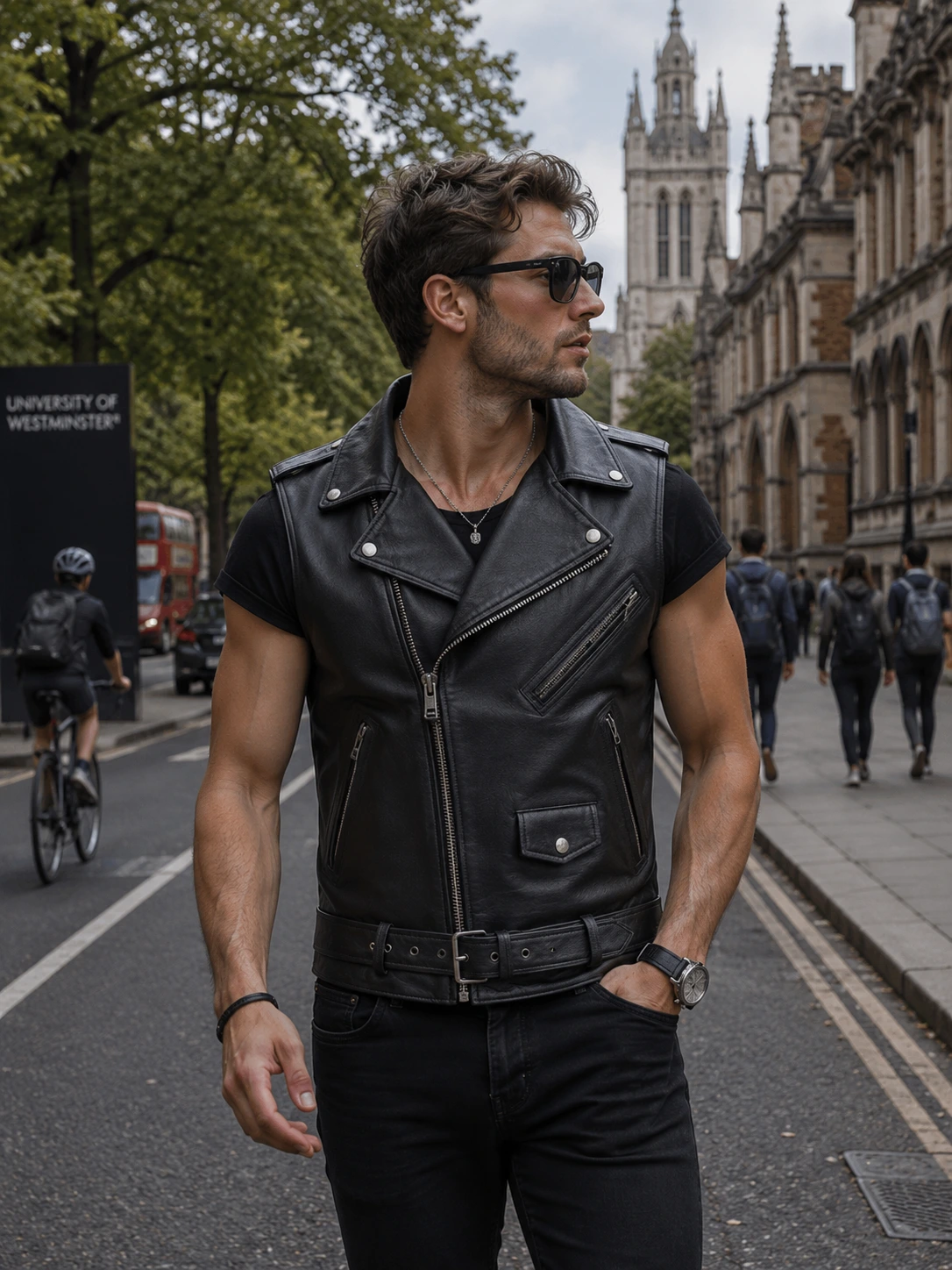
The biker jacket most people picture, an off-center front zip, a wide snap collar, a belted waist, traces back to Irving Schott, a New York coat maker whose Perfecto jacket is widely credited as the first motorcycle jacket built with a zipper rather than buttons. Early versions were cut from horsehide, prized for its tight grain and resistance to abrasion, before cowhide became the more common and affordable choice once horsehide grew harder to source. The off-center zip was never just a look. Running the closure on a diagonal kept the metal track and pull away from a rider's sternum when leaning forward over the handlebars, and the overlapping panel of leather it created added extra wind protection across the part of the body that takes the most airflow at speed; the wide, snap-closing collar and belted hem did similar work at the throat and waist. The style's move from protective riding gear into mainstream fashion is generally tied to its association with outlaw motorcycle culture in film in the years after the Second World War, and it has stayed shorthand for rebellion since, picked up by rock and punk musicians and later reworked by high fashion designers. Marco Jacket builds that same asymmetric-zip shape today in pieces like the Mens Black Leather Biker Jacket, and the cut runs across both mens biker jackets and womens biker jackets.
The Cafe Racer Cut: Built for Speed, Not Protection
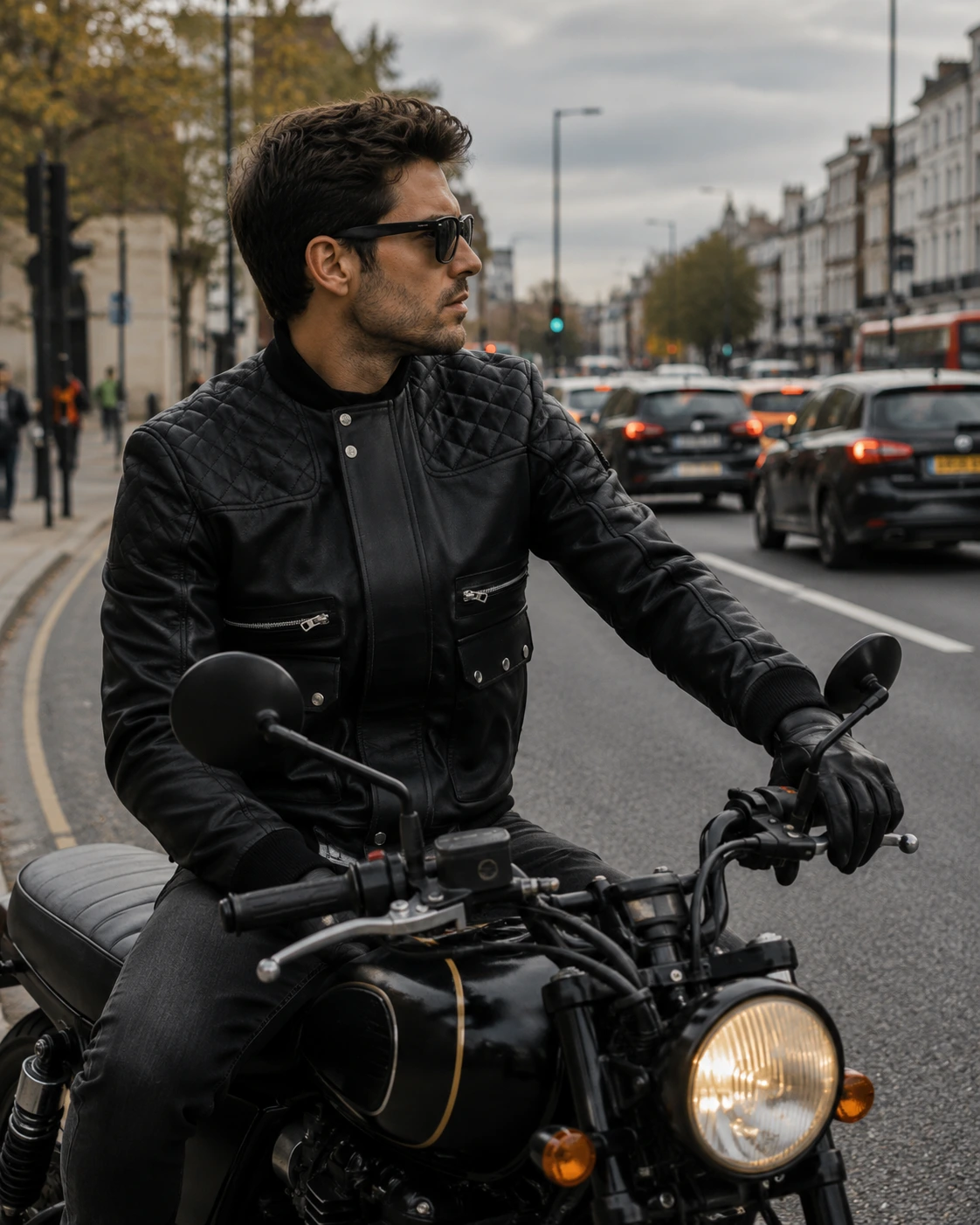
The cafe racer jacket comes out of a different set of priorities than the biker cut, which is the reason it sits so much closer to the body. In Britain in the years after the Second World War, young riders known as the Ton-Up Boys gathered at transport cafes, the Ace Cafe on London's North Circular Road most famously, chasing "the ton," a hundred miles an hour, a genuinely difficult speed on the bikes of the era. They stripped their motorcycles down for speed, pulling off anything that added weight or drag, and dressed the same way: a straight center-front zip instead of an offset one, a flat close-fitting collar instead of wide foldable lapels, no waist belt and nothing extra that could catch wind. That same stripped-down logic sits behind a jacket like the Cafe Racer Jacket with Red and White Stripes, and the cafe racer jackets category carries this cut across both the mens and womens ranges.
Aviator and Shearling Styles: Built for Cold at Altitude
Aviator and shearling-lined styles solve a problem neither the biker nor the cafe racer jacket was ever built for: sustained cold at high altitude. Military flight jackets went through several design generations, and the US Army Air Corps eventually developed the B-3, a dedicated winter jacket for bomber crews cut from sheepskin with the fleece left in as the lining rather than the smoother goatskin used in earlier flight jackets. Crews were flying in unpressurized, largely unheated cabins and gun turrets, where a thinner leather jacket wasn't enough, and shearling's dense wool gave far heavier insulation than a flat lining could. The deep, buckled shawl collar was built to fold up and wrap the jaw and neck, sealing off the point where a jacket loses heat fastest, and the tradeoff for that warmth was bulk; these were never cut for a trim, tailored line. That same shawl collar and boxy build carries into pieces like the B3 Flying Aviator Shearling Jacket, part of the mens aviator jackets and mens fur and shearling jackets ranges, with the equivalent cuts on the womens side under womens aviator jackets and womens fur and shearling jackets. The same lining shows up in longer coat-length pieces for anyone who wants more coverage than a jacket provides.
The Bomber Silhouette and the Ribbed Cuff
Bomber jackets share that same military flight-jacket lineage but solve a slightly different problem. Earlier flight jackets used a knit waistband and cuffs specifically to seal the garment against the body, keeping cold air from working up the sleeves or under the hem in flight, and that ribbed knit construction is still what defines a bomber silhouette today regardless of the exterior material, leather, satin or otherwise. The Red Leather Bomber Jacket carries that ribbed-cuff, ribbed-hem construction in genuine leather rather than the nylon or cotton the style more commonly appears in, and mens bomber jackets covers more of this shape, including a few character-inspired pieces beyond the plain leather build.
Patrol and Heavier-Duty Leather Styles
A heavier, more armored silhouette than the classic biker cut has its own real-world roots, closer to what a motorcycle patrol officer would wear on a long duty shift than a fashion-first jacket. Heavier padding through the shoulders and a more structured build hold up to hours of riding better than a lighter jacket does, which is the logic behind a piece like the Elite Patrol Leather Jacket. It's worth comparing directly against the plainer biker styles above if a heavier-duty look and feel matters more to you than a slim, minimal cut.
Cowhide, Lambskin and Shearling: The Material Differences
Three materials run across this category, and they come from structurally different hides rather than being interchangeable "leather" in name only. Cowhide has thick, tightly woven collagen fibers, which is the real reason it resists abrasion and punctures well enough to have been the historical choice for motorcycle safety gear; it also runs thicker, so a new cowhide jacket needs real break-in time, often weeks of regular wear, before it stops feeling stiff. Lambskin comes from a younger animal with a finer, looser fiber structure, soft from the first wear with almost no break-in period, but more prone to stretching and scuffing under rough, repeated use over the long run. Shearling is different again: it is sheepskin tanned with the wool left on one side, worn fleece-in for insulation rather than as an exterior finish, which is why it shows up in the aviator and coat styles above rather than in a slim biker or cafe racer cut. None of the three is objectively better. Cowhide suits a jacket meant to take years of daily wear, lambskin suits one you want to feel broken in immediately, and shearling suits genuinely cold weather over either.
What "Genuine Leather" Actually Means
The term "genuine leather" gets used loosely across the industry, and it helps to know what it does and doesn't tell you. It means the material is real animal hide rather than a polyurethane or PVC-based faux leather, though on its own it doesn't say which layer of the hide was used or how the surface was finished afterward. Full-grain leather uses the outermost layer of the hide left largely intact, and top-grain leather comes from that same layer sanded and refinished for a more uniform look and added stain resistance; both count as genuine leather since both are real hide rather than a synthetic stand-in, they simply differ in construction and finish. Bonded leather sits apart from either one, shredded leather fiber pressed together with a polymer binder onto a fabric backing rather than a single piece of hide. When Marco Jacket lists a jacket as genuine cowhide, lambskin or shearling, that confirms real animal hide rather than a synthetic or bonded material, with the specific type noted on each product page; if you need the exact grain classification for a given piece, the team can confirm that before you order.
Choosing a Cut for How You'll Actually Wear It
None of this history matters much if the jacket doesn't fit how you'll actually use it day to day. A slimmer cafe racer cut or a standard biker jacket in lambskin suits daily city wear, since both move easily and don't add bulk under a coat. Genuinely cold climates point toward the aviator and shearling styles, where the added bulk buys real insulation rather than just a look. A heavier patrol-style piece or a thicker cowhide biker jacket suits someone who wants a jacket built to take rougher daily use and outlast years of hard wear rather than staying pristine. None of these is a strict upgrade over another; it comes down to the climate you're dressing for and how much wear the jacket needs to survive.
How Leather Jackets Age
A "patina" on leather is a real chemical process rather than just a figure of speech, at least on hide with an open, unsealed surface. Untreated leathers retain natural tannin compounds, and over months and years, exposure to light and ambient oxygen slowly oxidizes those tannins into darker compounds that deepen the leather's color. Oils from skin contact and from any conditioner applied get absorbed into the leather's pore structure and undergo their own slow oxidation, softening the surface and shifting its tone further, and ordinary friction from wear burnishes the surface fibers, which is where the smoother sheen on a well-worn piece comes from. A heavily coated or corrected leather won't develop the same character, since a painted-on pigment layer blocks the oil absorption and light exposure the reaction depends on. How much a specific jacket in this category will visibly patina depends on its exact finish, which isn't something this page can promise across every piece; conditioning it regularly either way keeps the hide supple and gives it the best chance of aging well rather than just drying out.
Sizing and How Made-to-Order Works
Since nothing here is pre-made, production only starts once an order is placed, built against the size chart on that specific product's page. Leather doesn't stretch and forgive an off measurement the way a knit fabric does, so checking your actual measurements against the chart matters more here than with most garments. If your measurements fall outside that chart, email sales@marcojacket.com before ordering so the team can confirm what's adjustable. For a jacket built entirely around your own measurements rather than an adjusted standard size, the Custom Leather Jacket page handles that separately.
Caring for a Leather Jacket
Skip the washing machine and a standard dry cleaner; both can strip the natural oils out of the hide and leave it stiff or damaged. A soft, dry cloth handles everyday dust, and a damp cloth with mild soap works for light surface marks between proper cleanings. For anything beyond that, a leather-specific cleaner or conditioner applied sparingly on a regular schedule keeps the hide supple, and a leather specialist rather than a general dry cleaner is the safer route for a stain that won't lift. Store the jacket on a wide, structured hanger rather than a wire one or folded in a drawer, both of which cause creasing over time, and keep it out of direct sunlight and away from heat sources, which accelerate drying and fading.
Frequently Asked Questions
Is everything in this category made to order, or is some of it kept in stock?
Made to order across the board, biker, cafe racer, aviator, shearling, bomber and patrol styles alike. Nothing here is held as finished inventory waiting to ship the same day.
What actually separates cowhide, lambskin and shearling?
Cowhide is thicker and more abrasion-resistant but needs real break-in time. Lambskin is softer and lighter from the first wear with almost no break-in, but less rugged long-term. Shearling is sheepskin worn fleece-in for insulation, which is why it shows up in aviator and coat styles rather than slim cuts.
Does "genuine leather" mean the same thing as "full-grain leather"?
Not exactly. Genuine leather means it's real hide rather than a synthetic; full-grain and top-grain describe how that hide was processed afterward, and both count as genuine leather.
Why does a biker jacket have an off-center zip instead of a straight one?
It's a carryover from the style's origin as protective motorcycle gear. An off-center zip sat flatter against the body and added wind protection at the front, and the look has stuck around long after the practical need did for most people wearing one today.
Why is a cafe racer jacket cut so much slimmer than a biker jacket?
The cafe racer style comes from British riders in the years after the Second World War who stripped down both their bikes and their jackets for speed, removing anything that could catch wind. The biker jacket comes from the opposite priority, coverage and protection, which is why it runs boxier with more hardware.
How much warmer are the aviator and shearling styles than a plain leather jacket?
Noticeably warmer. The shearling lining traces back to military flight jackets built for high-altitude cold, and it adds real insulation that a plain leather biker or cafe racer cut was never designed to provide, which is the direct tradeoff for the extra bulk those styles carry.
Should I shop the mens or womens category, or just browse this page?
Either works, but the gender-specific pages are more useful once you know which fit you want, since they carry only that range's sizing and styles rather than mixing both together.
Does this category ship internationally?
Yes, orders go out beyond the US as well, apart from a short list of currently excluded countries. The shipping and delivery policy page has the current details on timelines and any restrictions.
What's the policy if a jacket needs to be returned?
The returns and refund policy page covers the process and timelines, including how made-to-order pieces are handled.
Can sizing be adjusted if I don't match the standard chart?
Email sales@marcojacket.com with your measurements before ordering and the team will confirm what's possible, or use the Custom Leather Jacket page for something built entirely around your own measurements from the start.