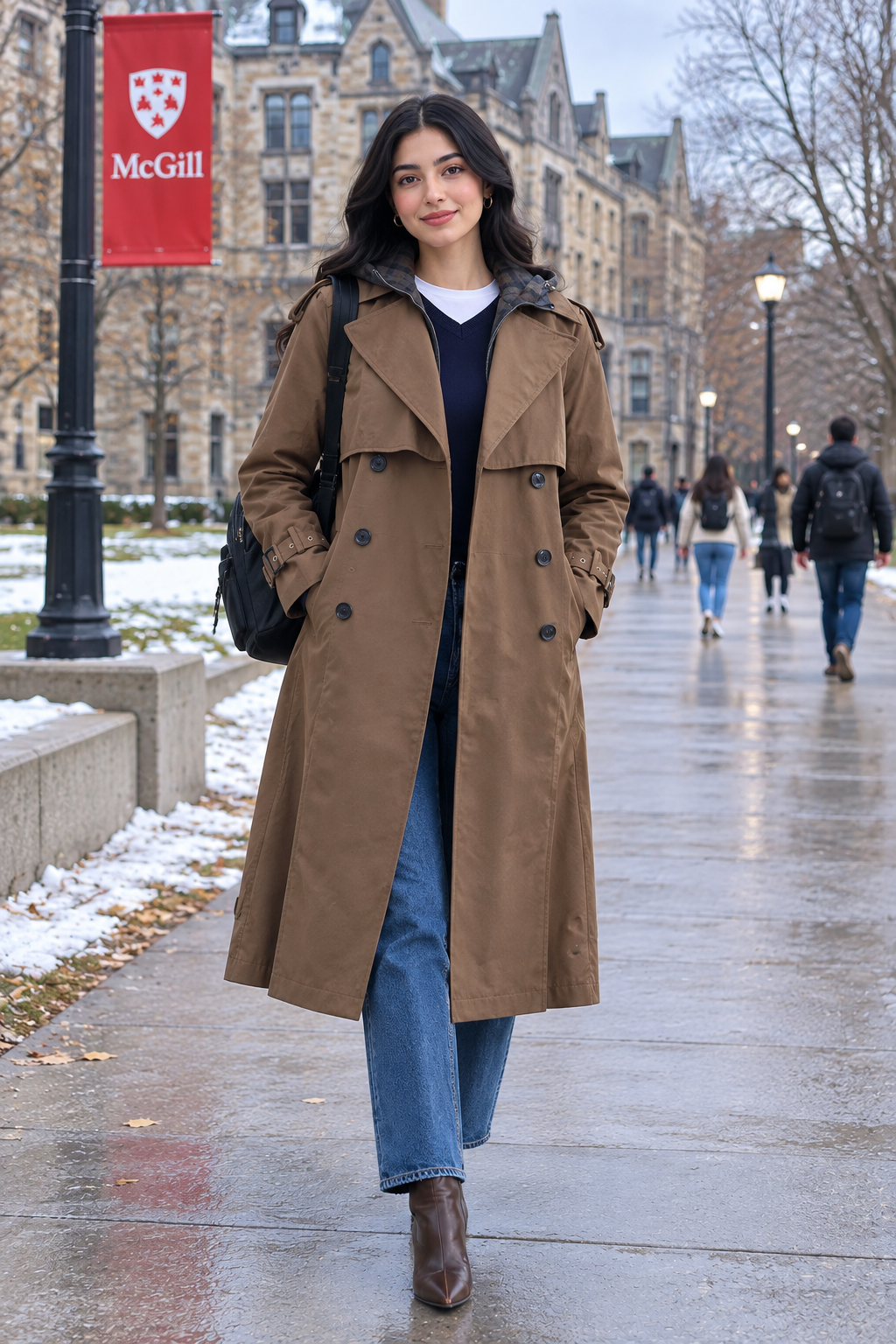
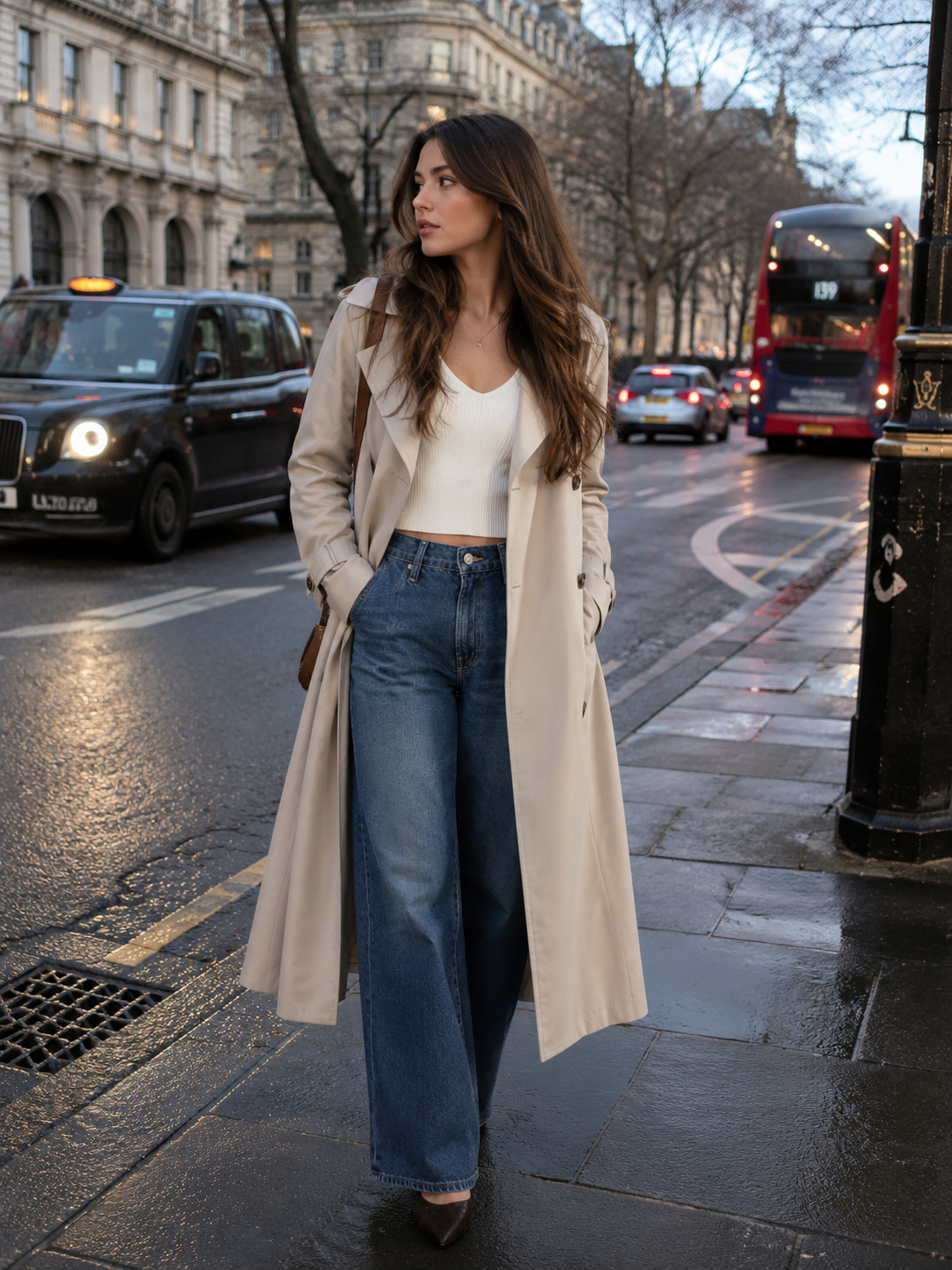
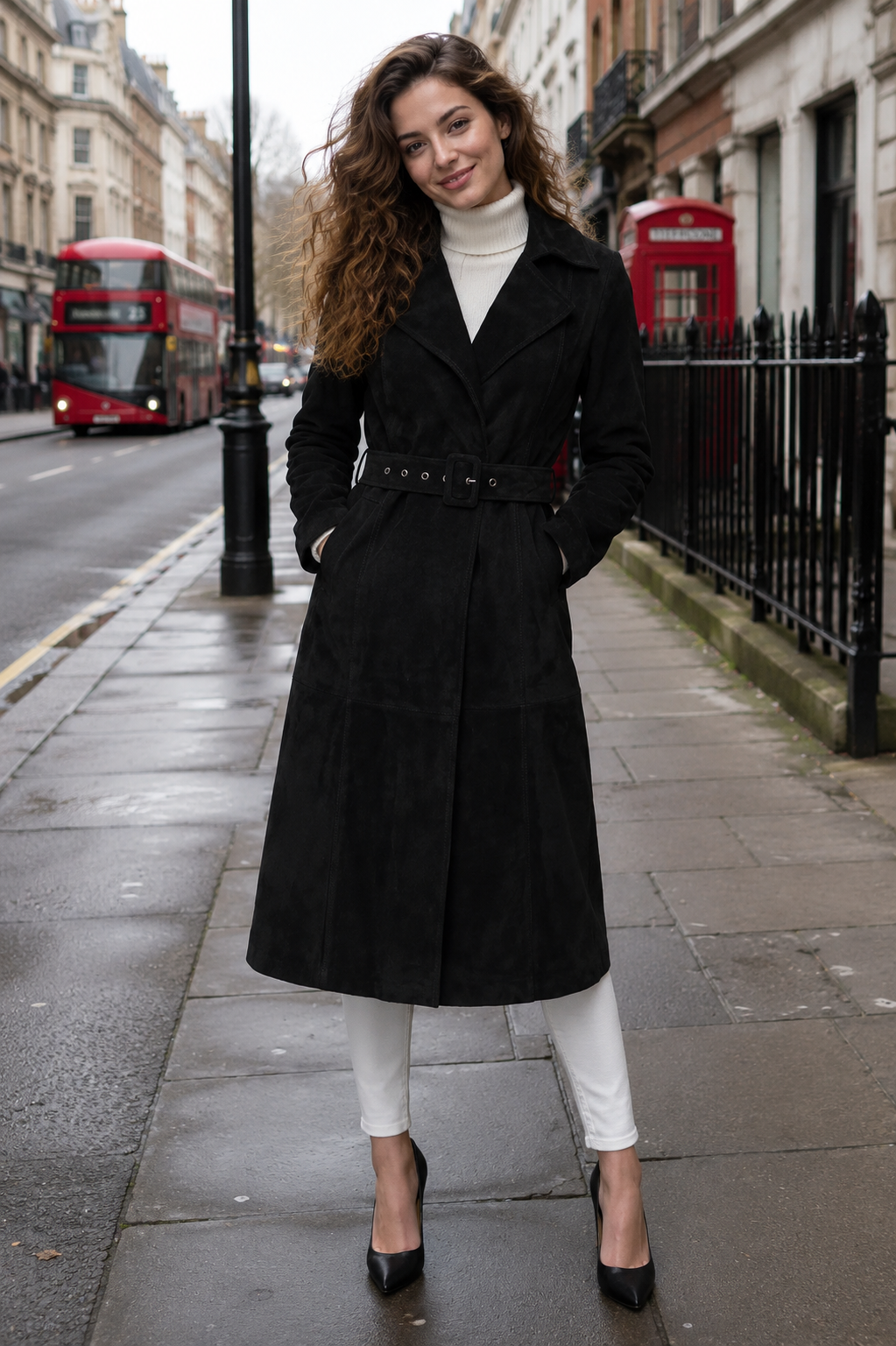
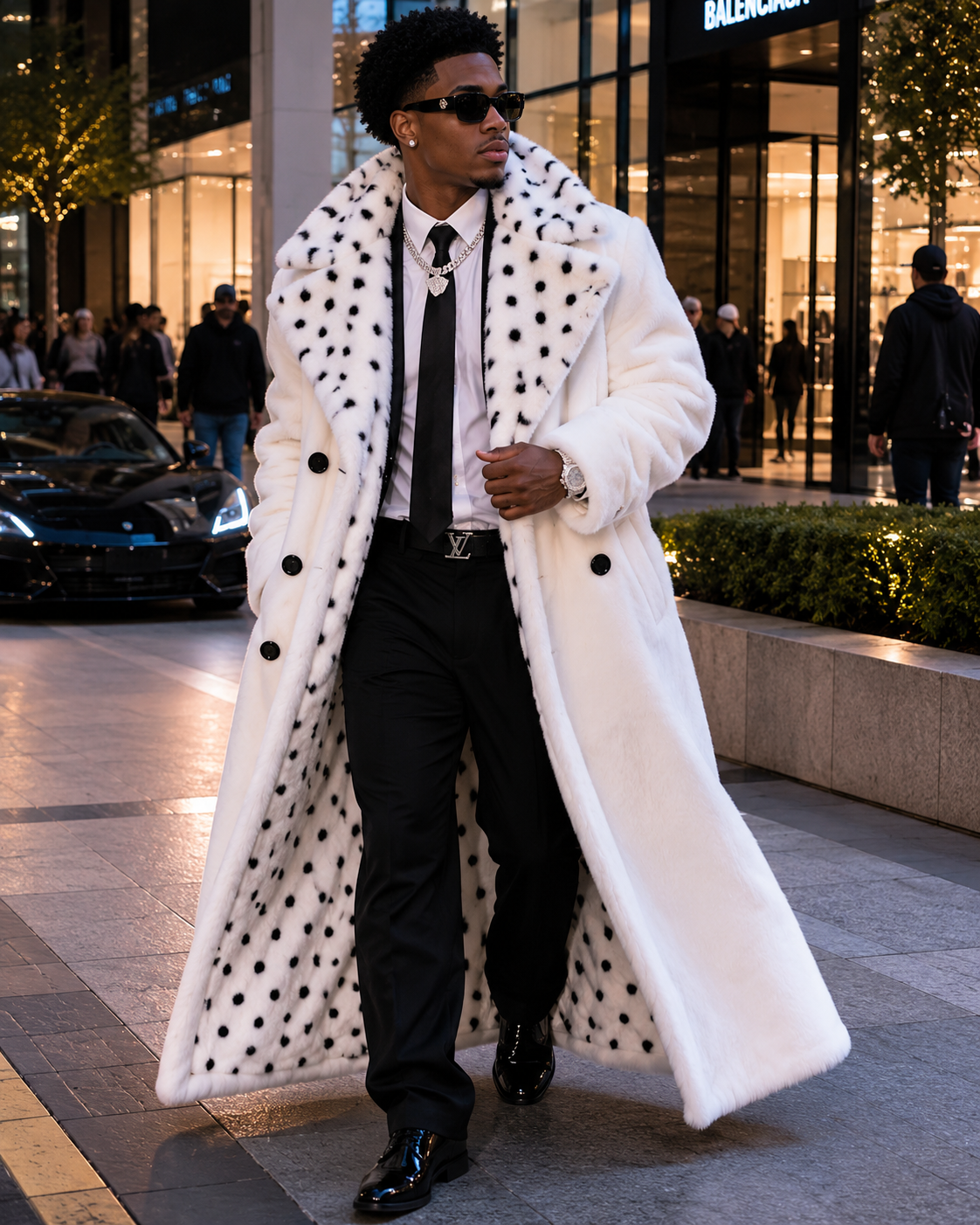
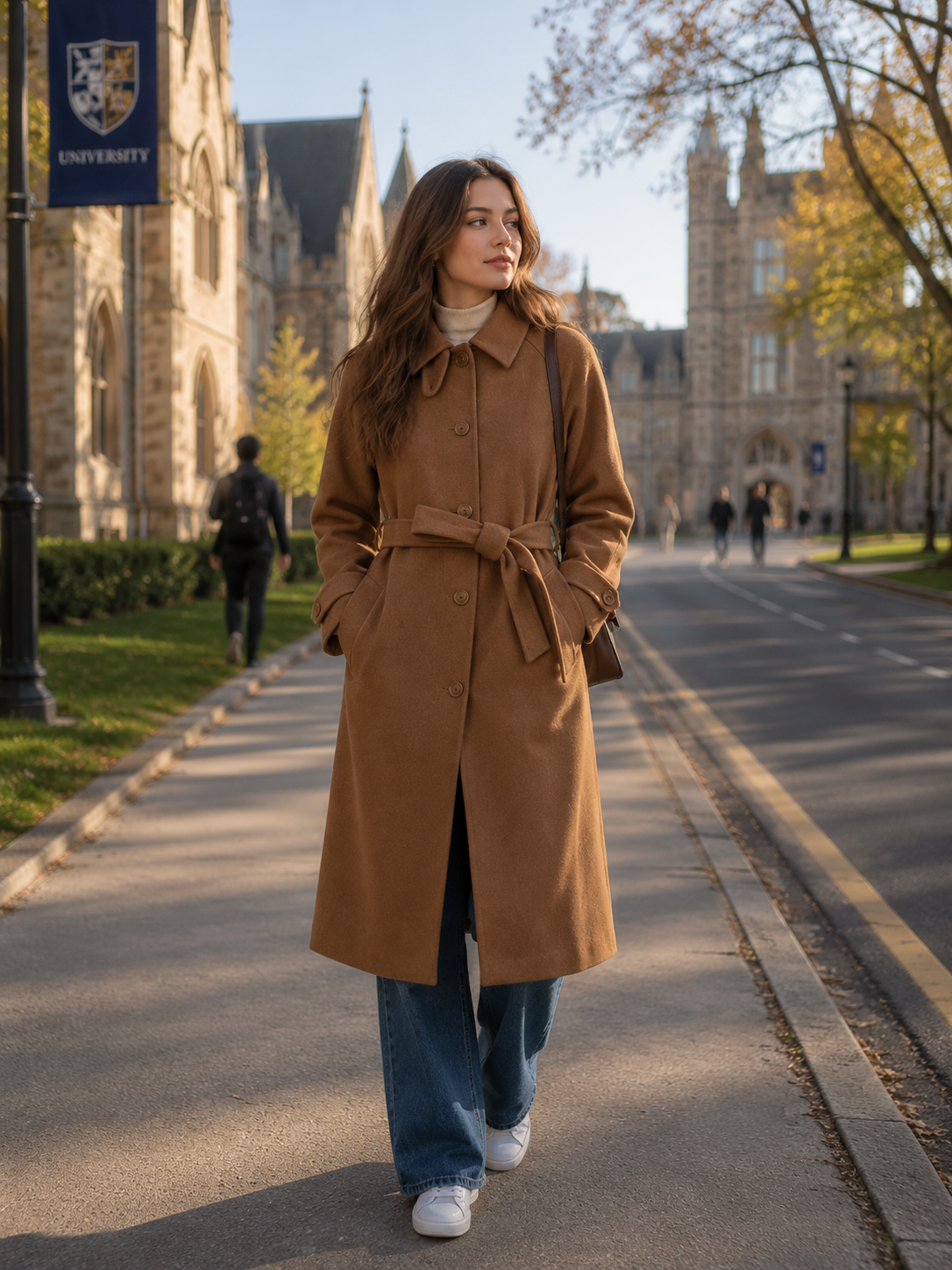
A trench coat carries more built-in history than almost anything else in a coat closet: a belt, a storm flap, a collar cut to close high against the neck, details that started as battlefield equipment long before they became a fashion staple. Marco Jacket's lineup spans a classic belted wool silhouette, an oversized crepe drape, a cropped shorter cut, genuine suede, and a technical nylon build with a hooded bib inset, each produced only once an order is placed. The sections below cover where the design actually came from, what separates the styles available now, and how sizing and care work for each material.
Gabardine and the Race Between Burberry and Aquascutum
Thomas Burberry patented gabardine in 1879, a tightly woven, water-resistant worsted cloth that breathed in a way rubberized rainwear of the era never could, and by 1901 he had pitched a version of it to the British War Office as material for an officer's raincoat. Aquascutum tells a longer version of the same story, tracing its own weatherproofed wool as far back as the 1850s under founder John Emary, and the company's name itself combines the Latin words for water and shield. Which firm actually produced the first true trench coat is still argued over by historians, and neither company's own account of its history should be taken as the final word on the question. Burberry's 1912 Tielocken coat, a beltless double-breasted overcoat, is one of the better documented direct forerunners, and the term trench coat itself is not documented in print before 1916, in a tailoring trade journal, well after officers in the field had already been wearing versions of the coat.
The Belt, Storm Flap and Collar Actually Do Something
Every feature that makes a trench coat recognizable started as a solution to a specific battlefield problem rather than a design flourish. The self-belt cinched the coat against wind and rain in an open trench and let an officer adjust the fit over layers; the storm flap across the shoulder shed rain and cushioned a rifle strap or map case from rubbing; epaulettes, added once the war was underway, held rank insignia in place; and the collar was cut deep enough to close against the neck, in some wartime versions high enough to work over a gas mask. The D-rings sewn onto the belt are commonly rumored to have been for hanging grenades, but that claim does not hold up. Military historians trace their actual use to attaching a map case or a sword scabbard, ordinary officer's kit rather than munitions.
Classic Wool and Cotton Trench Coats in Different Colorways
The Wool Blend Trench Coat covers the familiar silhouette, a belted waist and structured collar in a wool-blend fabric built to hold up once the temperature actually drops, closer to a winter coat than the lightweight gabardine of the original military versions. The Mens White Trench Coat and Womens Grey Trench Coat carry that same belted, storm-flapped shape, confirmed on both product pages, into colorways well outside the traditional khaki or camel, for anyone who wants the silhouette without the expected color. Anyone set on the traditional wool weight but not the trench shape specifically has the wider wool coats category to look through as well.
Oversized Drape and a Cropped Field-Length Cut
The Curator Crepe Oversize Trench Coat trades the fitted, tailored trench proportions for a soft crepe fabric and a relaxed, oversized drape; the listing itself notes that belt inclusion can vary by style, so it is worth checking the product photos rather than assuming a traditional belted closure on this particular cut. The Short Field Trench Coat goes a different direction, keeping a belted waist and the deep trench collar while cropping the length well above the knee, field-jacket short rather than full coat coverage, for anyone who wants the detailing without the length.
Genuine Suede and a Weather-Resistant Nylon Build
The Genuine Metis Suede Belted Trench Coat swaps wool or cotton for genuine suede, confirmed directly on the product page rather than a synthetic finish made to imitate the texture, in the same belted, structured-collar shape as the classic styles above. The Crinkled Nylon Trench Coat with Hooded Bib Inset goes further still, a technical nylon build described as offering real water resistance that traditional gabardine trench fabric was never designed to provide, plus a hooded bib inset the classic wool and suede versions do not have.
A Trench Coat Is Not the Same Thing as a Rain Coat
It is worth being clear about where a trench coat ends and a rain coat begins, since the nylon build above gets weatherproof enough to blur that line. Marco Jacket's rain coats category is built around weather function first: hooded casual shells and puffer-style jackets, most without a belt, a storm flap, or the trench's structured collar at all. A trench coat, even a technical one, keeps that specific silhouette; a rain coat can borrow it but does not have to. The nylon piece above earns its place in this category because it keeps the belted, storm-flapped trench shape underneath the water-resistant fabric, not simply because it happens to handle rain reasonably well.
Matching Length and Fit to How You Will Actually Wear It
Fit matters more on a trench coat than on most outerwear, since the silhouette is built around proportion rather than pure warmth. A belted, structured cut like the wool blend or suede versions layers cleanly over a suit or a sweater and reads more formal; the short field length pairs more naturally with jeans and everyday layers; and the oversized crepe drape leans toward a fashion silhouette that was never meant to sit close to the body in the first place. Sizing up on any of these to layer heavily underneath changes how the belt sits, so deciding on that before ordering is worth doing rather than after the coat arrives.
Sizing and How Made-to-Order Works
Placing an order is what starts construction here, not a warehouse pull: nothing in this category gets cut until a specific order comes in, and once it does, that cutting follows the size chart posted on the individual product's own page. Numbers that do not line up cleanly with that chart are worth flagging ahead of time rather than after. Reach sales@marcojacket.com with your measurements before placing the order, and someone will confirm what can flex within that pattern. A request that goes beyond adjusting a standard pattern, meaning a trench built from your measurements with no standard size as the starting point, sits outside chart-based adjustment entirely and gets handled instead through the Custom Leather Jacket page.
Caring for a Trench Coat by Material
Wool and suede both call for a professional cleaner who actually knows that specific material, since a home wash can shrink wool or wreck the texture suede depends on to look right. The technical nylon piece is more forgiving: a cold, gentle home cycle is usually fine, though checking the care label first is worth doing given the hooded bib construction. Whatever the material, hang it on a real coat hanger rather than a wire one; the shoulder shape is one of the first things to collapse from poor storage, and it is not something steaming or pressing fixes well after the fact.
Frequently Asked Questions
Is any trench coat here already finished, or built after an order comes in?
None of the seven styles here sit finished in a warehouse waiting for a buyer; the cutting table only sees a trench coat once someone has actually ordered one.
What actually separates the classic wool trench from the oversized crepe version?
Fit through the body. The wool-blend style sits closer to a tailored, belted silhouette, while the crepe version drapes looser and was designed around comfort rather than a fitted waist.
Is the suede trench coat genuine suede, or a synthetic finish?
Genuine suede, confirmed directly on that product's page rather than a synthetic alternative made to imitate the texture.
Is the nylon trench coat actually waterproof?
It is described as offering real water resistance rather than full waterproofing. Check the specific product page for the exact fabric treatment before assuming it will hold up in sustained heavy rain.
What is the real difference between a trench coat and something from the rain coats category?
Silhouette. A trench coat keeps the belted, storm-flapped, structured-collar shape regardless of fabric, while the rain coats category is organized around weather function first and includes hooded shells and puffer styles that do not share that construction.
Is the short field trench coat as warm as the full-length styles?
It runs slightly less warm simply because there is less fabric covering the body, though the material weight itself is comparable to the longer styles in this category.
Can sizing be adjusted if my measurements don't match the standard chart?
Send your measurements to sales@marcojacket.com before ordering, and the team will confirm what is adjustable for the specific coat you want.
Does this category ship outside the United States?
Yes, delivery reaches Canada, the UK, Europe and Australia along with the US, aside from a short list of currently excluded countries. The shipping and delivery policy page has the specifics.
What if a coat doesn't fit once it arrives?
The returns and refund policy page covers the process and timelines, including anything specific to made-to-order pieces.