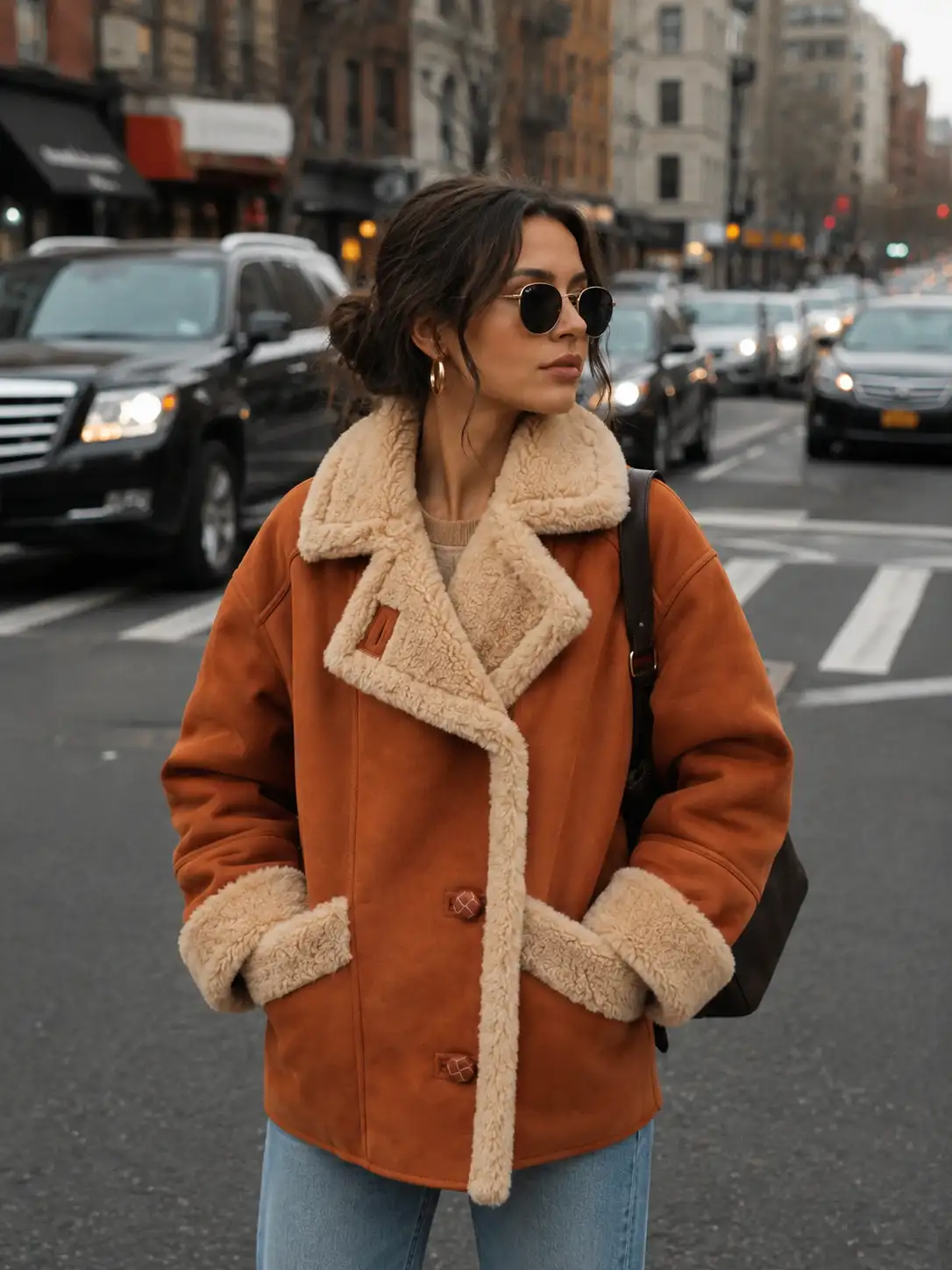
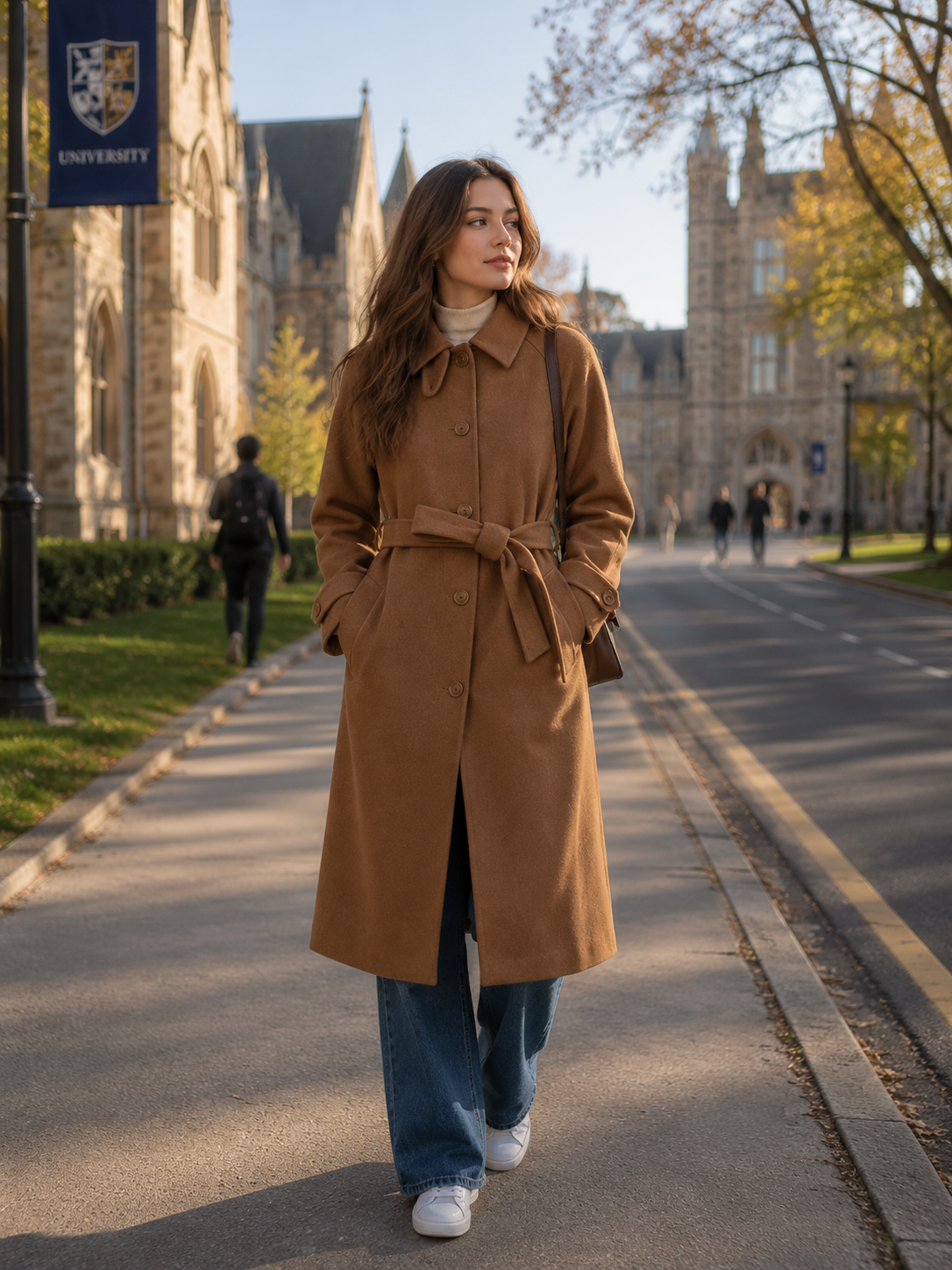
Wool coats in this category are scoped by two things at once: the fabric has to be genuinely wool-based, and the garment has to actually reach coat length rather than stopping at the waist the way a cropped, varsity-style jacket does. The style currently available meets both, a trench-length silhouette built in a wool blend, though which specific cuts and lengths sit in this category can expand as more pieces get added. The wider coats hub compares length and material trade-offs across trench, pea and leather styles beyond wool specifically.
Why Wool Fiber Insulates Differently Than a Woven Cotton Shell
Wool fiber grows with a natural crimp, a wavy, spring-like coil rather than a straight strand, and that coiled structure is what traps pockets of air between individual fibers the same way loft traps air in any insulating layer. More crimp per fiber means more trapped air means more retained heat for a given fabric weight, which is why a wool coat can hold in warmth without needing the thickness a flatter, straighter fiber would require to do the same job. Cotton fiber lacks that crimp almost entirely, so a cotton shell leans more on tight, dense weaving and often a separate lining to reach comparable warmth.
How Wool Behaves When It Gets Wet, and Cotton Doesn't
Wool fiber can absorb a substantial share of its own weight in moisture, commonly cited around thirty percent, before it starts to feel wet against the skin, because the fiber's core takes on water while its outer scales stay comparatively dry. Cotton works the opposite way: once cotton fiber saturates, it holds that water inside the weave itself, goes heavy, and loses much of its insulating value until it fully dries out. That difference is part of why a wool coat keeps working in damp, cold weather in a way a plain cotton shell doesn't. Raw wool fiber also carries some natural lanolin, an oily coating with a degree of inherent water resistance, though most fabric-grade wool has much of that lanolin removed during processing, so it isn't a substitute for a genuinely waterproof shell.
Melton and Boiled Wool: Two Ways of Densifying the Same Fiber
Two names come up constantly once you start comparing wool coat fabrics: melton and boiled wool, made differently even though both end up dense and wind-resistant. Melton starts as a woven wool cloth that gets heavily fulled and sheared until the weave all but disappears under a smooth, felt-like surface, a process tied historically to Melton Mowbray, the English town the fabric takes its name from, where it became closely associated with hunting and military coats. Boiled wool instead starts as knitted fabric, then gets agitated in hot, soapy water until the fibers interlock and the material shrinks by as much as half its original size, a felting technique with roots reaching back to the Middle Ages. Either process produces a fabric that resists fraying and wind better than a plain woven wool on its own, though the wool blend trench coat's own listing doesn't specify which construction its fabric uses, so that detail is worth confirming directly if it matters to how you plan to wear it.
Swapping Gabardine for Wool on the Trench's Classic Lines
The Wool Blend Trench Coat keeps the recognizable trench details, a belted waist, structured shoulders, a deep collar built to close against the neck, but swaps out the tightly woven cotton gabardine the style was originally built around for a wool blend instead. That's a meaningful swap rather than a cosmetic one: gabardine earned its place in trench coats because its tight weave sheds light rain, while wool takes over here for sustained warmth through an actual winter, a job the original fabric was never meant to do. Its own listing recommends ordering true to size for most builds, sizing up only for heavy layering underneath.
What "Wool Blend" Can Mean From One Coat to the Next
"Wool blend" covers a wide range on its own, anywhere from a fabric that's overwhelmingly wool with a small amount of another fiber added for stability, to a lighter mix where wool is a minority component chosen mainly for texture rather than warmth. This coat's own listing doesn't break that ratio out exactly, noting only that it can vary by production run, so if the precise wool content changes how you'd wear or care for it, checking directly with the listing or the team before ordering beats assuming from the category name alone.
Fit Considerations for a Made-to-Order Wool Coat
This coat exists only once an order triggers it: cutting begins against your selected size afterward, never pulled ready-made from finished inventory sitting in a warehouse. Because the trench silhouette relies on structured shoulders and a deliberately placed belt line rather than a loose, forgiving cut, getting the initial measurement close to accurate matters more here than it would on a relaxed, oversized style. A measurement that doesn't line up with the posted chart isn't automatically a dead end, reach out to sales@marcojacket.com ahead of placing the order, and the team can confirm what room there is to adjust before cutting begins.
Caring for a Wool Coat Without Damaging the Fiber
Water agitation combined with heat is what actually damages wool, causing the fiber to felt and shrink in a way that can't be undone, so a home washing machine is the one appliance to avoid entirely with this coat. Professional dry cleaning handles a full clean safely, and a damp cloth takes care of small marks between visits without needing a full cleaning cycle. Brushing the coat with a soft clothes brush after wear lifts surface dust and keeps the fiber's loft from flattening over time, and storing it on a shaped, sturdy hanger rather than folded in a drawer keeps the shoulders from creasing in ways that are hard to steam back out later.
Frequently Asked Questions
Why does wool insulate better than cotton at a similar fabric weight?
Wool fiber grows with a natural crimp that traps air between individual fibers, doing more insulating work per ounce than cotton's straighter, flatter fiber structure.
Does the Wool Blend Trench Coat use melton or boiled wool construction?
Its own listing doesn't specify either, describing the fabric simply as a wool blend. Checking directly with the listing or the team is the more reliable route if the exact construction matters to you.
What's the exact wool percentage in the blend?
The listing doesn't break out a specific ratio, noting only that it can vary by production run. Contact the team directly if the precise wool content matters to your order.
Is a wool coat as water-resistant as a dedicated rain coat?
Not by design. Raw wool fiber carries some natural water resistance, but this coat is built for winter warmth rather than sustained rain; the rain coats category is the better fit if shedding actual rain is the priority.
Can I machine wash a wool coat?
No. Water agitation combined with heat causes wool to felt and shrink permanently, and professional dry cleaning with spot cleaning between visits is the safer approach.
Why build this trench in wool instead of the traditional cotton gabardine?
Gabardine was chosen historically for shedding light rain. Wool takes over here instead for real winter insulation, a different job than the original fabric was built to do.
Can sizing be adjusted if my measurements don't match the standard chart?
Reach out to sales@marcojacket.com with your measurements ahead of ordering, and the team will confirm what's adjustable for this specific coat.
Is everything in this category made after I order, or is any of it in stock?
Made to order throughout. Nothing here ships from finished inventory; production begins once your order is placed.
Does this category ship outside the United States?
Yes. The shipping and delivery policy page has current timelines and any country-specific restrictions.
 Mens Elite Patrol Leather Jacket – Biker Style - 2XL