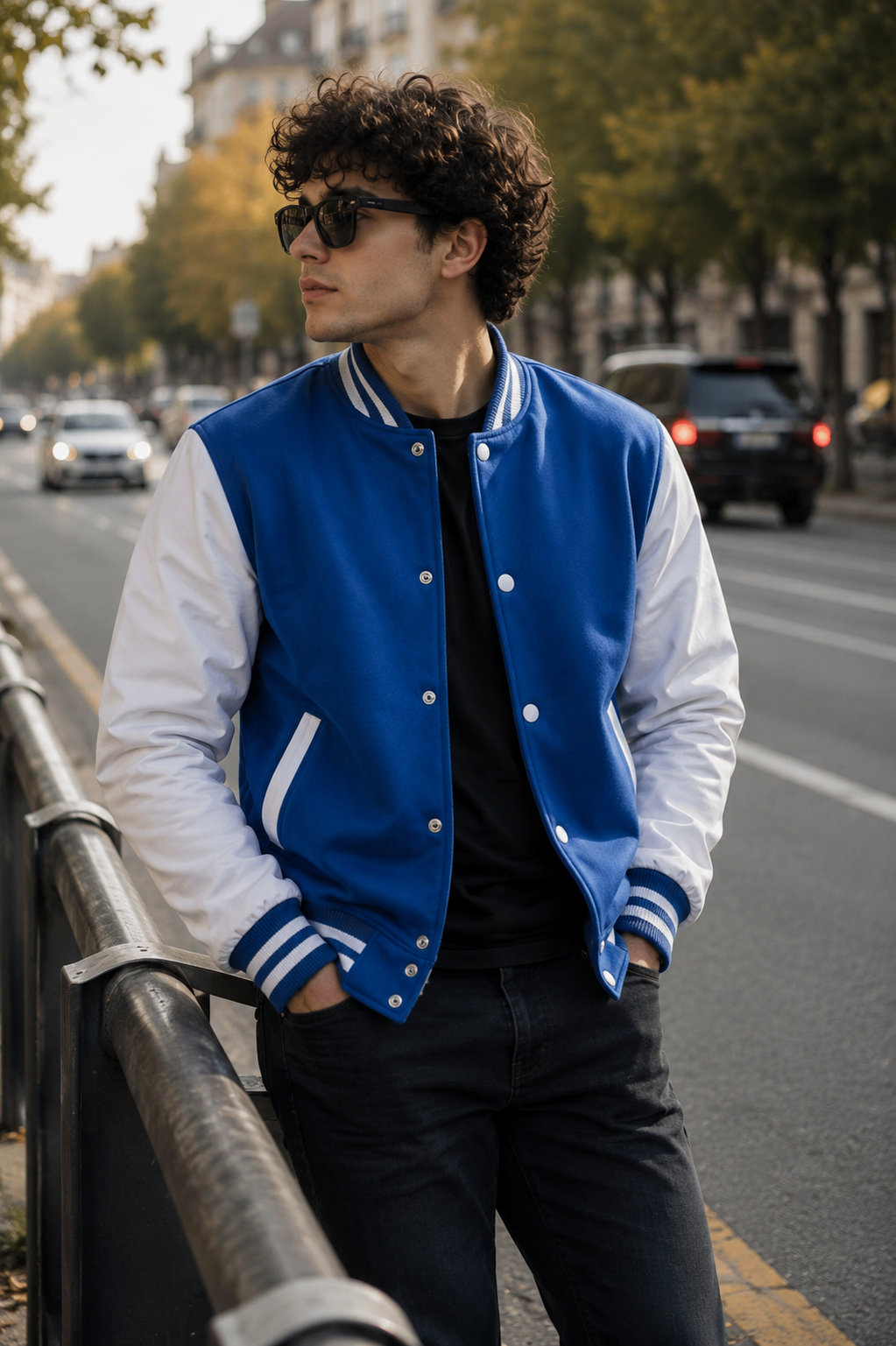
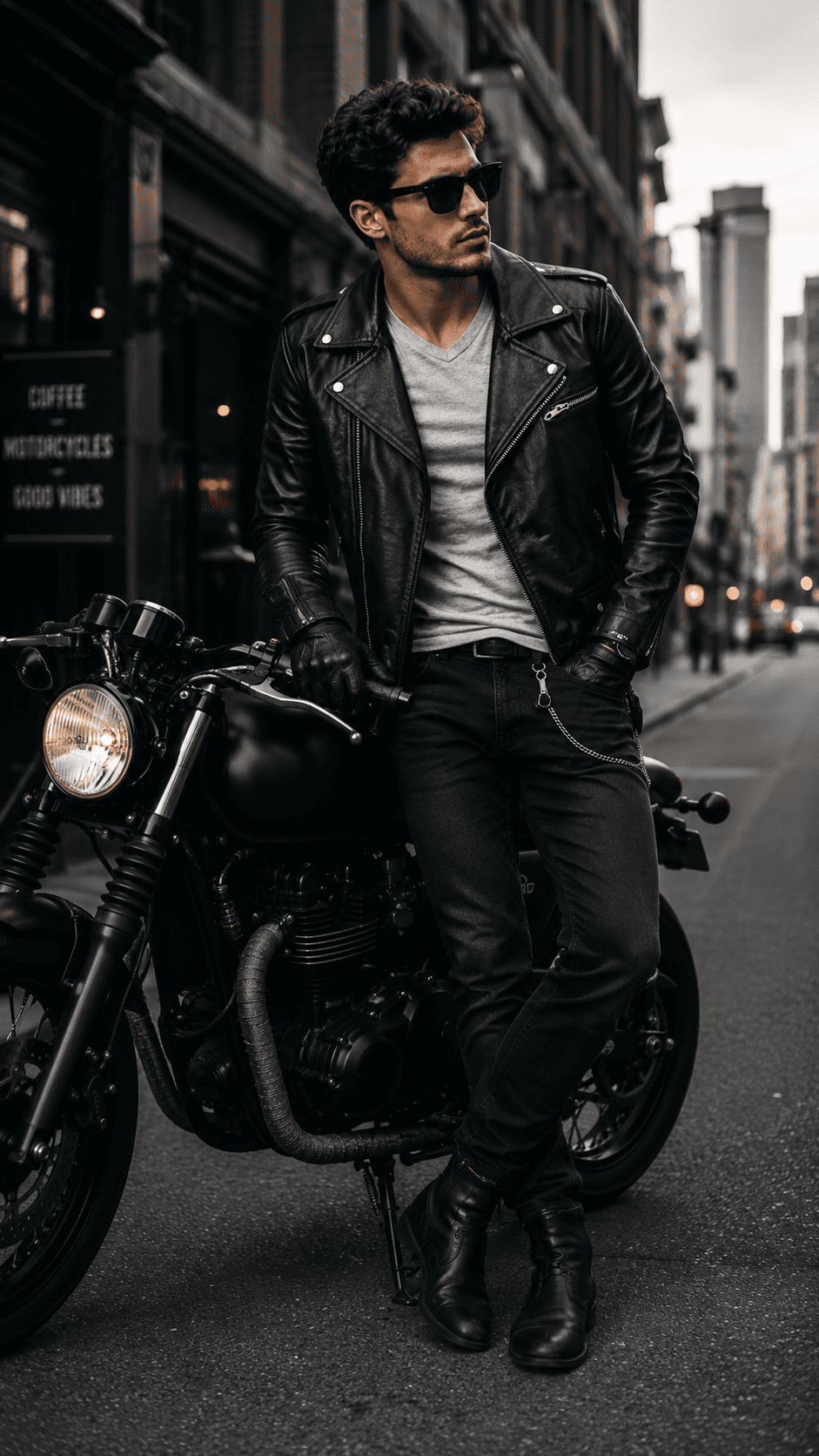
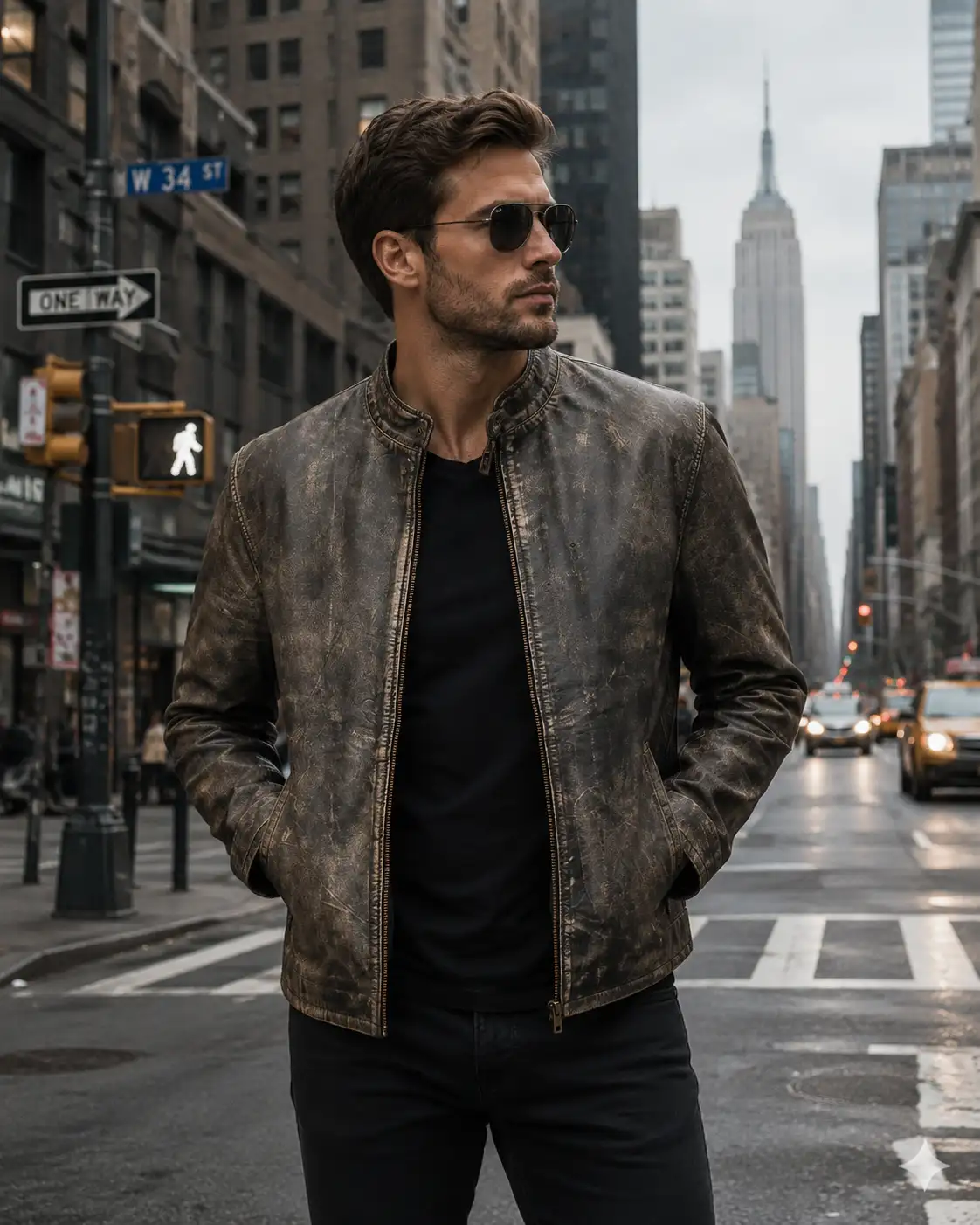
This page exists to help you land on the right jacket faster, not to repeat everything the more specific style pages already cover. Marco Jacket splits its leather jackets across cut-specific categories, biker, cafe racer, bomber, aviator and a handful of others, each with its own construction history and fit logic worth reading if you already know the shape you want. What belongs here is the orientation itself, plus the material and hardware questions that apply across every one of those cuts: what actually separates cowhide from lambskin from sheepskin, what a hide's tanning process changes about how it feels and ages, and why a zipper track sits where it does. None of that changes cut to cut, so it makes more sense living on one page than getting rewritten nine different ways.
Reading a Cut Before You Buy
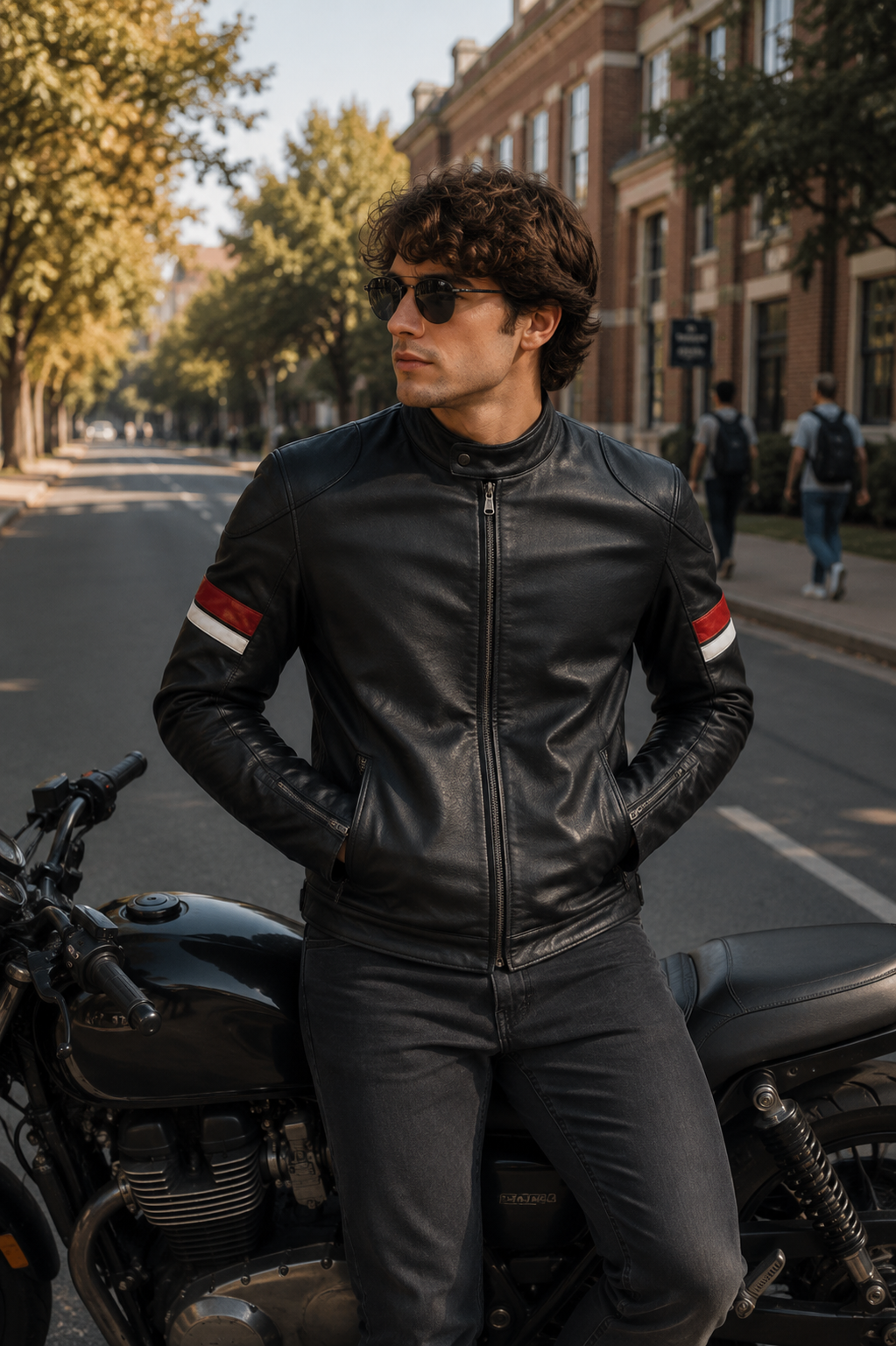
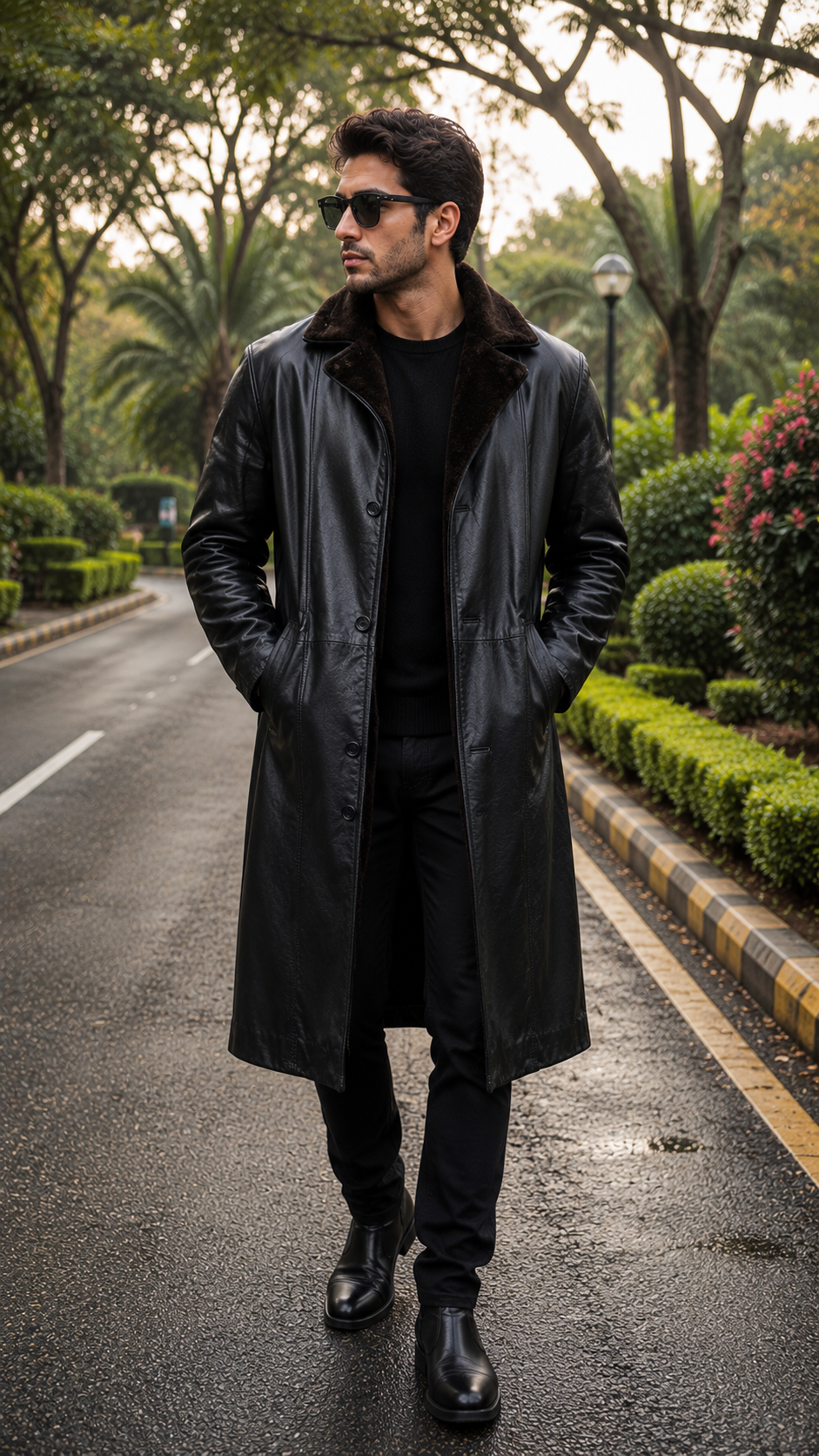
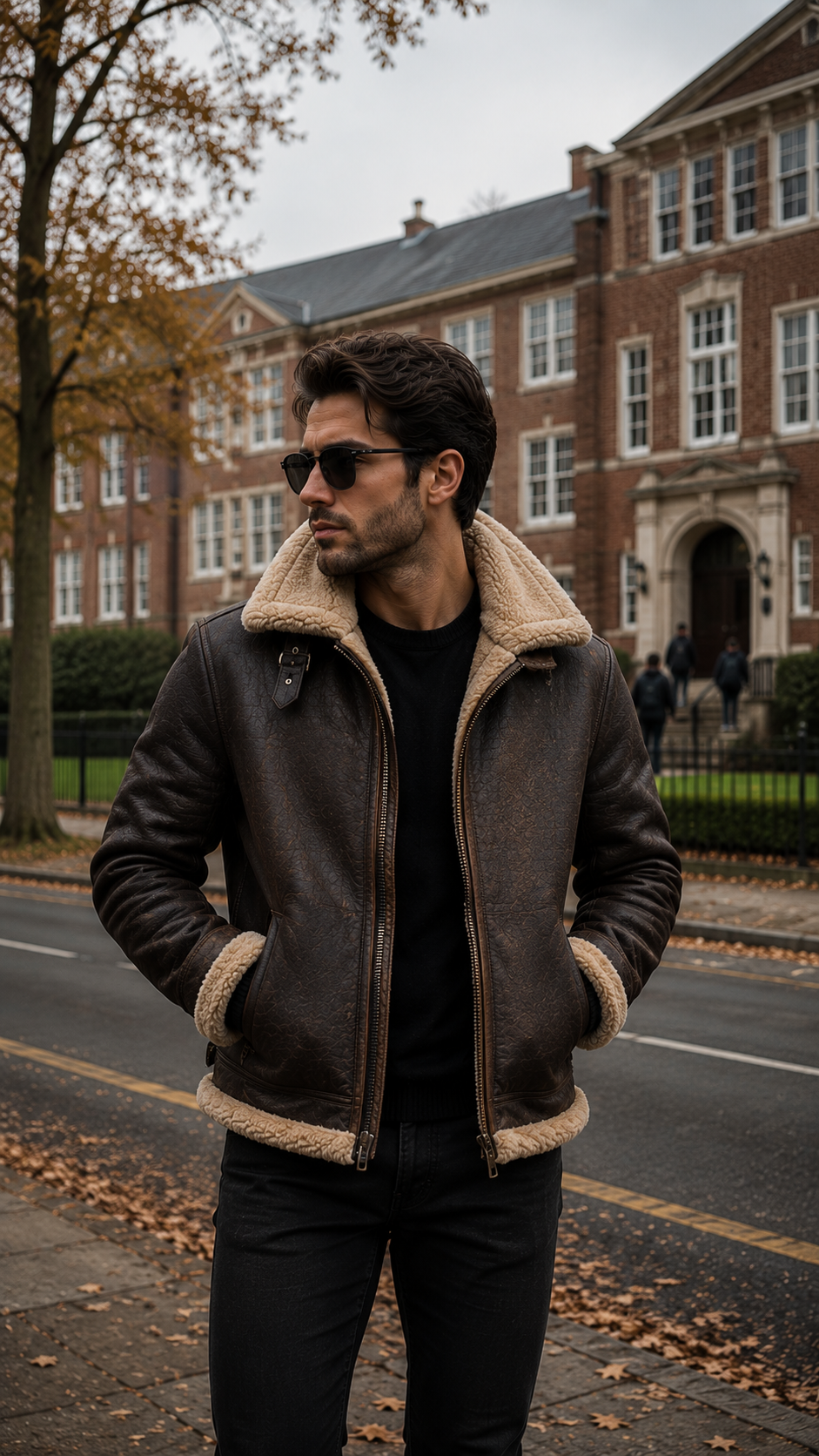
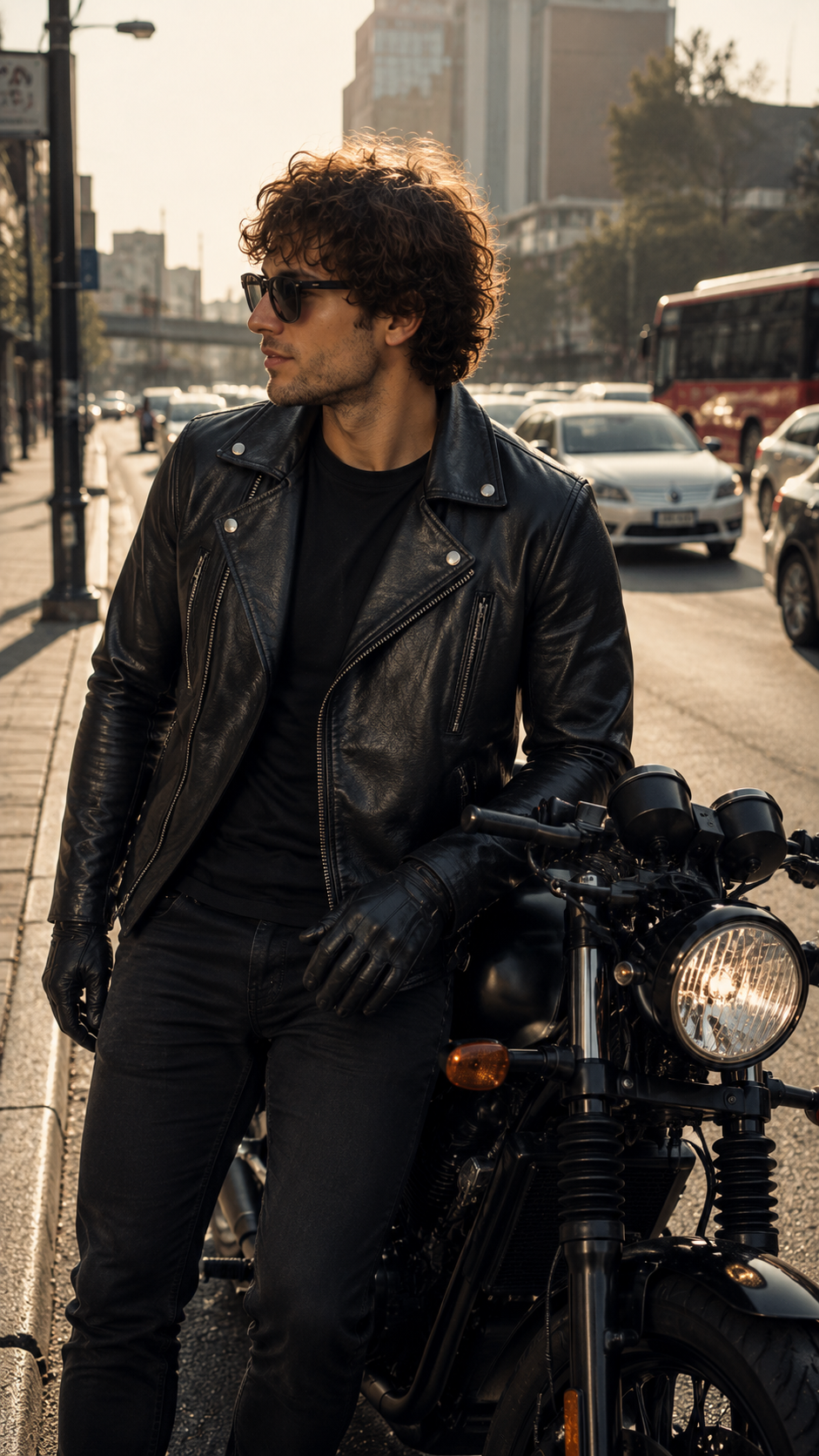
Four cuts make up most of what shows up under mens leather jackets, and each one solves a different problem rather than just looking different. The classic moto silhouette, seen in pieces like the Black Leather Biker Jacket and the Blue Asymmetrical Biker Jacket, runs boxier and heavier on hardware, built originally around protection and coverage rather than a slim line. A cafe racer strips that same idea down to almost nothing, no belt, no wide lapel, a flatter collar, which is exactly what makes a piece like the Black Studded Cafe Racer Jacket sit so much closer to the body than either biker jacket next to it. A bomber, represented here by the Red Leather Bomber Jacket, is identifiable by its ribbed knit cuffs and hem rather than anything about the front closure. Aviator and shearling-lined builds, like the B3 Flying Aviator Shearling Jacket, run bulkier still, trading a trim line for real cold-weather insulation. Each of those cuts has its own category page (mens biker jackets, cafe racer jackets, mens bomber jackets, mens aviator jackets) with the full history and fit detail behind the shape, or browse motorcycle jackets if you'd rather see every moto-derived cut mixed together on one page.
Cowhide, Lambskin and Sheepskin Aren't Interchangeable
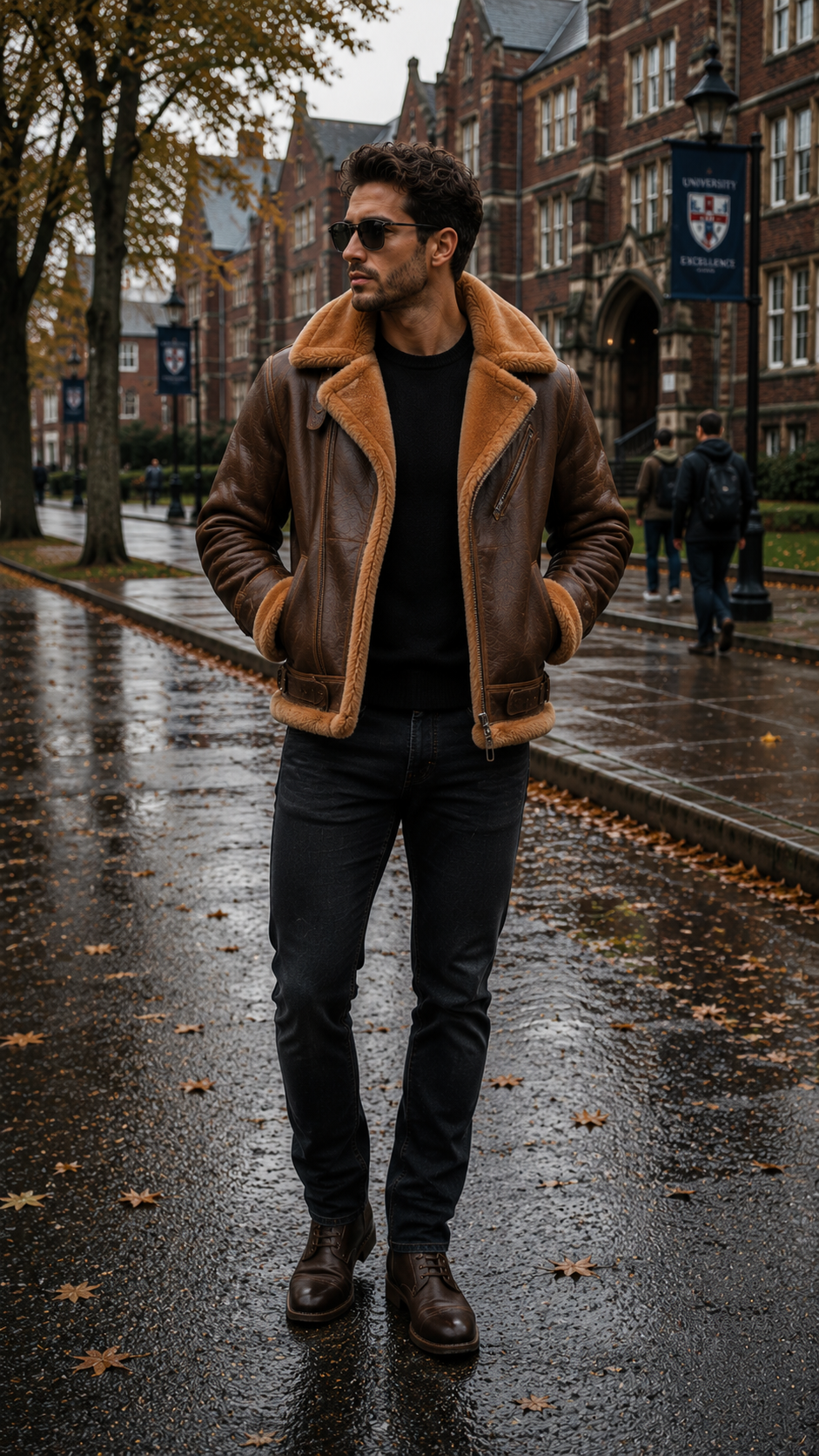
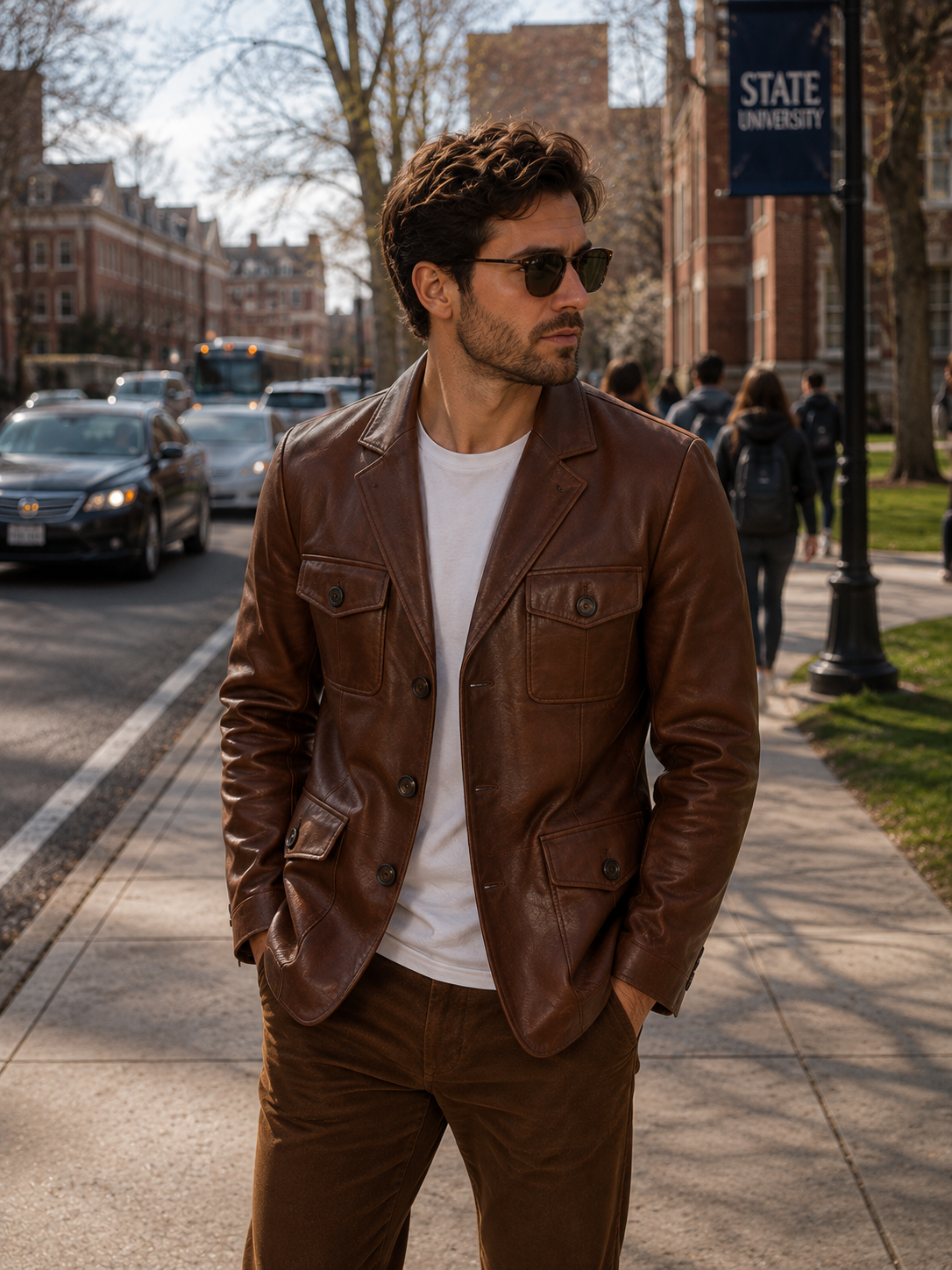
The three hides that show up most across this category solve different problems, and picking between them by price alone misses what each one is actually good at. Cowhide, used in the Elite Patrol Leather Jacket, has a dense, tightly packed fiber structure that resists abrasion well, which is why it was the historical choice for real motorcycle gear, at the cost of needing real break-in time before it stops feeling stiff. Sheepskin sits in its own category entirely, because it's the one hide on this page that can be tanned two different ways from the same source animal: with the wool sheared off for a smooth leather shell, as in the Brown Aviator Shearling Jacket, or left on for the shearling lining stitched into that same jacket. That dual identity is exactly why aviator-style pieces so often pair a sheepskin exterior with a shearling interior rather than sourcing the shell and the lining from two unrelated animals. Lambskin is the outlier of the three: it comes off a younger animal, so the fiber runs thinner and less densely packed than cowhide, which is why it needs almost no wearing-in but also gives out faster under repeated pulling, snagging or rough daily use. A heavier weight in millimeters generally means more structure and more durability under repeated wear; a lighter weight means an easier break-in and less bulk under a coat.
What Tanning Actually Changes About a Hide
Two tanning methods dominate leather production, and the difference matters more to how a jacket feels and holds up than most product descriptions let on. Chrome tanning, the faster, chromium-salt-based process most commercial leather goes through, produces a hide that's supple straight off the line and holds up well against moisture, which is a large part of why it's the industry default for outerwear. Vegetable tanning uses plant-based tannins instead, takes considerably longer to finish, and produces a firmer hide at first that softens with handling and wear rather than arriving soft. It also tends to develop a deeper, warmer color shift over years of use than a chrome-tanned hide typically will, though how a specific jacket ages depends on its full finish, not the tanning method alone. Marco Jacket hasn't published which process runs behind any individual jacket in this category, so treat this as general leather science rather than a claim about one product's specific tanning method.
Full-Grain, Top-Grain and "Genuine": Reading the Label Correctly
Full-grain, top-grain and "genuine" all describe the same underlying question, how much of the hide's original surface survived processing, and mixing them up is probably the single most common source of confusion shoppers run into in this category. Full-grain keeps the hide's outer layer completely intact; top-grain sands and refinishes that same layer for a more even surface. "Genuine leather" as an industry term actually sits below both on that specific scale, which surprises people who assume it sounds like the premium option. On this site, genuine cowhide or genuine sheepskin means real animal hide rather than a synthetic or bonded material, not a claim about which exact grain layer a given jacket falls under; the team can confirm that detail for a specific product on request. The genuine leather versus top-grain leather guide breaks the full grading scale down in more depth than makes sense to repeat here.
Zippers, Snaps and What's Sewn Inside
A leather jacket's hardware has its own history, separate from the leather itself. The modern zipper wasn't reliably functional until Gideon Sundback patented a workable design in 1913, and it still took roughly two more decades before garment makers trusted it enough to put it on jackets rather than just luggage and boots. Talon held the American zipper market for most of the twentieth century before the Japanese manufacturer YKK overtook it, and YKK-branded pulls now show up across this category, including on the Black Leather Biker Jacket and the Brown Aviator Shearling Jacket. What's stitched inside the shell matters just as much as what closes it. Viscose linings, used in most of the biker and cafe racer builds here, slide on and off easily over a shirt without static cling; a heavier polyester lining, like the one inside the Black Cowhide Leather Jacket, holds up to more repeated wear; and a quilted lining, discussed below, adds actual thermal insulation rather than just a smoother interior surface.
Finishes and Builds That Go Beyond the Standard Smooth Hide
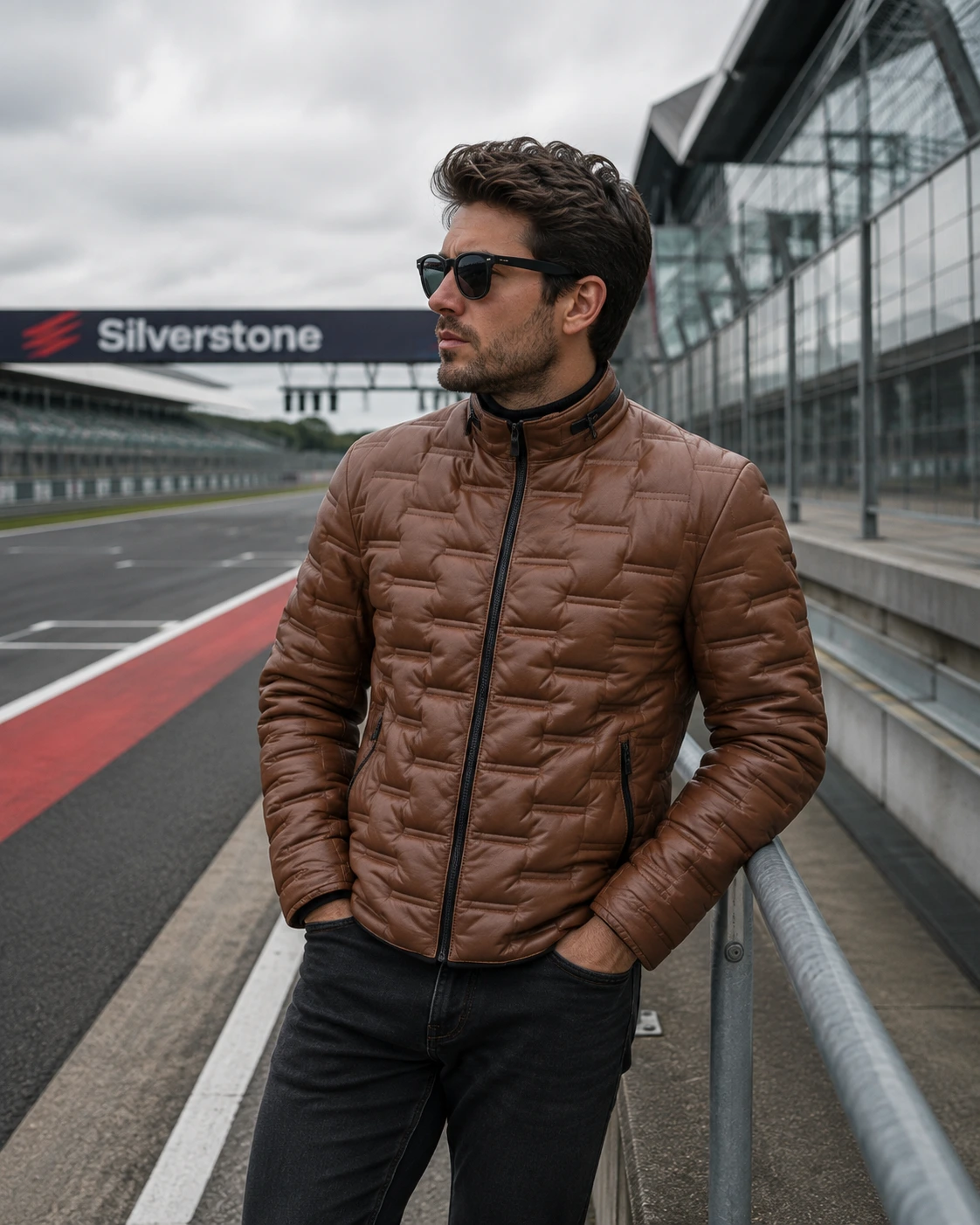
Not every jacket here is a plain smooth-leather cut, and the ones that aren't tend to fall into a few clear categories rather than being one-off novelties. Quilted insulation gets stitched over the shell itself in pieces like the Stylish Brown Leather Quilted Jacket, worth a closer look on the dedicated mens quilted jackets page if warmth matters more to you than a slim profile. A deliberately worn, aged surface finish is its own separate category, covered fully under mens distressed jackets and vintage jackets. Suede, which is really just the brushed, napped underside of a hide rather than a different animal, gets its own separate treatment under mens suede jackets. A smaller group of jackets in this category borrow their look from film and television rather than a functional riding history: the Black Cowhide Leather Jacket and its sheepskin counterpart, the Walking Dead Black Negan Leather Jacket, both draw on the same biker-style silhouette in different hides, while the Black Superhero-Inspired Leather Jacket and the Green and Black Racer Jacket apply that same construction logic to a tailored silhouette and a racer cut, respectively. None of these are officially licensed products; each carries a disclaimer identifying it as an independently designed piece rather than one authorized by a show, film or franchise.
Getting the Size Right Before It's Cut
Leather doesn't give and recover the way a knit fabric does, so an off measurement at order time is harder to correct later than it would be with most other jackets. Check the size chart on the specific product page against your own body rather than your usual off-the-rack size, since leather jacket sizing generally sits closer to the body than a casual cotton jacket, and the how should a leather jacket fit guide covers what "right" actually looks like across the shoulders, sleeves and body length. Measurements outside that chart aren't automatically a dead end: reach out to sales@marcojacket.com first and the team will tell you what can realistically be tailored within the existing pattern. When the goal is a jacket built from the ground up around your own numbers rather than a resized standard pattern, that's a different product entirely and belongs on the dedicated custom leather jacket page.
Keeping a Leather Jacket in Shape for the Long Run
Leather ages on its own schedule, and how it's handled day to day affects that more than most owners expect. Wipe dust and light surface marks off with a dry or barely damp cloth rather than reaching for a washing machine or a standard dry cleaner, both of which strip the natural oils out of the hide and can damage the grain permanently. A leather-specific conditioner applied every few months, more often in a dry climate or with daily wear, keeps the surface from drying out and cracking. Store it on a wide, structured hanger instead of a wire one or folded flat in a drawer, and keep it away from direct sun and heat sources, both of which speed up fading and drying. The how to take care of a leather jacket guide goes further into specific cleaning products and trouble spots like stains and mildew.
Frequently Asked Questions
Is everything in this category made after I order, or is any of it in stock?
Everything here is made after you place an order rather than pulled from finished inventory, across every cut and hide in this category. Production time starts once the order is placed, so plan around that rather than expecting same-day shipping.
Why does this page cover so many different jacket cuts instead of just one style?
This page works as an overview across every leather jacket style Marco Jacket makes for men, biker, cafe racer, bomber, aviator, quilted and a few builds inspired by film and TV characters, rather than going deep on any single cut. The material, hardware and care information here applies across all of them; the specific fit history and full product range for one particular cut lives on that cut's own category page.
I already know I want a biker jacket, or an aviator style. Should I still start here?
Not necessarily. Each cut named above has its own dedicated category page carrying more of that specific shape along with fit and history detail this overview doesn't repeat. This page works better for comparing cuts side by side before committing to the one you want to shop in depth.
Are the Negan-style and Ben 10 inspired jackets officially licensed?
No. Each of the character-inspired pieces in this category, including both Negan-style builds and the Ben 10 inspired racer jacket, carries a disclaimer stating it's an independently designed, fan-inspired piece rather than a product authorized by the show, film or franchise it references.
What's actually different between the cowhide and sheepskin jackets here?
Cowhide has a denser, more tightly packed fiber structure that resists abrasion well but needs real time to soften up when new. Sheepskin comes from a different animal entirely and can be tanned with the wool left on for a shearling lining or removed for a smooth leather shell, which is why it shows up in both forms across the aviator pieces in this category.
Does the tanning method actually change how a hide feels?
Yes, in general. Chrome tanning produces leather that's softer and more water-resistant from the start, while vegetable tanning starts firmer and typically develops a deeper color shift with years of wear. Marco Jacket hasn't published which process any specific jacket in this category goes through, so treat this as general leather science rather than a claim about one product.
Why do some jackets pair sheepskin leather with a shearling lining instead of a different material?
Because both can come from the same animal. Sheepskin tanned with the fleece intact becomes shearling, so pairing a sheepskin shell with a shearling lining, as in the aviator jackets here, keeps the whole garment sourced from one consistent hide rather than mixing an unrelated lining fabric into a leather shell.
Can sizing be adjusted if my measurements don't match the standard chart?
For an adjustment within an existing jacket's pattern, email sales@marcojacket.com with your measurements before ordering and the team will confirm what's possible. For something built entirely around your own measurements from the start, the custom leather jacket page linked above handles that directly.
Does this category ship outside the United States?
Yes, orders currently go to Canada, the UK, Europe and Australia in addition to the US, aside from a short list of excluded countries. The shipping and delivery policy page has current timelines and any country-specific restrictions.