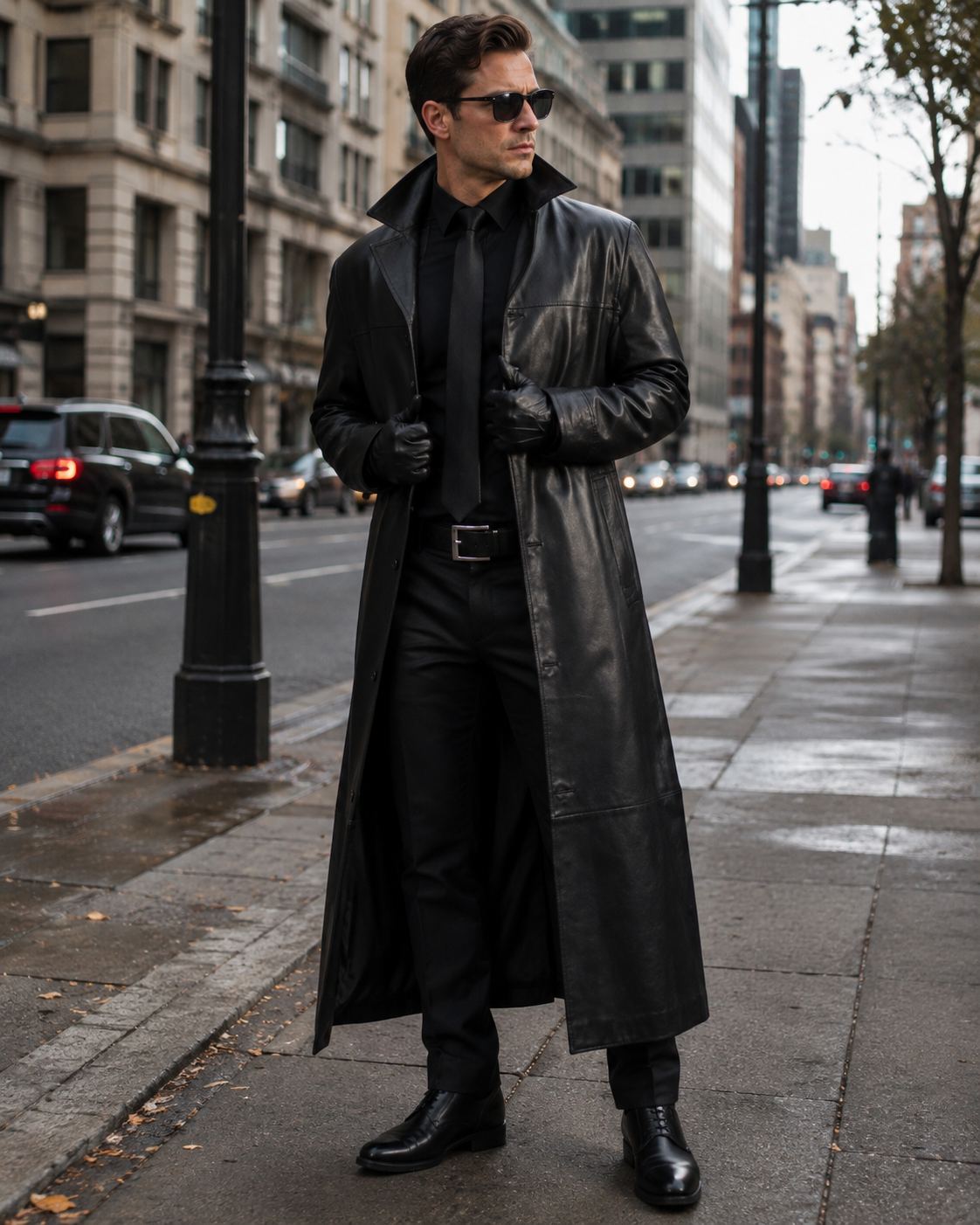
An overcoat is one of the oldest general-purpose words in outerwear: any long, structured coat built to go over a suit jacket or heavy knitwear rather than serve as the main layer itself. That's a wider definition than a single fabric or silhouette, which is why the term has covered everything from a heavy Victorian wool topper to a modern faux-leather take like the style currently listed here. The sections below cover where the word actually came from, how it differs from a topcoat or greatcoat in practice, and what matters before ordering one.
Where the Word "Overcoat" Actually Comes From
Overcoat is a plainly literal compound, over plus coat, first recorded in English around 1802 to describe a large coat worn on top of ordinary clothing. It replaced vaguer earlier terms like overcloth and overgarment, both of which had already described outer layers in general since the 14th and 15th centuries without pinning down any particular shape. That vagueness never fully disappeared. Unlike a pea coat or a trench coat, each tied to one recognizable cut, overcoat still works more as a category label than a fixed silhouette, which is part of why the word gets applied to such different-looking garments today.
Overcoat, Topcoat and Greatcoat: Where the Terms Actually Split
Tailors have traditionally separated an overcoat from a topcoat by fabric weight rather than length. A topcoat runs lighter, historically cited around 18 ounces per yard or under, built for milder cold and the shoulder seasons, while an overcoat uses a denser cloth meant for genuine winter. In practice the two overlap enough that plenty of retailers use the names interchangeably, and there's no single enforced cutoff between them. A greatcoat sits at the heaviest, most military end of the same family, traditionally double-breasted with a deep collar and, on some historical versions, a caped shoulder built for standing outdoor watch rather than commuting between a car and an office. Every greatcoat qualifies as an overcoat under the broad definition; not every overcoat is cut heavy or martial enough to earn the greatcoat name.
Named Overcoat Styles From Victorian Tailoring
Long coats reaching past the knee had already existed in military and formal dress for centuries before overcoats became common civilian wardrobe pieces across the 17th century, and several specific cuts that emerged from Victorian-era tailoring are still named individually today. The chesterfield, a dark, knee-length coat built around a distinctive velvet collar, is usually traced to a 19th-century Earl of Chesterfield, though like most eponymous garments the exact figure and date behind the name are debated rather than settled. The ulster added a caped top and was built as a working daytime coat rather than an evening piece, while the covert coat, cut with notched lapels for country and hunting wear, rounded out the period's range of tailored outerwear. The full-length silhouette, structured lapels and Victorian-inspired detailing on the Full Length Black Faux Leather Long Steampunk Overcoat lean directly on that same period's tailoring lines, reworked in faux leather instead of the wool those historical styles were built from.
Why an Overcoat Needs More Room Than a Suit Jacket
An overcoat's entire job is to sit on top of another layer, which is why a properly sized one is never cut as close through the body as the suit jacket underneath it. One commonly cited tailoring guideline calls for roughly 3 to 4 inches of extra chest or underarm room beyond a suit jacket's own measurement so the coat closes comfortably over it, dropping to around 2 inches if it's only going over a shirt or light knitwear instead. Skip that allowance and the coat either won't close over a jacket at all or strains across the shoulders the first time it's buttoned. It's also why an overcoat and whatever gets worn underneath it are sized as two separate decisions rather than matched to the same number.
One Fabric Doesn't Define This Category
Because overcoat describes a role rather than a required material, this category isn't scoped to wool the way a fabric-specific category would be. The style currently listed uses faux leather rather than the wool or wool-blend cloth most historical overcoats were built from, and additional weights and materials can join it over time without changing what actually qualifies something as an overcoat here: length, structure, and enough built-in room to layer over tailoring. Anyone specifically after a genuine wool build has the dedicated wool coats category to check instead, a belted, storm-flapped silhouette specifically is better covered by trench coats, and a genuine hide shell in a similarly long, structured cut belongs instead over in leather coats. Anyone prioritizing insulated warmth over tailored structure altogether has winter jackets as a separate option.
Made-to-Order Production and Sizing
Production on every piece here starts once an order is actually placed, not before, so there's no finished stock sitting around waiting on a buyer. Sizing follows whatever chart sits on that specific product's own page, and a measurement that doesn't cleanly match it is worth flagging ahead of checkout: send sales@marcojacket.com your numbers first and expect a direct answer on what the pattern can flex to accommodate. A fully bespoke leather overcoat, drafted from personal measurements instead of a resized standard pattern, is offered separately through the Custom Leather Jacket page for anyone who wants that route instead.
Caring for a Faux Leather Overcoat
The faux leather build currently in this category calls for lighter upkeep than genuine hide: a damp cloth handles everyday dirt, harsh chemical cleaners are worth skipping entirely, and extended direct heat or sunlight is the real threat, since either can leave the material brittle over time. Hang it on a proper shaped hanger instead of folding it into a drawer, since a coat this long and structured loses its shoulder line quickly under poor storage, and that's not something a quick steam reliably undoes afterward. A future genuine wool or leather addition to this category would call for the more involved dry-cleaning or conditioning routine those materials typically need instead, so checking the specific product page for care instructions beats assuming one routine covers everything here.
Frequently Asked Questions
Is an overcoat the same thing as a topcoat?
Not exactly, though the line is blurry. Convention splits them by fabric weight, a topcoat lighter and meant for milder cold, an overcoat heavier and built for genuine winter, but the two names get used interchangeably often enough that no single cutoff is enforced across the industry.
What actually separates an overcoat from a greatcoat?
Weight and origin, mainly. A greatcoat sits at the heaviest, most military end of the overcoat family, traditionally double-breasted with a deep collar and sometimes a caped shoulder, built originally for standing outdoor watch rather than everyday wear.
Does an overcoat have to be made from wool?
No. Overcoat describes a role, a long, structured coat built to layer over tailoring, rather than one required fabric. Wool has historically been the most common shell material, but the term itself was never limited to it.
Is everything in this category made after I order, or is any of it in stock?
Made to order across the board. Nothing here ships from finished inventory; cutting only begins once an order is placed.
Can sizing be adjusted if my measurements don't match the standard chart?
Email sales@marcojacket.com with your numbers before checkout, and the team will tell you directly what the pattern allows.
What if a coat doesn't fit once it arrives?
The returns and refund policy page covers the return and exchange window, including anything specific to made-to-order pieces.
Does this category ship outside the United States?
Yes, delivery extends to the UK, Canada and a number of other countries beyond the US. The shipping and delivery policy page has current coverage and timelines.
How long should an overcoat actually be?
By longstanding tailoring convention, somewhere between the top of the knee and mid-calf, long enough to cover a suit jacket's hem completely. Anything noticeably shorter starts to function more like a car coat than a true overcoat.
Why is a faux leather piece filed as an overcoat instead of a leather coat?
Overcoat is defined by length and structure rather than a required material, so a full-length, lapelled coat with a structured build can qualify whether the shell is wool, faux leather or something else entirely.