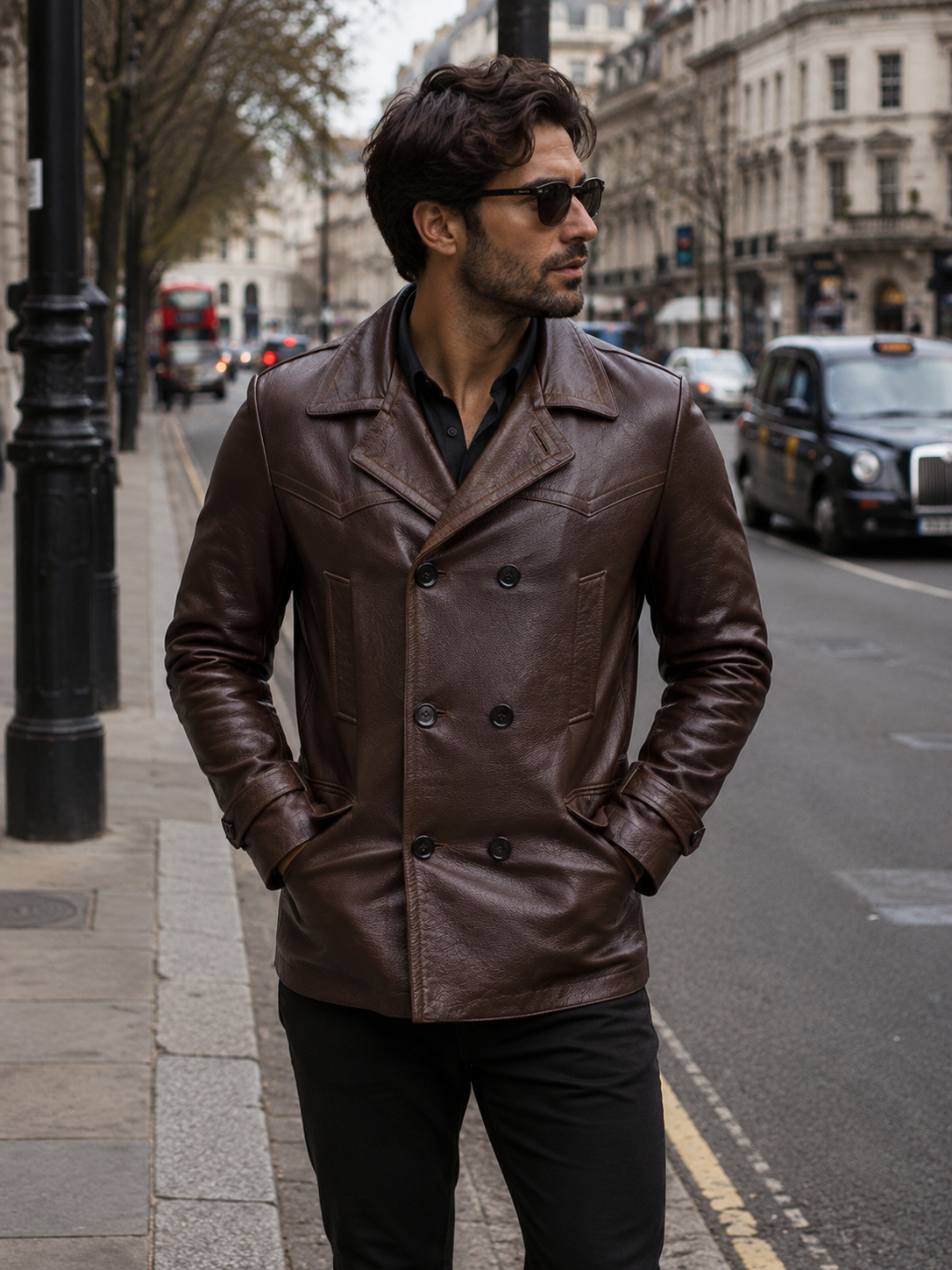
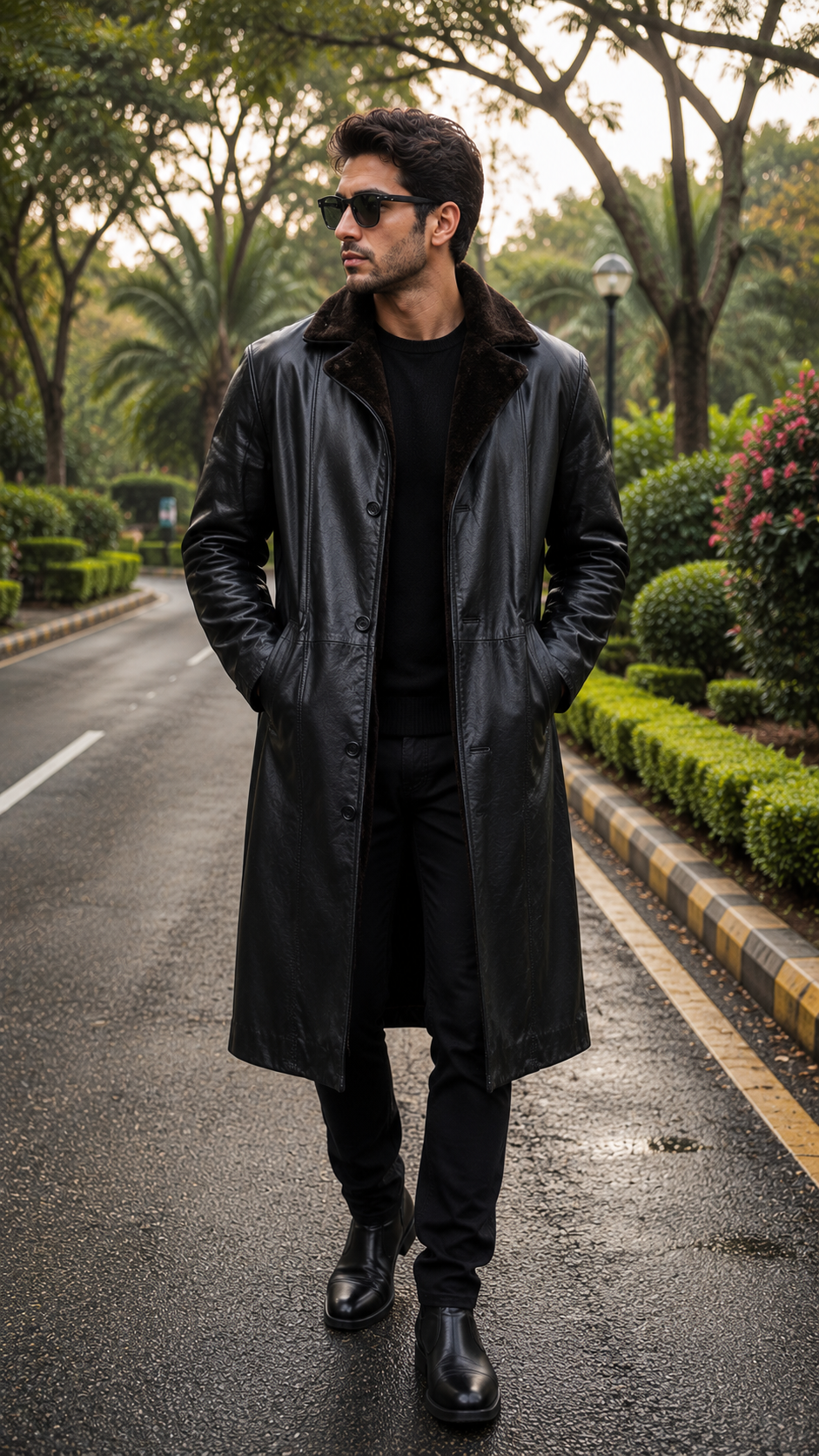
Pea coats are defined by a specific naval silhouette, not by a specific fabric, a distinction worth stating plainly since heavyweight wool shows up in most versions of the style without being what actually makes a coat a pea coat. The shape does: hip length, a double-breasted front with wide lapels that can button up over the throat, and vertical or slanted pockets angled for quick hand access rather than storage. The wool coats category covers wool construction across any coat shape; this page narrows in on the cut itself, currently represented by a single heavyweight wool build, with room for the lineup to grow into other fabrics later without changing what a pea coat actually is. It sits alongside the other silhouette- and fabric-specific pieces inside the site's wider coats collection, and anyone weighing this shorter naval cut against something built purely for insulated cold has winter jackets to compare it against separately.
Where the Name "Pea Coat" Actually Comes From
The origin of the word "pea" in pea coat is genuinely disputed among historians rather than settled fact, and any single confident answer found online is worth reading skeptically. One theory traces it to the Dutch or West Frisian word "pij" (sometimes written "pije"), a coarse, twilled fabric that gave its name to a short, heavy jacket called a "pijjekker." The competing account, favored in the US Navy's own historical record, holds that the coat was originally cut from a heavy blue "pilot cloth," shortened in naval slang to a "P-jacket" and eventually worn down to "pea coat." Whichever version history eventually settles on, both point to the same underlying fact: the coat was named for a specific, rugged fabric built to survive shipboard weather, not for a vegetable or a shade of green.
Built for a Working Deck, Not a Runway
Nearly every visible detail on a traditional pea coat traces back to a sailor's actual working conditions rather than a design trend. A front built from two overlapping panels of wool across the chest blocks wind meaningfully better than one that simply closes edge to edge. The wide lapels were never purely decorative either: turned up and buttoned across the throat, they worked as a stand-in collar in weather too harsh for an open neckline. Large buttons, traditionally cast with a fouled-anchor design, were sized to be handled with cold, wet or gloved hands, and pockets ran vertical or at a slant specifically so a sailor could find them by feel without fumbling at a straight horizontal opening. Hip length wasn't a style choice at all: anything longer risked catching in rigging, lines or deck machinery during actual work.
From Kersey to Melton: How the Fabric Underneath Changed
The fabric behind a pea coat's surface has shifted more over its long service history than the silhouette ever has. Early twentieth-century naval versions were commonly woven from Kersey, a dense wool left with enough of its natural lanolin intact to shed light moisture on its own before modern fabric finishing became standard practice. Later in the century, military supply shifted much of its pea coat production toward Melton wool cloth instead, a more heavily fulled and sheared fabric that trades some of Kersey's inherent water resistance for a smoother, denser, more felted surface, part of why later military and civilian pea coats more often carry a quilted lining that earlier Kersey builds typically didn't need.
The Aldo Raine Pea Coat's Take on the Classic Cut
The Inglourious Basterds Lt. Aldo Raine Pea Coat, a design inspired by the rugged look of the character from Quentin Tarantino's film, keeps the traditional overlapping front and structured lapels central to the naval cut, built in a heavyweight wool blend and finished with a deliberately weathered surface instead of a clean, showroom look. Its own product page recommends checking chest and shoulder measurements closely against the posted size guide before ordering, since a double-breasted front depends on an accurate fit across the chest in a way a single-breasted style is more forgiving about.
Pea Coat or Overcoat: Reading the Difference at a Glance
Length is the fastest way to tell the two apart, and the gap isn't subtle. A pea coat stops at the hip by design, while an overcoat is cut to the knee or below specifically so it clears a suit jacket underneath cleanly. That length gap brings a formality gap with it: a pea coat reads casual to smart-casual no matter how it's styled, while an overcoat is built to sit over tailoring for a genuinely dressed-up look. Anyone weighing the two against sustained winter cold rather than looks alone is better served checking the overcoats category directly, since the added length and coverage there does more for deep cold than a shorter naval cut is built to do.
Pea Coat or Trench Coat: Different Origins, Different Jobs
A trench coat and a pea coat can look similar from a distance, both structured and often double-breasted, but they were built for opposite climates and different services entirely. The trench traces back to officer outerwear from the First World War, cut from tightly woven, water-shedding fabric and cinched with a belt for mobility in wet conditions. The pea coat comes out of naval service instead, built from heavy wool for cold, windy decks rather than rain, with no belt at all and a boxier, less fitted line through the body. The trench coats category is the better fit for anyone drawn to that belted, WWI-derived silhouette rather than this coat's naval one.
Getting the Fit Right Before You Order
Because a front that overlaps two full panels of wool sits across the chest, a size that runs even slightly off can throw the whole front out of alignment in a way a simpler jacket with one closing edge tends to hide more easily. Nothing in this category exists as a finished piece waiting in a size run; production on a given coat starts from the measurements tied to your specific order once that order is placed. When your own numbers fall outside what the posted chart covers, getting them to sales@marcojacket.com ahead of time gives the team a chance to weigh in on fit before any cutting begins, rather than after.
Caring for a Heavyweight Wool Pea Coat
Heavyweight wool holds its structure best with a professional dry clean rather than a home wash, since machine agitation combined with heat is exactly what causes wool fiber to felt and lose its shape for good. A stiff clothes brush after wear keeps surface dust from working into the weave, and a wide, shaped hanger protects the structured shoulders a double-breasted front depends on, something a wire hanger or a folded stack in a drawer will flatten out over time.
Frequently Asked Questions
What actually makes a coat a pea coat instead of just a wool coat?
The cut, not the fabric. Hip length, a front that overlaps in two panels, wide lapels that button up over the neck, and vertical or slanted pockets make up the naval silhouette, one that could technically be built in fabrics other than wool even though wool is the traditional and currently available choice.
Why is a pea coat cut so much shorter than an overcoat?
Sailors working a moving deck couldn't afford excess fabric anywhere near rope, rigging or machinery, so cutting the hem off at the hip instead of letting it run long was a safety decision more than a style one, and that working-deck origin is part of why the cut still feels more casual than a full-length overcoat.
Where does the name "pea coat" actually come from?
Historians disagree. One theory traces it to the Dutch or West Frisian word "pij," a coarse fabric that named a short jacket called a "pijjekker." The US Navy's own account instead traces it to "pilot cloth," shortened in naval slang to "P-jacket" and then "pea coat." Neither claim is fully settled among historians.
Is the pea coat currently available here made from real wool?
Yes. The Inglourious Basterds Lt. Aldo Raine Pea Coat is built from a heavyweight wool blend, per its own product listing.
Is this pea coat officially licensed by the film it references?
No. It is an independently designed piece inspired by the character's general look rather than an officially licensed or studio-affiliated product.
Can sizing be adjusted if my measurements don't match the standard chart?
Send your measurements to sales@marcojacket.com before placing the order, and the team can weigh in on what adjustments are realistic given how this coat's front overlaps at the chest.
Is everything in this category made after I order, or is any of it in stock?
Made to order. Cutting on any pea coat in this category begins once an order comes in, not pulled from a pre-finished batch.
What if a coat doesn't fit once it arrives?
The returns and refund policy page covers the process and timelines for a made-to-order piece that needs to come back.
Does this category ship outside the United States?
Yes. The shipping and delivery policy page lists current international coverage and any country-specific limits.
How is a pea coat different from a trench coat if both can be double-breasted?
Origin and job. A trench coat comes from WWI officer wear, belted and built from tightly woven fabric to shed rain, while a pea coat comes from naval wear, unbelted and built from heavy wool to block wind and cold on an open deck rather than rain specifically.