Winter Jackets is the widest net in the catalog rather than one construction or one silhouette: it is every current piece built to survive real cold, gathered in one place before you commit to a narrower category like puffer, quilted, parka or wool coats. Some of what has carried that "winter" label on other sites is really a three-season piece with a warm-sounding name, so the sections below explain what separates an insulated garment from one that merely looks heavy, then work through where each construction in the wider Marco Jacket catalog actually belongs.
What Makes a Jacket Insulating in the First Place
Heat leaves a body through direct contact, through moving air, and through radiating outward, and an insulating garment's only real job is slowing that last exchange by holding a layer of air still against the skin. Still air conducts heat poorly, which is the entire point; a material only insulates well if its structure can pin air in place rather than let it circulate away. That single mechanism explains every fabric in this category despite how different they look on a hanger: a fill-based jacket does it with stitched pockets of down or synthetic fiber, sheepskin shearling does it with dense wool left uncut on the hide, and a wool garment does it within the twisted structure of the yarn itself. None of the three is more scientifically legitimate than the others; they are three different ways of arriving at the same trapped-air result.
Down Fill and Synthetic Insulation, for Context
Puffer and quilted jackets solve the trapped-air problem with loose fill packed into sewn baffles rather than a natural fiber structure, and since that fill isn't part of what's currently stocked in this exact category, it is worth explaining briefly for comparison. Down fill is graded by fill power, a number describing how many cubic inches one ounce of it expands to once fully lofted; a higher number traps more air per ounce, which is why premium down performs better relative to its weight than a lower grade rather than simply weighing more. Its tradeoff is moisture: down clusters collapse and stop insulating once soaked, and take a long time to dry back out. Synthetic insulation gives up some of that warmth-to-weight ratio in exchange for holding its loft when wet, since the fibers themselves don't absorb water the way a natural down cluster does. Anyone shopping specifically for a fill-based build should look at mens puffer jackets, womens puffer jackets, or the leather-panel mens quilted jackets and womens quilted jackets categories, since those are where that construction actually lives.
Shearling and Wool: Warmth Without Any Added Fill
Everything currently stocked in this specific category gets its warmth from one of two natural structures instead of a synthetic or down fill. Shearling keeps the wool on the hide instead of stripping it away during tanning, and the finished jacket gets worn wool-side in, so that dense curled fiber ends up pressed right against the wearer, pinning a layer of warm air where it can't escape. Wool works on a smaller scale but the same principle: each fiber has a natural coil rather than lying flat, and a garment woven or felted from enough of that coiled fiber holds pockets of still air inside the fabric itself without any separate lining doing the work. Neither material needs a fill layer to function, which is part of why a shearling jacket or a wool build can run warm without the loft-driven bulk a heavily filled puffer needs to hit the same number.
Lambskin, Sheepskin and What "Genuine Shearling" Actually Means
Product pages in this category use both "sheepskin" and "lambskin," and the difference is worth knowing before ordering. Both terms describe genuine shearling, hide with the wool intentionally left on rather than removed, but lambskin comes specifically from younger animals, which tends to produce a finer grain and a softer hand than shearling taken from a fully mature sheep. Warmth comes from the wool density and depth on the inside far more than from which animal the hide came from, so a lambskin piece is not automatically less insulating, it is generally lighter and softer against the skin for a similar level of warmth. A product's own listing states which one it uses, since the two aren't interchangeable terms even though both describe real, wool-on sheepskin rather than a synthetic pile made to imitate it.
Wind Chill: Why the Same Temperature Feels Colder on a Bad Day
A still layer of warm air sits close to skin and clothing under calm conditions, and moving air strips that layer away faster than the body can replace it, which is the actual mechanism behind wind chill rather than the wind somehow lowering the air's real temperature. That's why a dense, tightly woven exterior, leather and heavier wool both qualify, does more for perceived warmth on a windy day than an equally warm but loosely woven fabric would, independent of how much insulation either one carries underneath. It's also why a shearling collar that closes around the neck, or a shawl collar built the same way, matters beyond styling: the neck and wrists are where that stripped-away boundary layer gets replaced fastest, so closing those gaps does real work.
The Layering System This Category Fits Into
A single jacket rarely does all the work in genuinely cold weather, and where a piece from this category fits into a layering system changes how it should be sized and worn. Right against the skin, a base layer exists to pull moisture off the body and push it outward through the fabric, because wet skin sheds heat at a much faster rate than dry skin does. A mid layer, typically a sweater or a lighter knit, holds the warm air the base layer keeps dry. The outer layer's job shifts again toward blocking wind and precipitation rather than generating warmth on its own, and most pieces in this category are substantial enough to serve as that outer layer without anything heavier stacked on top. A lighter wool-blend piece can also work as a mid layer under a heavier shell on the coldest days, which is worth knowing before assuming "winter jacket" always means the outermost piece.
Matching How Cold It Gets to the Right Category
Because this hub spans several different constructions, the honest next step for most shoppers is narrowing down rather than buying straight from here. Daily cold with a lot of movement, a commute, errands, standing outside, generally favors something packable and lighter, which is where the puffer and quilted builds covered above do their best work. Cold paired with a dressier setting, an office, a dinner, an evening out, generally calls for wool coats, pea coats, or overcoats instead, since a shearling jacket or a puffer reads wrong in that context regardless of how warm it is. Sustained, harsh cold with real wind exposure is where parka and duffle coat silhouettes earn their hoods and closures. And genuine natural insulation with a leather exterior, the specific combination this category is built around right now, is best compared directly against mens fur and shearling jackets and womens fur and shearling jackets, which carry the fuller range of that specific build by gender.
What's Actually Stocked Here Right Now
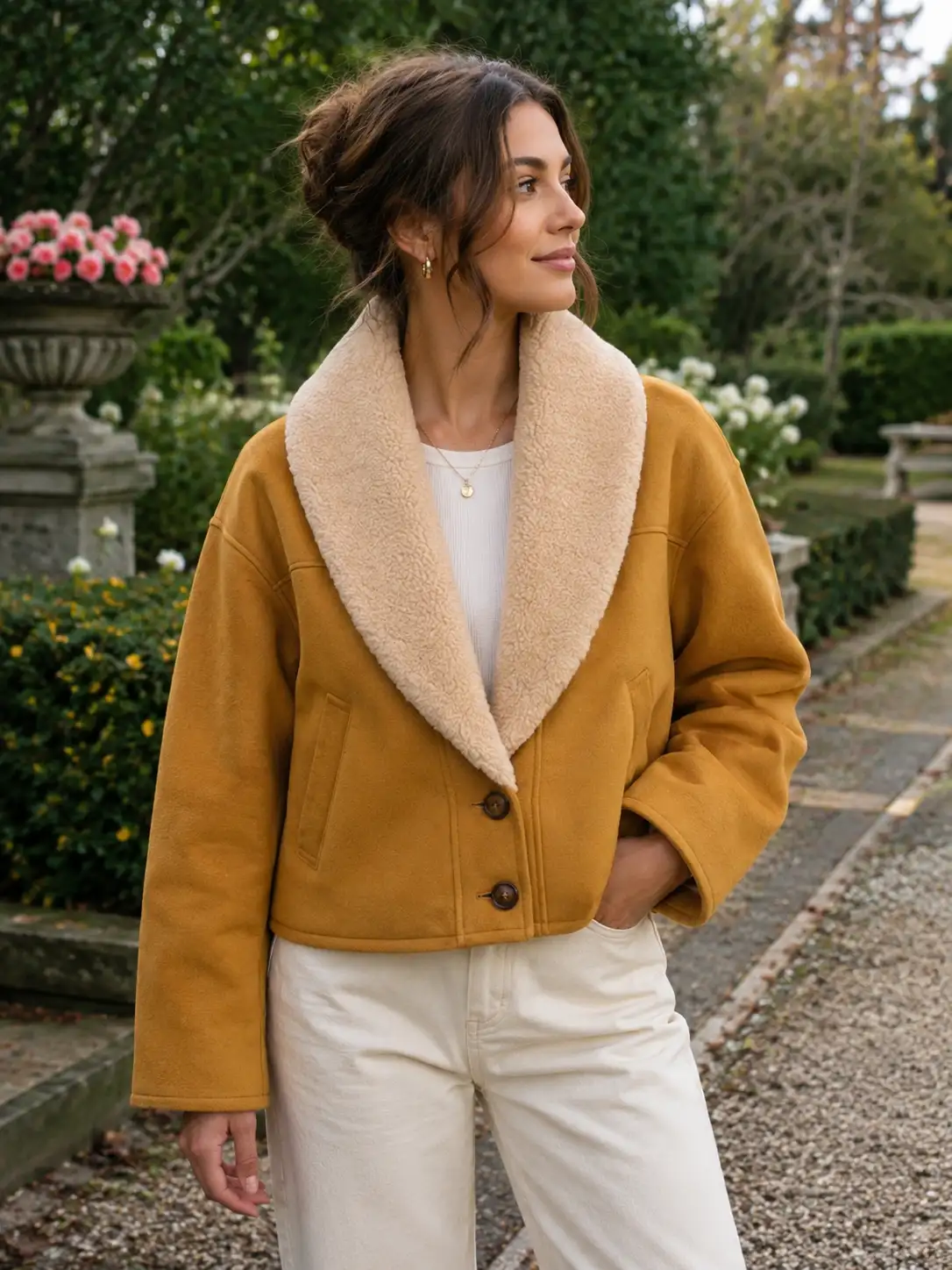
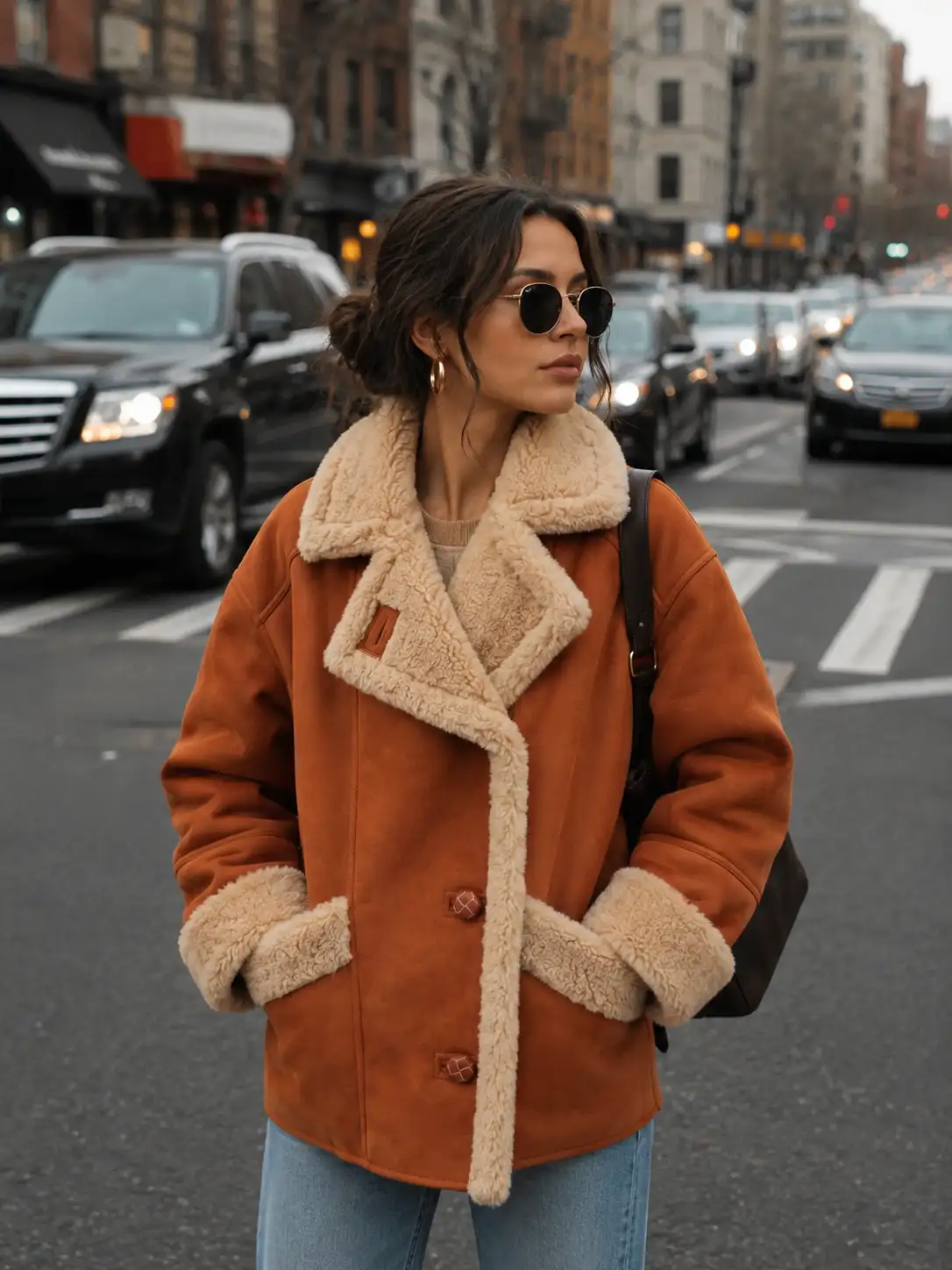
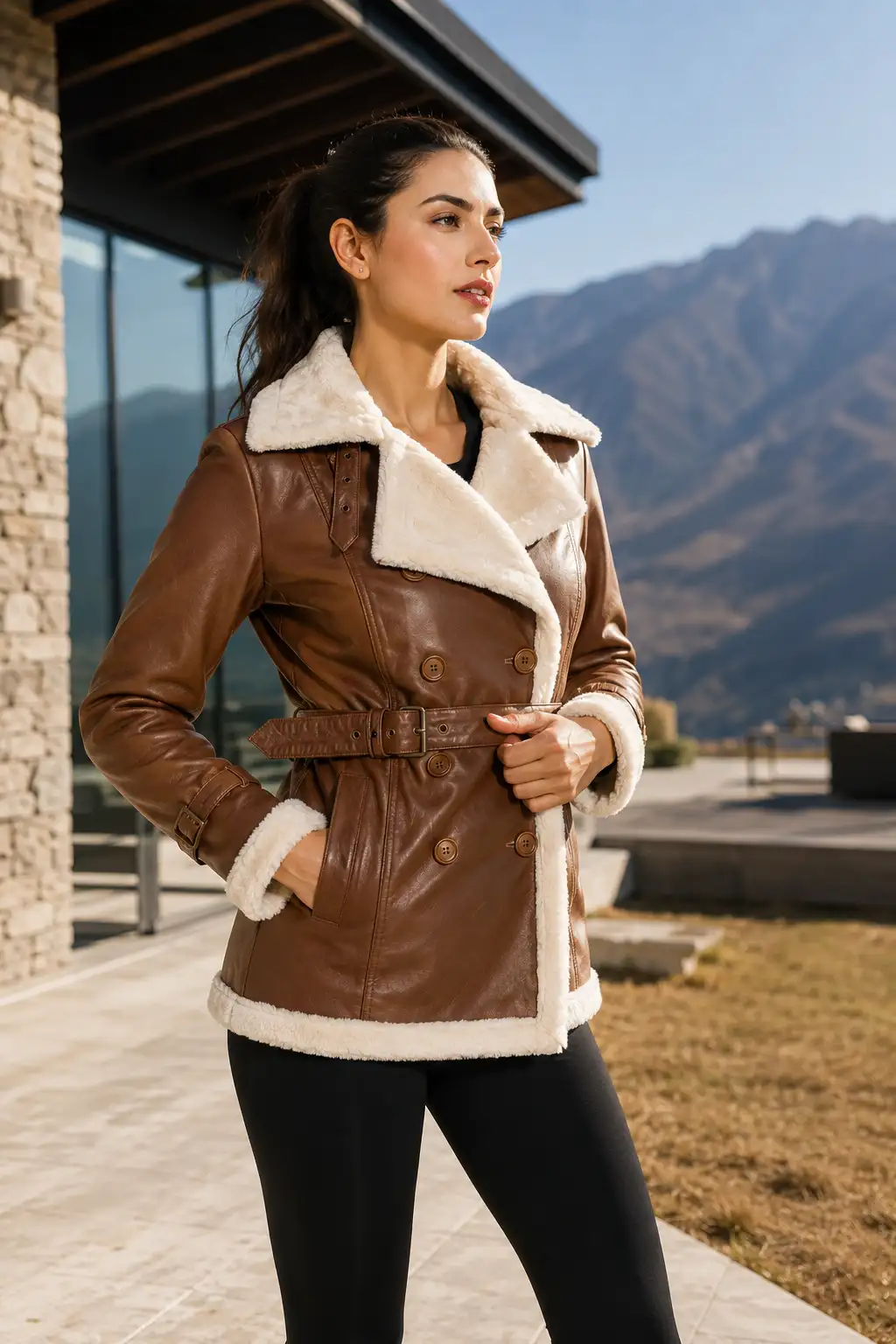
The current lineup splits into three functional groups rather than one uniform style. Shearling-lined jacket-length pieces make up most of it: the Mens Brown Aviator Shearling Jacket and Mens Shearling Dark Brown Aviator Jacket both confirm genuine sheepskin exteriors over a full shearling interior on their own product pages, and the same is true across the womens builds here, the Womens Aviator B3 Shearling Leather Jacket, the Womens Aviator Brown Shearling Leather Jacket, the Womens Black Leather Shearling Jacket, the Womens Shearling Shawl Collar Leather Jacket, and the Womens Tan Brown Shearling Leather Jacket, the last one built from lambskin specifically rather than heavier sheepskin. A second group runs longer: the Women Black Leather Hooded Shearling Coat and the Womens Suede Shearling Coat both carry that same shearling lining into a mid-to-long coat body for more coverage than a jacket hem provides. The one outlier is the New Royal Blue Varsity Letterman Wool Jacket, a wool-blend body with leather sleeves that its own listing describes as warm enough to wear on its own in cold weather rather than needing heavy layering underneath. A handful of other leather pieces show up in search results tied to this category but are built and marketed for milder three-season wear rather than genuine cold, so they are intentionally left out of this specific list.
Sizing for a Bulkier, Insulated Fit
A shearling-lined piece runs noticeably thicker than a plain leather jacket in the same size, so it is worth ordering with your actual winter layering in mind rather than sizing purely off a summer wardrobe. Everything here is made to order once you place it, cut and sewn against the size chart posted on that specific product's page rather than pulled from finished stock sitting on a shelf. Measurements that fall outside a given chart aren't automatically a dead end here, sales@marcojacket.com is the right address to send them to ahead of ordering so the team can confirm what a specific piece allows. For a leather jacket built from the ground up around your own numbers instead of an adjusted stock pattern, the Custom Leather Jacket page handles that as its own separate service.
Keeping Shearling, Wool and Leather in Good Shape Together
Shearling needs a cleaner who specifically works with sheepskin rather than a general leather specialist, since the wool side mats and dries out under the wrong treatment in a way plain leather never does. A wool-blend piece belongs at a dry cleaner used to working with tailored outerwear specifically, since a home wash cycle can felt the fibers and pull the whole garment out of its original shape for good. Both materials benefit from being stored on a wide hanger with room around them rather than compressed in a packed closet, since flattened wool fiber and crushed shearling both lose some of the loft that does the actual insulating.
Frequently Asked Questions
What's actually different between genuine shearling and a synthetic sherpa lining?
Genuine shearling is real sheepskin tanned with the wool still attached, so the insulating layer is a living fiber structure that springs back after being compressed. Sherpa is a knit synthetic fabric built to look similar; it's generally lighter and easier to clean, but it flattens permanently under repeated compression in a way real shearling does not.
Is a shearling jacket warmer than a wool coat?
Generally yes for a jacket-length piece, since shearling packs a denser layer of insulating fiber into a shorter garment. A heavier full-length wool coat can close that gap or exceed it in practice, since coverage and coat weight matter as much as the material itself.
What does fill power mean, and is anything in this category rated by it?
Fill power measures how much loft one ounce of down produces once fully expanded, so a higher number traps more warmth per ounce. Nothing currently stocked in this specific category uses a down or synthetic fill, that construction lives in the puffer and quilted categories instead, so fill power isn't a spec you'll see on a product page here.
Should I shop here or a narrower category like puffer, quilted or parka jackets?
Shop here if you want to compare genuinely cold-weather constructions across the whole catalog before deciding. Go straight to a narrower category if you already know you want a specific build, packable fill, a hooded parka, a tailored wool coat, since each of those has its own page with the fuller range of that exact style.
Is lambskin shearling as warm as sheepskin shearling?
Warmth comes mainly from the wool depth and density on the inside rather than the animal's age, so a lambskin piece isn't automatically colder. It tends to run lighter and softer for a comparable level of warmth, which is a genuine tradeoff rather than a downgrade.
Are the shearling collars on these jackets functional or just decorative?
Functional. A collar that closes fully around the neck blocks one of the two places, along with the wrists, where moving air strips warm air away fastest, so it does real work beyond the look of it.
Is everything in this category made after I order, or is any of it in stock?
Made after ordering, across the board. There's no finished winter inventory sitting in a warehouse ready to ship the same day.
What if a jacket doesn't fit once it arrives?
The returns and refund policy page covers the process and timelines, including anything specific to a made-to-order piece.
Does this category ship outside the United States?
Yes, orders currently go out to Canada, the UK, Europe and Australia in addition to the US, aside from a short list of excluded countries. The shipping and delivery policy page has the specifics.
Can sizing be adjusted if my measurements don't match the standard chart?
Email sales@marcojacket.com with your measurements before ordering and the team will confirm what's possible, or use the Custom Leather Jacket page mentioned above for something built entirely around your own numbers.